Testimonials
Services
Top 500 Python Interview Questions & Answers
Top 500 JavaScript Interview Questions & Answers
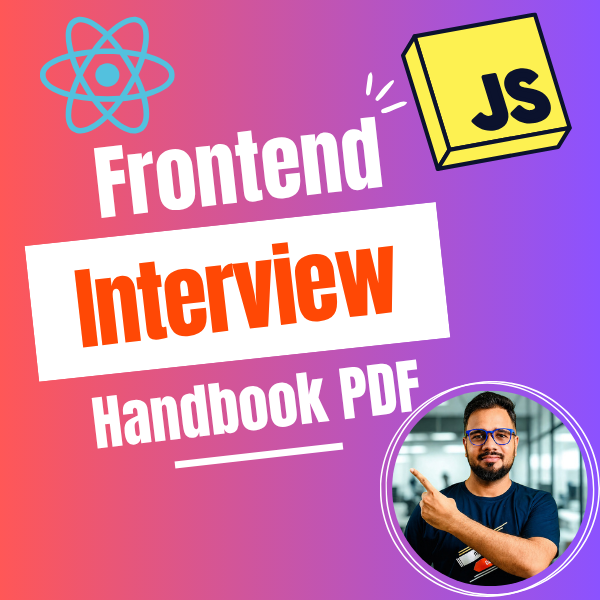
JavaScript & React Interview Preparation Handbook
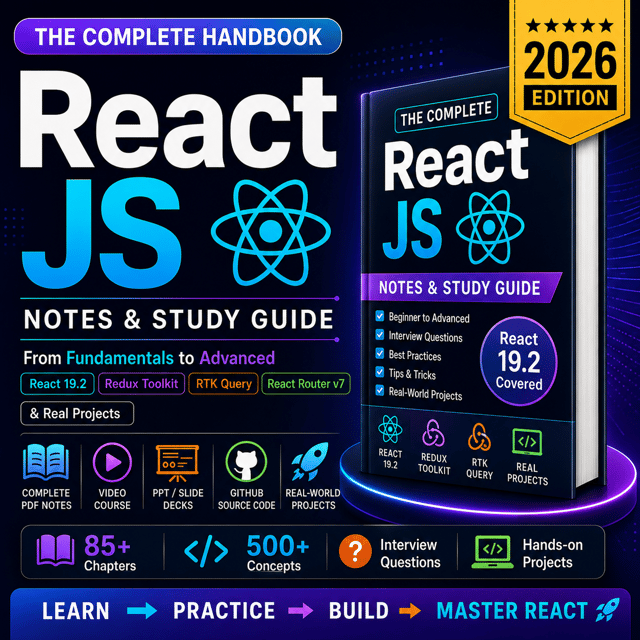
Complete ReactJS Handbook + Course + Code
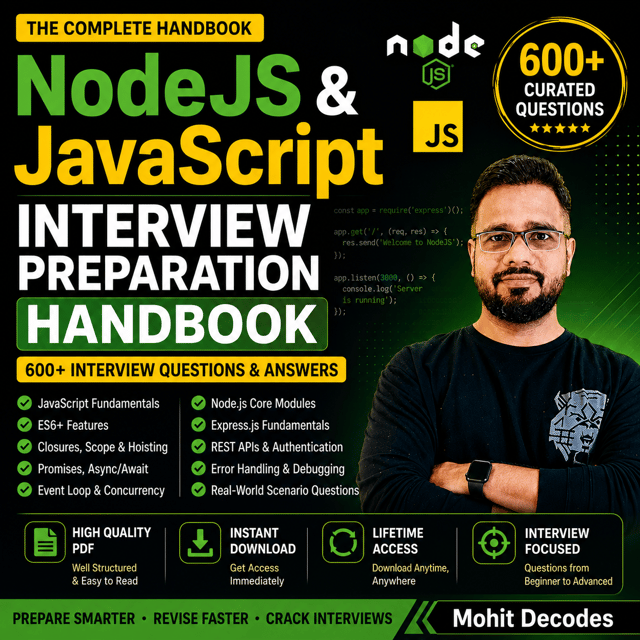
NodeJS & JavaScript Interview Preparation Handbook
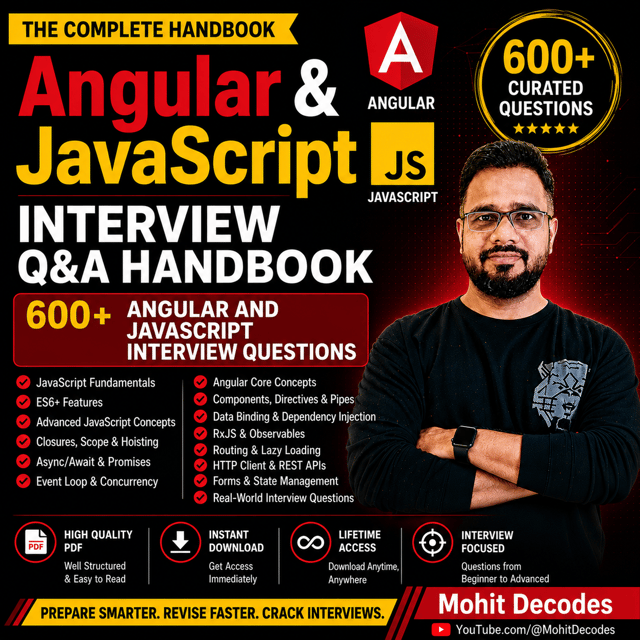
Angular & JavaScript Interview Q&A Handbook
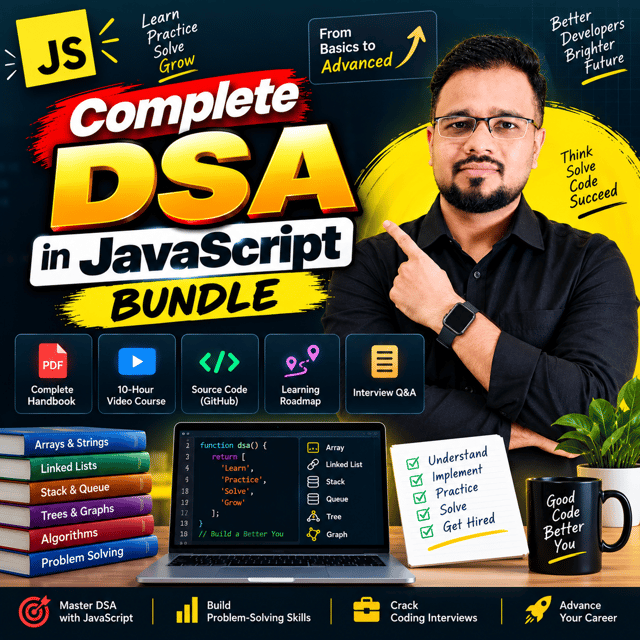
DSA in JavaScript: Beginner to Advanced
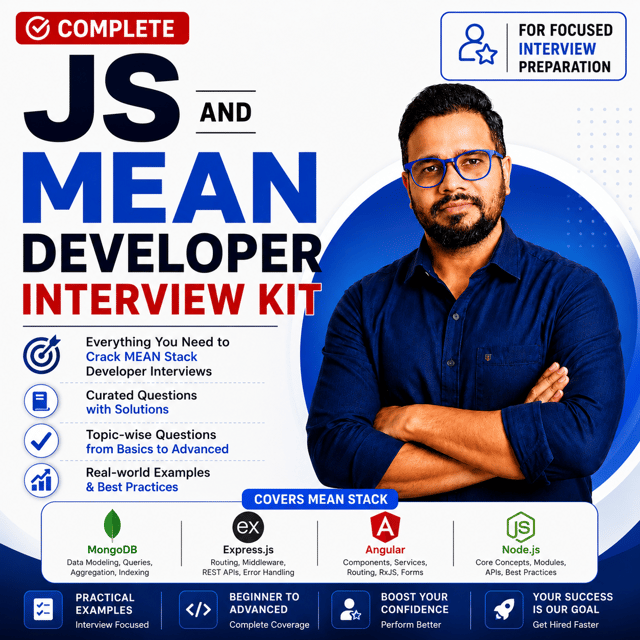
MEAN Course Interview Preparation Handbook

Developer Roadmap & Career Guidance
Interview Preparation & Tips
Daily JavaScript Output Based Questions
I'm Just a Message Away 🤝
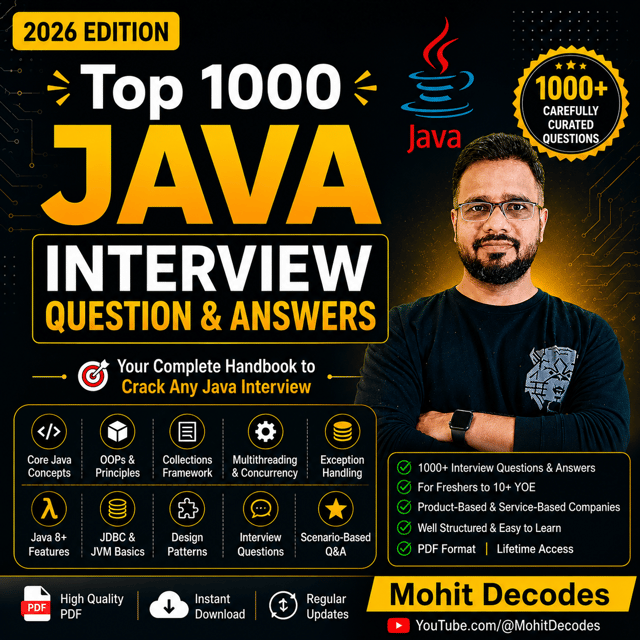
Java Interview Questions & Answers Handbook
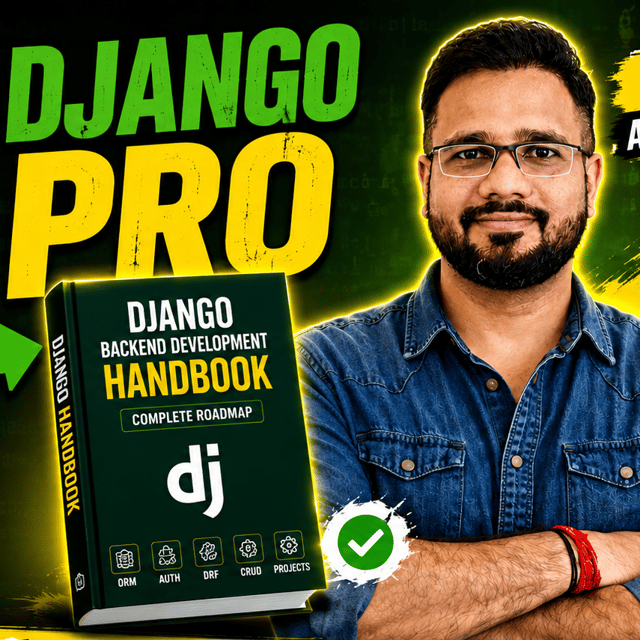
Complete Django Handbook + Course + Code
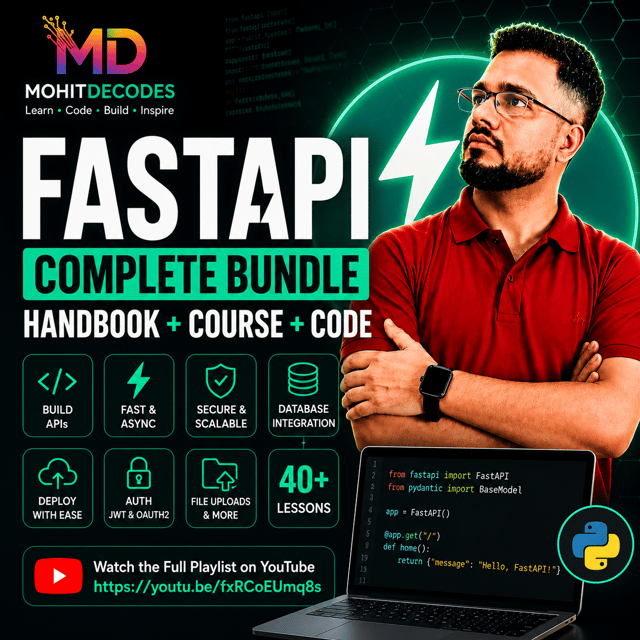
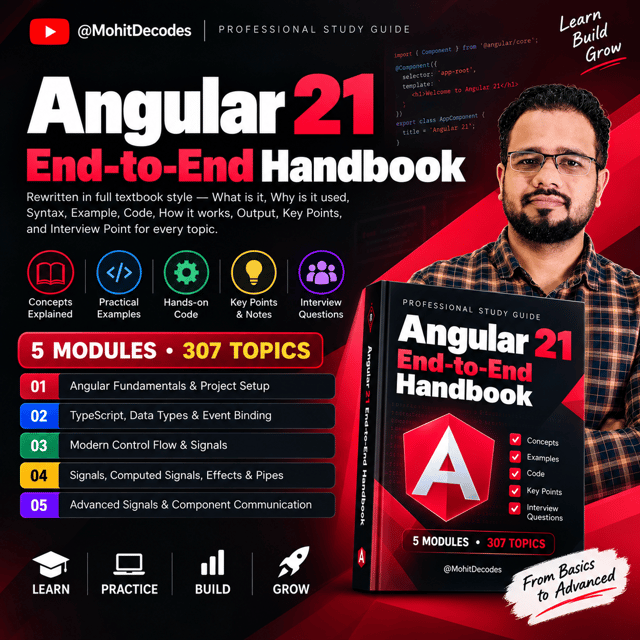
Complete Angular Handbook + Course + Code
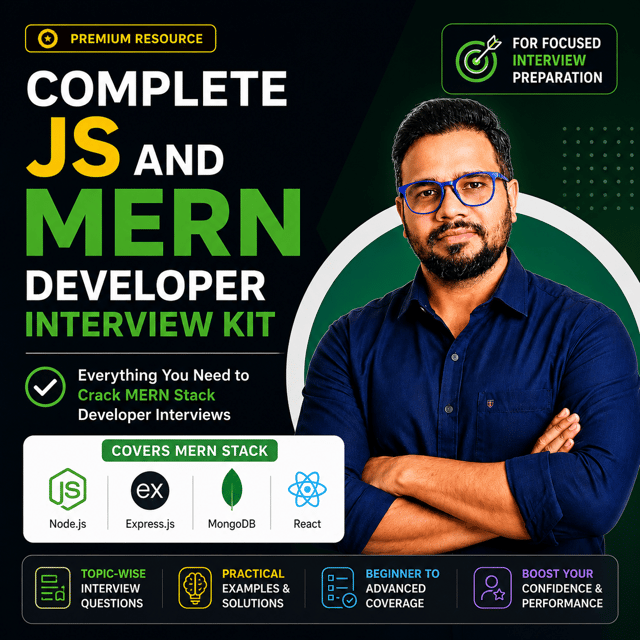
MERN Course Interview Preparation Handbook
Learn any Concept and Topic : HTML to React
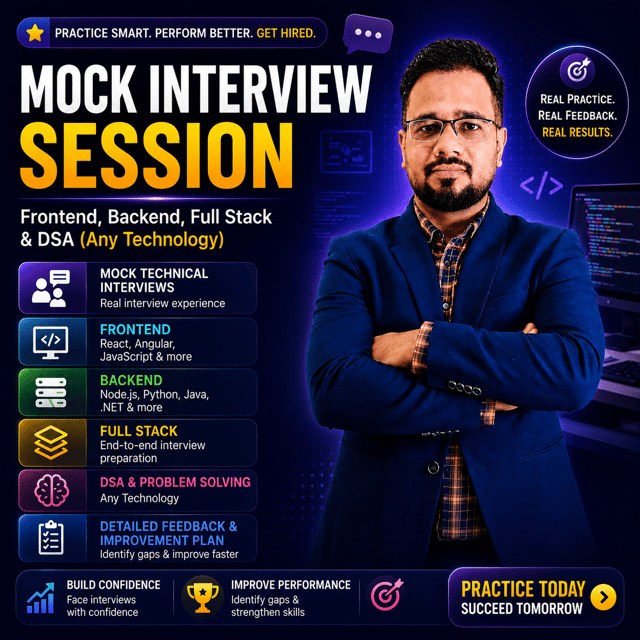
Mock Interview Session – (Frontend and Backend)
1:1 Mentorship For DSA + Full-Stack Development
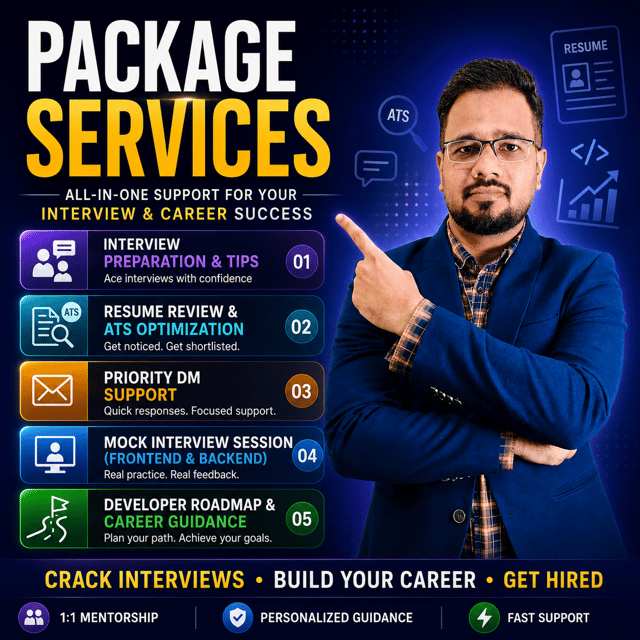
3 Months Mentorship (4 sessions)
About me
- YouTube - Mohit Decodeshttps://www.youtube.com/@MohitDecodes
- Every booking supports free tech education and mentorship for aspiring developers

- Mohit Kumar is highly praised for his personalized mentorship, providing clear guidance that boosts confidence and clarifies career paths for tech professionals.
 AI-generated based on testimonials
Frequently asked questions
How to become a front end developer with no experience?
Follow a structured sequence instead of random tutorials. Start with HTML, CSS, and core JavaScript — including DOM, ES6+, and async behavior — then learn React properly (components, hooks, state, routing). Build 3–4 real projects with API integration, authentication, and responsive design, push them to GitHub, and deploy them live so recruiters can open them. For anyone serious about how to become a front end developer, projects act as your experience: they prove you can build and give you concrete talking points in interviews. Six to nine months of consistent, project-driven practice is a realistic timeline.
What should a frontend developer roadmap 2026 include?
A practical frontend developer roadmap 2026 looks like this: HTML5 and CSS3 (flexbox, grid, responsive design) → deep JavaScript (closures, event loop, async/await) → React with hooks and component patterns → state management with Redux Toolkit or Context → Next.js for server-side rendering → TypeScript → Git and deployment → testing with Jest and React Testing Library → performance and accessibility basics. Treat it as a sequence, not a checklist — build a small project after every stage so each concept sticks. If you're targeting senior roles later, add micro frontends and frontend system design to the same roadmap.
How should freshers practice React interview questions and answers?
Focus on understanding, not memorizing lists. Make sure the fundamentals are clear — components, props, state, keys, virtual DOM, and reconciliation — and code a small example for each concept. Most React interview questions for freshers revolve around useState and useEffect, props vs state, conditional rendering, lists and keys, and why the virtual DOM exists. After that, practice common React interview questions and answers out loud or with a friend, because explaining your reasoning clearly matters as much as knowing the answer.
What do React interview questions and answers for experienced candidates focus on?
Experienced rounds test depth and judgment rather than definitions. React interview questions and answers for experienced developers usually cover performance optimization (memoization, lazy loading, code splitting), preventing unnecessary re-renders, state management at scale, component and folder architecture, testing strategy, SSR with Next.js, and sometimes micro frontends for large applications. Expect deep dives into your past projects — why you made each choice, what trade-offs you accepted, and how you'd redesign it now. In India, product companies often add a frontend system design round at this level, so practice designing a complete page or widget end to end.
What are the most common React Hooks interview questions?
Most of them test whether you truly understand useState and useEffect — dependency arrays, cleanup functions, and stale closures come up constantly. Beyond those, React Hooks interview questions typically cover useMemo vs useCallback, useRef, custom hooks, the rules of hooks, and what exactly triggers a re-render. Interviewers often ask you to write a small component or spot the bug in one, so practice writing hook-based code by hand instead of only reading theory.
How should I prepare for JavaScript interview questions and answers?
Build depth in the topics that appear in almost every round: closures, hoisting, the `this` keyword, prototypes, scope, the event loop, promises and async/await, array and object methods, debouncing and throttling, and ES6+ features. Then practice writing code — reverse a string, flatten a nested array, implement debounce, predict event-loop output — because most JavaScript interview questions and answers are judged on how you reason, not what you memorize. Explaining your approach out loud while solving is the habit that separates selected candidates from rejected ones.
What are the top JavaScript interview questions for freshers?
Expect fundamentals first: var vs let vs const, == vs ===, data types, hoisting, closures, the event loop, truthy and falsy values, array methods like map, filter, and reduce, basic DOM manipulation, and small programs such as reversing a string or finding duplicates. Most JavaScript interview questions for freshers are designed to check whether you genuinely understand how the language behaves, so be ready to explain why your code produces the output it does — not just what the output is.
How is a JavaScript interview different with 5 years of experience?
The depth and intent change completely. JavaScript interview questions for 5 years experience move away from syntax toward event loop internals, memory and garbage collection, design patterns, performance optimization, and architectural decisions — plus "why" questions about choices you made in real projects. You'll also face debugging scenarios and system-level discussions, so prepare specific stories: a bottleneck you fixed, a refactor you led, or a trade-off you defended in production.
What is a promise in JavaScript?
A promise is an object that represents the eventual completion or failure of an asynchronous operation. It has three states — pending, fulfilled, and rejected — and once settled, its value never changes. Promises are consumed with .then(), .catch(), and .finally(), or more readably with async/await, which is built on top of them. Be prepared to explain how promises solve callback hell, how Promise.all() differs from Promise.allSettled(), and to write a small example such as wrapping setTimeout in a promise, since these follow-ups come up in almost every JavaScript interview.
How to respond to interview questions about weaknesses?
Pick a genuine, non-critical weakness and frame it as a work in progress: state the weakness honestly, describe the specific steps you're taking to improve, and show evidence of progress. Avoid clichés like "I'm a perfectionist" and never name a weakness that's core to the role — a frontend developer claiming they don't care about details, for instance, is disqualifying. A safe structure is: real weakness → action taken → measurable improvement. Interviewers ask this to test self-awareness and honesty, so a calm, specific answer beats a polished fake one.
How to respond to interview questions like tell me about yourself?
Use a present–past–future structure and keep it under 90 seconds: what you do now, the most relevant experience or projects behind you, and why this role is the logical next step. Knowing how to respond to interview questions like tell me about yourself is really about relevance — pick the two or three points from your background that best match the job description instead of walking through your resume chronologically. Practice it aloud until it sounds conversational, because interviewers can easily tell when an answer is memorized.
What should I do if I don't know the answer to an interview question?
Never bluff — interviewers can usually tell, and guessing confidently on something verifiable damages trust. The practical approach for how to respond to interview questions you can't fully answer is to think aloud, break the problem into smaller parts, solve what you can, and say honestly, "I haven't worked with this exact thing, but here's how I'd approach it." Interviewers often weigh reasoning under uncertainty more heavily than a memorized answer, so a structured attempt beats a panicked silence or a made-up response.
Are mock interviews worth it before a frontend interview?
For most candidates, yes — especially in India's product-company hiring process, where multiple technical rounds happen within a few days. A mock interview exposes what self-study can't: whether your explanations are structured, how you behave when stuck, whether you talk through your logic, and how you manage time under pressure. Do two or three sessions before your real interviews — with a mentor who has sat on interview panels, or at minimum a peer — record them if possible, and fix one specific weakness after each session.
How do I make my resume ATS-friendly for software engineering roles?
Keep the layout simple: single column, standard section headings (Summary, Skills, Experience, Projects, Education), a readable font, and no tables, graphics, or text inside images, since parsers often misread them. Mirror the exact keywords from each job description naturally — React.js, Redux, REST APIs — because ATS software ranks matches, and put your strongest skills and numbers in the top half of page one. Quantify your impact ("reduced page load time by 40%", "built features used by lakhs of users"), keep it to one or two pages, and follow the format the application portal specifies over any default.