Testimonials
Services
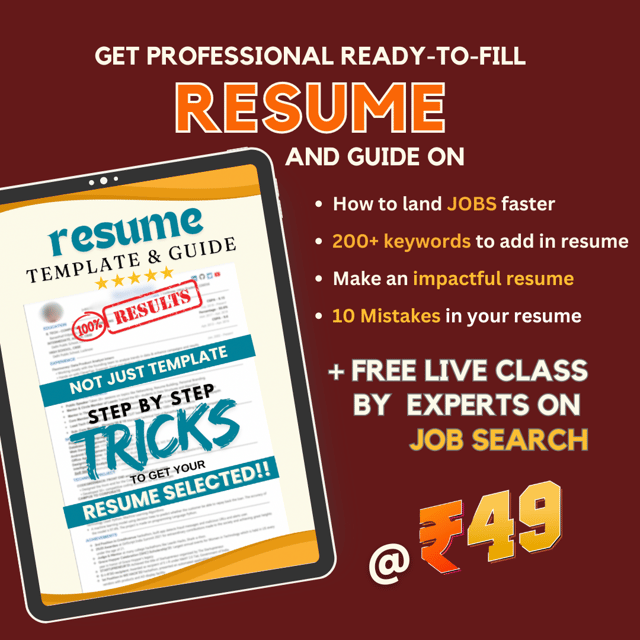
Resume Template + Guide To Multiple Calls
Early Career Resume Review ( till 3yr exp)
Resume Template + Guide To Multiple Calls
LinkedIn Message Templates
Optimise LinkedIn Profile
About me
- Mansi is praised for her informative and motivational career guidance. Her insightful advice and supportive nature significantly impact bookers' professional lives.
 AI-generated based on testimonials
Frequently asked questions
What is career guidance and counselling?
Career guidance and counselling is a structured process where a trained counsellor or mentor helps you understand your strengths, interests, and skills, and matches them to the right courses, jobs, and career paths. In India, students usually seek it after 10th or 12th, while freshers and early-career professionals use it for switches and growth decisions. A good session ends with a clear, realistic action plan — not just a list of options.
Why is career guidance important for students?
Most students pick streams and courses based on marks, peer pressure, or family expectations rather than aptitude. Career guidance helps students match their strengths with the right stream, course, and skills early, so they avoid wasted years and expensive course changes later. It also builds communication, soft skills, and profile strength alongside academics — things colleges rarely teach but recruiters expect.
Is career counselling worth it?
Yes, if you are confused between options, stuck in the wrong role, or getting rejected without clear feedback. A good counsellor gives an outside view of your strengths, a realistic roadmap, and interview readiness that free videos cannot personalize. Treat it as an investment — one right decision about a course, skill, or job switch can be worth far more than the session fee. It is less useful if you only want validation for a decision you have already made.
How does career guidance after 10th help you choose between Science, Commerce, and Arts?
The stream you pick after 10th shapes your course and job options for years, so it should not be a marks-only or peer-pressure decision. Career guidance after 10th typically includes an aptitude and interest assessment, a clear explanation of what each stream leads to, and how emerging fields like data, design, and digital marketing fit into each path. This helps students choose based on merit and genuine interest.
What does career guidance after 12th typically include?
A good session covers course-versus-career mapping (engineering, commerce, management, law, design, and newer options), entrance exams and timelines, backup options, and the skills you should build alongside your degree. With so many career paths now open beyond traditional courses, career guidance after 12th helps students compare options on actual job outcomes and their own strengths instead of following the crowd.
How do I find a reliable career guidance counselor near me?
Check the counselor's niche first — student guidance, early-career mentoring, and mid-career switching are different skills. Then verify their experience, real mentee reviews, and whether they offer a structured session with an action plan instead of generic advice. Ask for a short intro call or DM before paying. Also consider online 1:1 sessions — they let you work with counselors across India instead of limiting yourself to "near me" options, often at lower cost and with flexible timing.
Is a resume writing service worth it?
It can be, especially if you are getting few interview calls despite relevant qualifications — that usually points to a resume problem. Professionally reviewed, ATS-friendly resumes tailored to each role noticeably improve shortlist rates. Before paying, compare options: marketplace services like Naukri resume writing, AI tools, and independent coaches who do line-by-line reviews. Independent reviews are usually more personalized, while large services can be template-heavy. Whichever you choose, make sure the keywords match the jobs you are targeting — that matters more than design.
Which resume writing format works best for freshers?
A single-page, reverse-chronological format works best: contact details with a LinkedIn link, a clear career objective or headline, education with strong scores, projects and internships written with measurable outcomes, skills, and certifications. Use a clean single-column, ATS-friendly layout — graphic-heavy two-column templates often get misread by applicant tracking systems and silently rejected. Save it as a PDF, name the file professionally, and mirror keywords from each job description before sending.
How long does it take for a resume to be reviewed by recruiters?
The initial resume review usually happens within 24–72 hours of applying, but the full response depends on the hiring process — campus drives move in days, while regular openings can take one to two weeks. Keep in mind that the first human scan itself lasts only a few seconds, so your format, keywords, and achievements must be instantly scannable and ATS-readable. If you hear nothing after about 10 days, send one polite follow-up.
How long to wait after sending a resume before following up?
A gap of 5–7 working days is the standard wait before following up. If the job post mentions a deadline or a recruiter has given a timeline, wait until that passes first. Your follow-up should be short — restate your interest, add one new reason you fit the role, and attach your resume only if asked. Two follow-ups are the maximum; after that, put your energy into the next application instead.
Is AI resume writing good enough to get shortlisted?
AI resume writing is useful for fixing grammar, structure, and producing a quick first draft, but on its own it generates generic resumes that look like thousands of others, and it can add exaggerated or invented details that backfire in interviews. The smarter approach is AI for the draft, followed by a human review for role-specific keywords, genuine achievements, and ATS formatting. That combination performs far better than either one alone.
What is LinkedIn profile optimization?
It means improving your profile so LinkedIn's search algorithm ranks you for the roles you want: a keyword-rich headline, an About section that tells your story clearly, the right skills listed, experience written with results, and a complete, public profile. Recruiters search LinkedIn by keywords, so an optimized profile appears in their searches and attracts more InMails — while a half-filled profile stays invisible no matter how qualified you are.
How to do LinkedIn profile optimization to attract recruiters?
Start with the headline — add your target role and key skills instead of just a designation. Rewrite your About section with natural keywords, list relevant skills, and describe each experience with numbers and outcomes. Add a professional photo, custom URL, and job preferences, then stay active by posting or commenting in your field. Finally, view your profile the way a recruiter would and fix anything incomplete, because profile completeness directly affects search ranking.
Is there a free LinkedIn profile optimization tool that actually works?
Yes — LinkedIn's own profile strength meter, AI-based profile checkers, and Chrome extensions can flag missing sections, weak headlines, and keyword gaps for free. However, these tools give checklist-level feedback; they cannot judge whether your positioning matches your target role or how your story reads to a recruiter. Use a free LinkedIn profile optimization tool for the basics, and if you are still not getting profile views or recruiter messages, add a human expert review for the strategy layer.