Testimonials
Services
Data Scientist Toolbox Kit🤩

Shopeasy Ecommerce (Full Stack MERN Project)🤩
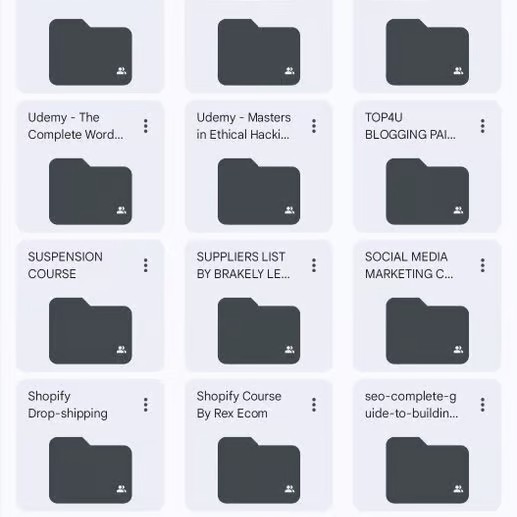
Ask me anything ✅and Get Replied in a Week 🚀
Boost your Career Growth 🚀
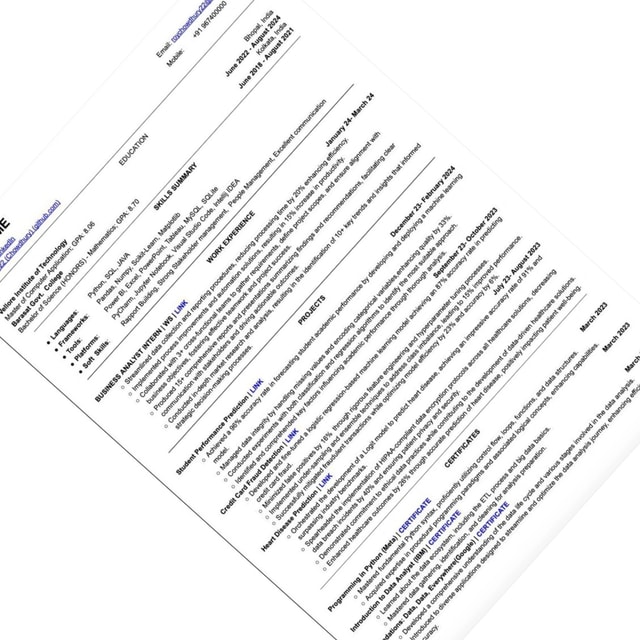
About me
- Change the World With Your Time. Come and Join Us!https://topmate.io/join/khusboo_tayal

Frequently asked questions
What is personal branding and why does it matter for your career?
Personal branding means intentionally shaping how recruiters, clients, and your industry perceive your skills, work, and expertise. In India's competitive job market, a strong personal brand helps you get noticed for placements, job switches, and freelance clients before you even apply. Think of it as your reputation made visible and consistent online.
How to use LinkedIn for personal branding and career advancement?
If you're wondering how to use LinkedIn for personal branding, start with three things: optimise your headline and About section around your core skills, post consistently about what you're learning or building, and engage meaningfully with people in your target industry. Share wins with context and lessons learned rather than one-line announcements. Two to three quality posts a week beat daily random content, and over time this visibility is what brings recruiter DMs and opportunities to you.
How to build a LinkedIn personal brand from scratch?
To begin, pick one clear niche — for example, web development, data analytics, or cloud — and rewrite your profile (headline, photo, About, featured section) to reflect it. Then document your journey publicly: projects, interview prep, internships, and lessons learned. People often ask how to build a LinkedIn personal brand that feels authentic — the answer is consistency plus a specific point of view, not follower count in the early months.
Should I hire a LinkedIn personal branding consultant or build my brand myself?
A LinkedIn personal branding consultant makes sense when you're short on time, targeting a specific outcome like client leads or a senior job switch, and can invest a budget. Students and early-career professionals can usually get most of the results themselves by studying strong profiles in their field and posting consistently. A practical middle path is to build the habit yourself and later take a focused 1:1 session to fine-tune your positioning and content strategy.
How to prepare for SQL interview questions?
If you're unsure how to prepare for SQL interview questions, master the fundamentals first — SELECT, joins, GROUP BY, subqueries, and window functions — and then practise writing real queries every day instead of just reading answers. Run them on sample datasets so you can explain the output and logic, not just the syntax. In the final week, revise high-frequency patterns like finding duplicates, the second-highest salary, and join-based aggregations.
What are the most common SQL interview questions for freshers?
Most SQL interview questions for freshers stay in the basic-to-intermediate zone: WHERE vs. HAVING, types of joins, primary key vs. unique key, DELETE vs. TRUNCATE vs. DROP, normalization, and query-writing tasks like the second-highest salary or finding duplicate records. Service-based and product companies in India rarely go beyond subqueries and window functions for fresher roles. Practise explaining your query logic out loud, since communication matters as much as the correct output.
How do SQL interview questions for 5 years experience differ from fresher-level questions?
SQL interview questions for 5 years experience test judgment, not definitions — expect query optimisation, execution plans, indexing strategies, handling very large tables, CTEs and window functions in depth, and database design trade-offs. Instead of "write a query to...", you'll hear scenario questions like "this report query is slow, how would you fix it?". Prepare real troubleshooting stories from your projects, because that's what interviewers at this level are probing for.
What SQL interview questions for data analyst roles should I expect?
SQL interview questions for data analyst roles focus heavily on aggregation, joins, date handling, and window functions — think month-over-month growth, running totals, top-N per group, and cohort-style queries. You'll often get a dataset and be asked to derive a business insight from it. Make sure you're fluent with GROUP BY, HAVING, CASE statements, and CTEs, since these appear in nearly every analytics round in India.
Where can I find SQL interview questions and answers for practice?
You can practise SQL interview questions and answers on platforms like LeetCode's SQL 50, HackerRank, and SQLZoo, where you actually run queries rather than just read them. Structured question banks with detailed, step-by-step explanations are also useful because understanding why a solution works is what interviewers really assess. Solve topic-wise — joins first, then subqueries, then window functions — instead of jumping around randomly.
How to start DSA with LeetCode as a complete beginner?
If you're figuring out how to start DSA with LeetCode, first get comfortable with one language (C++, Java, or Python), then begin with Easy problems on arrays, strings, and hashing. Follow LeetCode's built-in study plans like Top Interview 150 instead of solving randomly, and spend more time understanding the editorial solution than you spent attempting the problem. One to two problems a day for six months beats a cramming spree of fifty problems in a week.
What is a good DSA LeetCode roadmap for placements?
A practical DSA LeetCode roadmap for Indian placements follows this order: arrays and strings → hashing → two pointers and sliding window → stacks and queues → linked lists → binary search → recursion and backtracking → trees and BSTs → heaps → graphs (BFS/DFS) → dynamic programming → greedy. Give each topic one to two weeks with a mix of Easy and Medium problems, and revise older problems weekly. Most campus and off-campus interview rounds stay within these topics.
What are DSA LeetCode patterns and how do they help?
DSA LeetCode patterns are recurring problem-solving templates — sliding window, two pointers, fast and slow pointers, binary search on answer, BFS/DFS, backtracking, and the standard DP families. Learning by pattern is far more efficient than solving randomly, because most interview problems are a familiar pattern in disguise. Once you can quickly identify which pattern a new problem belongs to, you already know the skeleton of the solution.
How many DSA LeetCode problems should I solve before interviews?
There's no magic number, but 150–250 well-understood DSA LeetCode problems spread across all major patterns is enough for most placement and off-campus interviews. Solving 500 problems superficially helps less than deeply revising 150. Keep a list of problems you couldn't solve on your own and re-attempt them after two weeks — that spaced revision is what actually makes the concepts stick.
Is LeetCode best for DSA, or should I also practise on other platforms?
LeetCode is the closest match to actual interview questions, which is why most people treat it as the best single platform for DSA preparation. That said, pairing it with Codeforces or CodeChef builds speed under time pressure, and GeeksforGeeks helps with company-specific questions common in Indian hiring. If you stay consistent on LeetCode alone, that's perfectly fine too — consistency matters more than the platform choice.
Does LeetCode have solutions for every problem, and how much is LeetCode Premium?
Yes — LeetCode has solutions for most problems: every problem has a free Discuss section with community explanations, while official editorials and video solutions generally require Premium. On cost, LeetCode Premium is roughly $35 per month, with an annual plan (around $159) that works out much cheaper, though pricing can vary slightly by region. For most students preparing for placements, the free problems plus community solutions are genuinely enough — Premium mainly adds company-tagged questions and official write-ups.