Testimonials
Services
📘 Wipro WILP 2025 Complete Preparation Guide
InTimetec Interview Process & questions
Celebal Interview exp and PYQ asked
Mistakes you should avoid in Placement
Accenture Interview Experience& 52 unique PYQ's
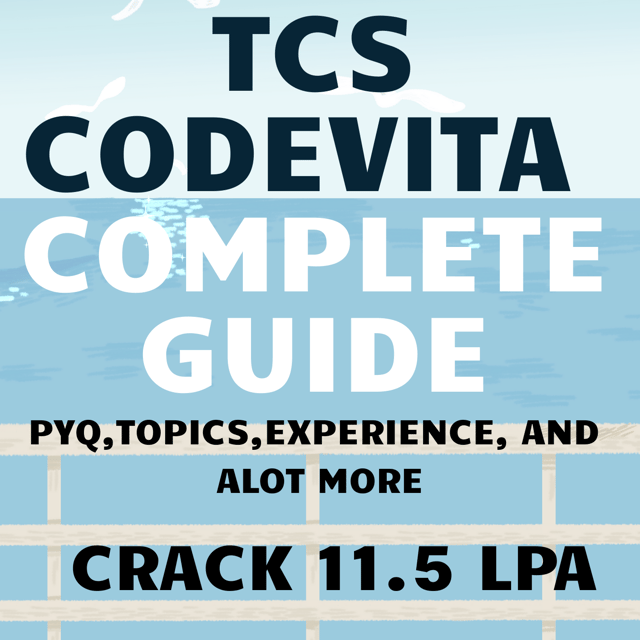
TCS CodeVita 2025 – Ultimate Preparation Guide
My college Hiring calendar
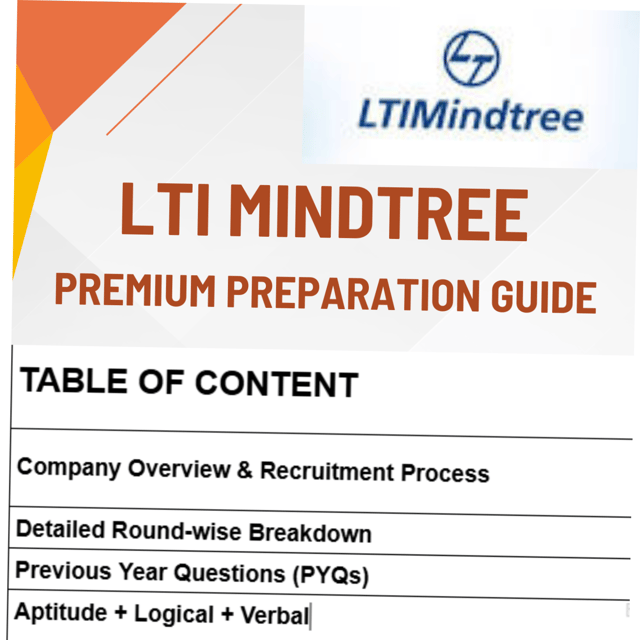
LTI Preparation Guide |PYQ + Coding + Experiences
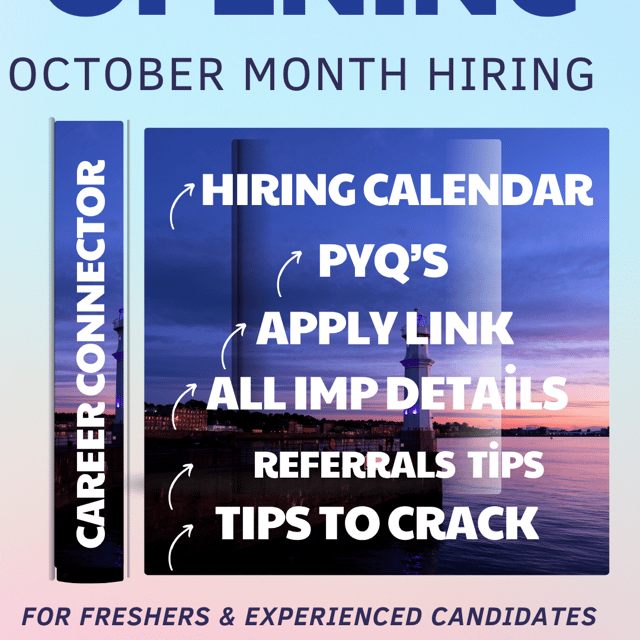
October Hiring Calendar (100+Apply Link shared)
Resume Scan and tips
How to crack off-campus opportunity?
Content creation Tips
Chat & Get Your Doubts Resolved 💬
Microsoft - Cold mail and linkedin msg
Microsoft Layoff 15,000 in 2months why?
HPE Interview Experience
ZS Campus beat & WatchGuard–My Insight & Resources
Hiring Calendar 2026
These 80+ AI Tools Will Make Your Life 10x Easier
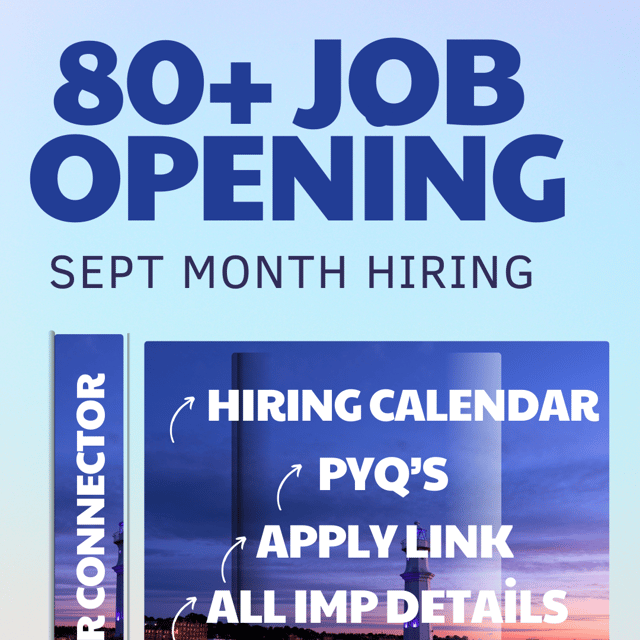
September Hiring Calendar (100+Apply Link shared)
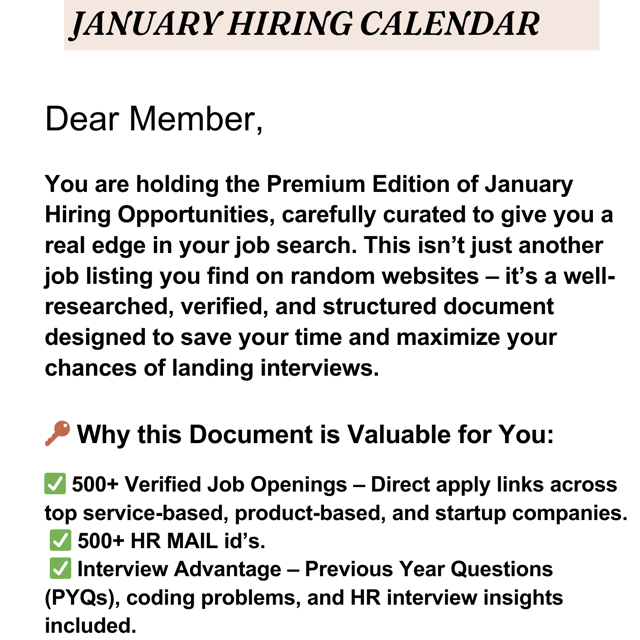
January Hiring calendar ( 1800+HR list shared)
ALL About TCS NQT
Interview Mock-ups
Interview Guidance
Ultimate Aptitude Guide – Quant, Logical, Verbal
About me
Frequently asked questions
How to start placement preparation from scratch?
Start by understanding the placement timeline — most campuses begin drives from the seventh semester, so give yourself at least 4–6 months. Begin with daily aptitude practice (quant, logical, verbal), build your coding and DSA basics, revise core subjects like DBMS, OS and computer networks, and create a one-page resume with one or two strong projects. In the final phase, switch to company-specific previous questions and mock interviews. Following a sequence instead of studying randomly is what helps students get placed early.
What is placement prep and what should it include?
Placement prep is the structured preparation you do for campus and off-campus hiring. It includes aptitude training, coding and DSA practice, core CS subjects, resume and project building, company research, and mock interviews. Service-based companies lean more on aptitude and basics, while product companies test deeper problem solving, so your plan should match the type of company you are targeting.
Which subjects matter most in placement preparation for CSE?
Good placement preparation for CSE rests on five pillars: data structures and algorithms, core subjects (DBMS, operating systems, computer networks, OOPs), one or two well-explained projects, quantitative and logical aptitude, and communication for HR rounds. Service companies weight aptitude and basics heavily, while product companies go deep into DSA and fundamentals, so prioritise accordingly.
What should a good placement preparation course include?
A worthwhile placement preparation course should offer a clear month-by-month roadmap, aptitude from basics to advanced, DSA with solved problems, resume and project guidance, company-specific previous year questions, and mock interviews with feedback. Also check whether the material is updated for the current hiring season — outdated drive patterns waste months of effort.
Which placement preparation website should I use for practice?
No single placement preparation website covers everything, so combine a few: a coding platform for DSA practice, an aptitude drill site for quant and reasoning speed, and sources for company-specific PYQs and interview experiences. Add a hiring calendar to track application deadlines so your practice actually converts into interviews.
What are placement papers and how should I use them?
Placement papers are previous years' question papers or memory-based questions shared by candidates who appeared for a company's hiring test — companies like TCS, Infosys, Accenture and LTI see a lot of pattern repetition. Use them to understand the exam pattern, difficulty level and time pressure, and then solve them in timed conditions. Reviewing placement papers before the actual test is one of the highest-ROI steps in preparation.
How to get off campus placement as a fresher?
Getting an off campus placement needs consistency more than luck: build the skills companies test, keep your resume and LinkedIn updated, and apply regularly through company career pages, job portals and LinkedIn. Track hiring calendars and drive announcements, ask seniors and alumni for referrals, and send polite, specific messages to HRs. Expect online assessments before interviews, so keep your aptitude and coding sharp throughout.
What is the process of off campus placement, step by step?
The off campus placement meaning is simple — instead of companies coming to your college, you apply to them directly through career portals, drive links, job portals or referrals. The process usually works like this: shortlist companies and track their drive dates, apply before deadlines, clear an online assessment (aptitude plus coding), go through technical and HR interview rounds, and then receive and accept the offer. Documentation and joining formalities are handled directly with the company.
What is on campus placement and how is it different from off campus?
On campus placement is when companies visit your college, and only eligible students — usually those meeting CGPA and backlog criteria — can sit for those drives, with the placement cell coordinating everything. Off campus, by contrast, means you find and apply to opportunities yourself, which gives you the freedom to target any company but requires you to manage applications, deadlines and preparation on your own. Many students use both routes in the same season.
Where can I find off campus placement for freshers 2026?
For the 2026 season, watch the career pages of mass recruiters, LinkedIn posts from HRs, job portals, and crowdsourced hiring calendars that compile active drives and HR contacts in one place. College placement cells and alumni networks also share drive links. Apply within the first few days of a drive opening — online assessment slots often fill quickly.
What is interview prep and when should I start it?
Interview prep is the focused phase where you prepare for the actual interview rounds: revising DSA patterns, core subjects and your projects, drafting answers to common HR questions, researching the company, and doing mock interviews. Keep your fundamentals in shape months in advance, and start company-specific interview prep about one to two weeks before your scheduled rounds.
How do I do interview preparation for freshers with no work experience?
Interviewers don't expect freshers to have corporate experience — they evaluate how well you know what you have done. Interview preparation for freshers should focus on explaining your academic projects end to end, internship or club work, DSA and subject basics, and structured answers to questions like "tell me about yourself". Do a few mock interviews with a senior or mentor so you can speak about your resume confidently.
Which interview preparation questions are asked most in fresher interviews?
The most repeated interview preparation questions are "tell me about yourself", "why should we hire you", strengths and weaknesses, and detailed walkthroughs of your projects. Technical rounds typically probe arrays, strings, linked lists and DBMS or SQL basics, with puzzles in some companies. Keep two or three stories from college ready that show teamwork or leadership, and always have a question ready to ask the interviewer at the end.
Are interview preparation AI tools actually useful for freshers?
Yes, if you treat interview preparation AI tools as practice partners rather than a replacement for real preparation. They are useful for generating likely questions for a specific role, polishing your "tell me about yourself" answer, getting resume feedback, and simulating a first HR round. However, they cannot fully judge your communication under pressure or company-specific expectations, so pair them with a few live mock interviews with humans.
Are interview preparation classes near me worth joining, or is online guidance enough?
If you are searching for interview preparation classes near me, you are probably looking for structure, and a fixed classroom schedule does help some students stay consistent. That said, most placement-focused guidance today happens online — 1:1 mock sessions, doubt-clearing calls and webinars with mentors who have cleared these processes recently. Decide based on what you lack: take a class if you need discipline and basics, and choose personalised online mentoring if you need targeted feedback before specific interviews.