Testimonials
Services

German Telc - B1 Exam Prep – How to Ace Speaking ?
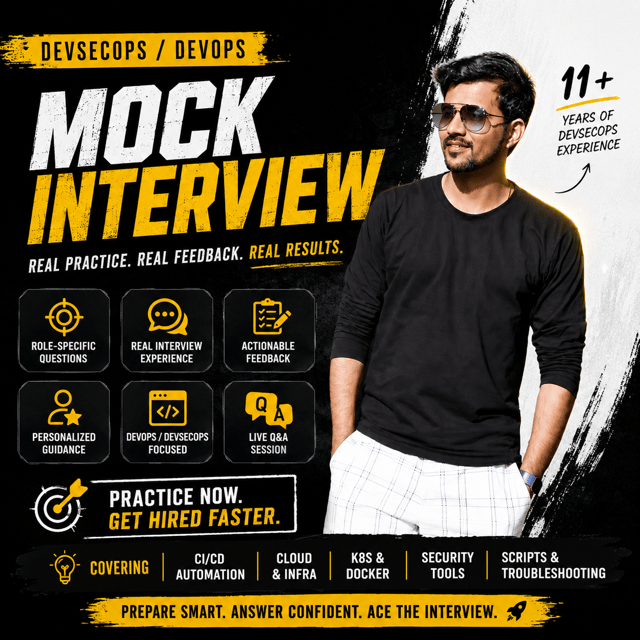
DevSecOps/DevOps Mock interview + Expert FeedBack

DevOps/DevSecOps Resume Preparation

Germany Relocation - Starter Package


German Telc - A2/B1 Exam Prep – Learn the Pattern

Ace German Telc B1 Exam
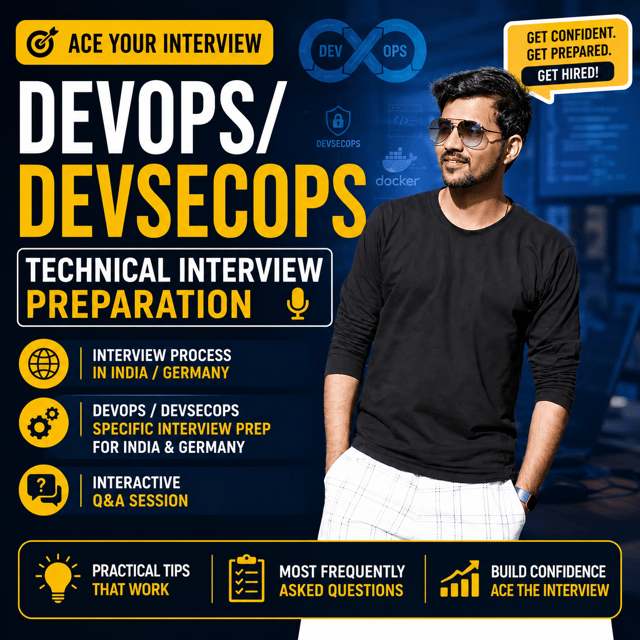
DevOps/DevSecOps - Technical Interview Preparation



About me
- Karthik Seenuvasan - LinkedInhttps://www.linkedin.com/in/karthik-seenuvasan?utm_source=share&utm_campaign=share_via&utm_content=profile&utm_medium=android_app

Frequently asked questions
Is DevOps a good career in India, both now and for the future?
Yes, for most engineers it remains one of the stronger IT career choices because every company running cloud infrastructure needs people who can automate, deploy and secure applications. Pay is typically higher than pure support or testing roles at the same experience level, and the skills transfer across industries. Looking at a DevOps career in the future, the work is evolving toward platform engineering and security, so engineers who keep adding cloud, Kubernetes and DevSecOps skills stay relevant rather than becoming obsolete.
Is DevOps in demand in India and abroad?
Yes. India has a strong market for DevOps roles across IT services, product companies, BFSI and GCCs, and countries like Germany, the Netherlands and the UAE actively hire DevOps engineers from India. Demand is highest for engineers who combine CI/CD, one major cloud, containers and infrastructure-as-code, and it keeps growing as security gets folded into the role. Since hiring is skills-driven, hands-on projects and demonstrable pipelines matter more than the number of tools listed on a resume.
How to start a DevOps career with no prior experience?
Start with the foundations — Linux, networking and one scripting language like Bash or Python — then pick one cloud (Azure or AWS), learn Git, Docker, Kubernetes basics and a CI/CD tool such as Jenkins or GitLab CI, and tie it all together with a few demo-able projects. A practical DevOps career roadmap looks like this: foundations → cloud basics → containers → CI/CD → monitoring → security. Certifications like Azure AZ-104 or AWS SAA help you get shortlisted, but a GitHub portfolio with working pipelines is what convinces hiring managers.
What is a DevOps job role, and what does a DevOps engineer actually do day to day?
A DevOps engineer builds and maintains the pipelines and infrastructure that let development teams ship software quickly and reliably. In practice that means creating CI/CD pipelines, writing infrastructure as code, managing containers and Kubernetes, setting up monitoring dashboards, automating deployments and, increasingly, embedding security scanning into the pipeline. It is a role that sits between development and operations, so strong troubleshooting and clear communication matter as much as tool knowledge.
Does DevOps pay well in India compared with other IT roles?
Generally yes. DevOps roles usually pay more than support or manual testing roles at the same experience level because the skill set is harder to find, and salaries rise sharply once you add cloud architecture, Kubernetes and security skills. DevOps career growth is also faster in the early and mid-career stages — engineers often move into lead, SRE, platform engineering or DevSecOps positions within a few years, which pushes compensation up further.
Are remote DevOps careers realistic for engineers based in India?
Yes, but with caveats. Indian product companies and GCCs hire fully remote DevOps engineers regularly, and some foreign startups hire contractors from India, though those roles usually expect overlap with European or US hours, strong communication and proven independent delivery. The most realistic path is to build two to three years of hands-on experience, maintain a public portfolio of pipelines and infrastructure code, and then target remote-first companies directly instead of relying only on generic job portals.
What are the most common DevSecOps interview questions for experienced professionals?
Expect questions on integrating security into CI/CD — when and how to run SAST, DAST and SCA scans, how you handle false positives, and how you secure secrets and container images. Interviewers also probe shift-left culture, OWASP Top 10 vulnerabilities, Kubernetes and infrastructure security, and how you get developers to fix issues without slowing releases. For senior roles, be ready to walk through a real pipeline you built and explain the exact security controls you added at each stage.
How should I plan my DevSecOps interview preparation?
Structure it in three layers. First, revise DevOps fundamentals — CI/CD, Docker, Kubernetes, one cloud and one IaC tool — because DevSecOps questions assume these basics. Second, go deep on security tooling and concepts such as SAST, DAST, SCA, secrets management, image scanning and compliance. Third, practise explaining real scenarios out loud, ideally through a mock interview with someone who works in the field, because experienced interviewers test how you think through trade-offs, not just how many tool names you can recite.
How to get a job in Germany from India?
The most common route is to apply directly to German companies or through referrals while you are still in India, targeting roles where English is the working language, and then relocate on an EU Blue Card once the salary threshold and degree requirements are met. Most jobs in Germany for software engineers and DevOps profiles are concentrated around Berlin, Munich, Frankfurt, Hamburg and Stuttgart. While many IT roles run in English, learning German up to A2 or B1 noticeably improves your chances with employers and in daily life.
How do I find jobs in Germany with visa sponsorship as an Indian professional?
Focus on employers who routinely hire non-EU talent — large enterprises, established product companies and startups that already relocate engineers — and use portals like LinkedIn, StepStone and Make it in Germany with the right filters. Jobs in Germany with visa sponsorship for Indians usually require a relevant degree, a salary that meets Blue Card thresholds and clearly demonstrable skills, so a well-structured English CV, an optimised LinkedIn profile and referrals from people already working in Germany dramatically improve response rates.
Are there jobs in Germany for Indian freshers?
Honestly, the fresher market is much tougher than the experienced market because German employers prefer candidates who can work independently from day one. Realistic options include pursuing a master's degree in Germany (which comes with a post-study work permit), working-student and internship roles, and structured trainee programmes. Compared with other jobs in Germany for Indians, IT and engineering roles offer the clearest pathway, so building strong projects and starting the German language early while still in India makes a fresher profile far more competitive.
What is a mini job in Germany?
A mini job is a small part-time job in Germany with a monthly earnings cap, and it is largely tax-free for the employee. Common examples are café work, deliveries, office assistance or household help. They are mainly taken up by students, spouses of relocated employees and people easing back into work — it is not a route to a full-time career. If you are relocating to Germany with family, a mini job is often how a spouse builds income and local work experience before moving into a proper role.
How difficult is the Telc B1 exam, and how do I clear the speaking part?
Telc B1 is very manageable if your preparation is structured, because the format is fixed: reading, listening, grammar (Sprachbausteine), writing and a paired speaking exam. The speaking part is where most candidates struggle, since it tests a short talk about yourself, a discussion and a joint planning task with a partner. The fix is pattern familiarity — learn the exact exam structure, rehearse the typical speaking tasks with a timer and a partner, and prepare reusable phrases for agreeing, disagreeing and making suggestions. Candidates who only study grammar usually underperform here.
Is B1 German enough to work and live in Germany?
For many IT jobs at international companies, yes — plenty of software and DevOps roles run fully in English, and B1 comfortably covers daily life, bureaucracy and social situations. B1 is also the level commonly expected for permanent residency and citizenship applications, so reaching it early pays off twice. If you are targeting traditional German enterprises, they often prefer B2 and above, so treat B1 as your entry ticket and keep improving after you land.