Testimonials
Services

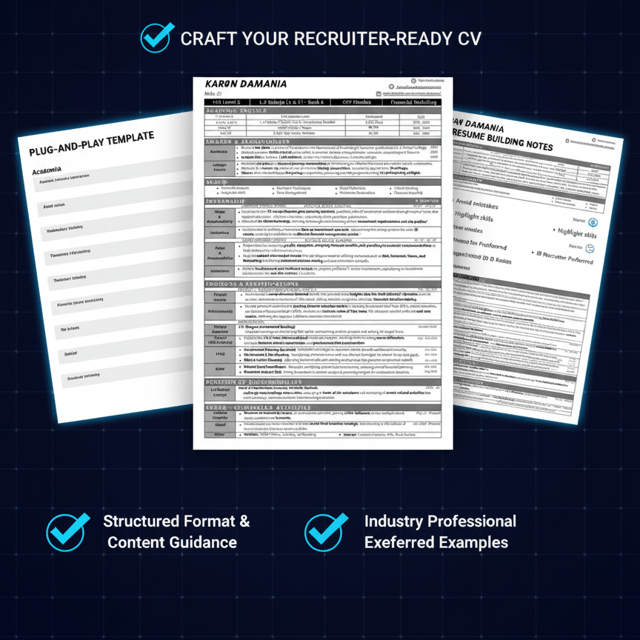


Ultimate 5 IB Project Package
Investment Banking Discovery Call

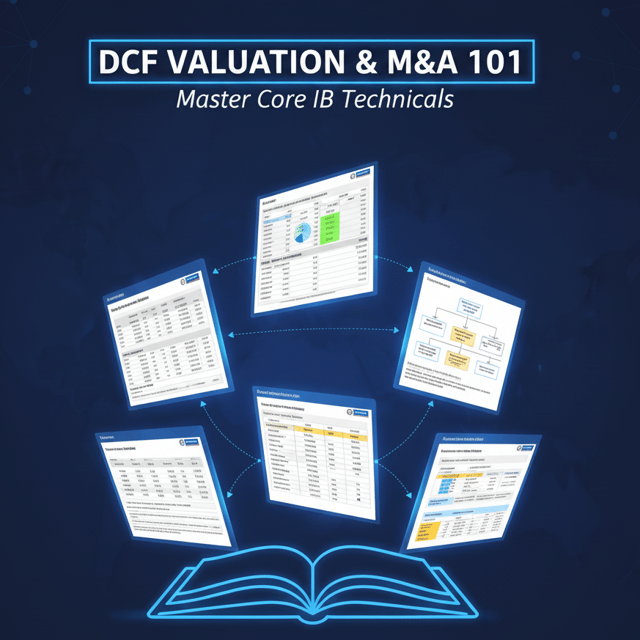
DCF Valuation & Mergers & Acquisition 101
The Investment Banking Ultimate Guide
About me
Frequently asked questions
How to get into investment banking?
Getting into investment banking usually comes down to three things: technical skills (accounting, valuation, financial modeling), relevant experience (finance internships, live projects, or case competitions), and networking with bankers who can refer you. In India, most entry points are campus placements from target colleges, off-campus applications to investment banking wings of banks, or starting in equity research, Big 4 valuation, or consulting teams and moving internally. A structured plan — learn the fundamentals, build 2–3 solid models or projects, polish a one-page resume, and reach out to professionals for referrals — beats blindly applying on job portals.
How to crack an investment banking interview?
To crack an investment banking interview, prepare in three layers: technicals (accounting, valuation, DCF, merger math), your story (why banking, why this firm, walk me through your resume), and firm knowledge (recent deals, market news). Most candidates fail not because they lack knowledge but because they memorize definitions without being able to apply them under pressure. Practice answering out loud, solve numbers on paper, and do mock interviews — give yourself at least 4–6 weeks of focused prep if you're starting from scratch.
What is an investment banking interview like?
An investment banking interview typically has two parts: technical rounds and fit/HR rounds. Technicals cover the three financial statements, valuation methods like DCF and comparables, and quick on-the-spot calculations, while fit rounds test your motivation, resume claims, and how you handle pressure. In India, interviews often move fast — sometimes 15–30 minutes — with interviewers probing anything you've written on your CV. It feels intense but is highly predictable: the questions follow well-known patterns, so structured preparation goes a long way.
What are the most common investment banking interview questions?
The most common investment banking interview questions fall into four buckets: accounting (walk me through the three financial statements, how does depreciation affect them), valuation (how do you value a company, walk me through a DCF), mental math and guesstimates, and fit questions like "Why investment banking?" Interviewers often add questions on a recent deal or market development, so follow business news regularly. Building a bank of 30–40 polished answers across these areas covers most of what you'll face.
How to answer investment banking interview questions?
The best way to answer investment banking interview questions is to structure every response: give the direct answer first, then explain the reasoning step by step. For technical questions, learn the underlying logic instead of memorizing lines, because interviewers deliberately push one or two "what if" follow-ups to test depth. For fit questions, use short stories with a clear situation, action, and result. Practice speaking your answers aloud under time pressure — knowing an answer and delivering it confidently are two different skills.
Are investment banking interview questions for freshers different?
Yes — investment banking interview questions for freshers focus more on fundamentals, trainability, and hunger to learn, while experienced candidates get grilled on deal sheets, modeling tests, and past transactions. As a fresher, expect accounting basics, simple valuation logic, guesstimates, and plenty of "why banking" questions, since interviewers are judging whether you can be trained. You won't be expected to know advanced M&A modeling, but you should be able to explain a DCF, talk through the financial statements, and show genuine interest through internships, projects, or finance clubs.
Is it enough to prepare from an investment banking interview questions and answers PDF?
An investment banking interview questions and answers PDF is a good starting point, but it's rarely enough on its own. Interviewers can tell the difference between memorized answers and genuine understanding the moment they ask a follow-up. Use the PDF to identify question patterns and answer structures, then rewrite every answer in your own words, practice speaking aloud, and test yourself on variations. Pair it with mock interviews and hands-on modeling practice, and you'll be far better prepared than someone who only reads.
What is a DCF valuation model?
A DCF (Discounted Cash Flow) valuation model estimates a company's worth by projecting its future free cash flows and discounting them back to today using a required rate of return, typically the WACC. The logic is simple: a business is worth the cash it will generate over its lifetime, adjusted for time and risk. It's considered one of the most fundamentally sound valuation methods because it relies on the business itself rather than market mood, which is why it's a core topic in investment banking interviews and coursework.
How to do a DCF valuation of a company?
To do a DCF valuation of a company, follow five broad steps: project free cash flows for 5–10 years, estimate the terminal value, choose a discount rate (usually WACC), discount everything to present value, and sanity-check the output against the company's market price and comparable peers. The hard part is the assumptions — growth rates, margins, and the discount rate — not the Excel mechanics. Build the model yourself at least once so you understand how each driver moves the valuation, because interviewers will almost always ask you to defend your assumptions.
What is the DCF valuation formula?
The DCF valuation formula is: Enterprise Value = Σ [FCF ÷ (1 + r)^t] + [Terminal Value ÷ (1 + r)^n]. In plain terms, you take each year's projected free cash flow (FCF), discount it by the required rate of return (r, typically WACC) for each year (t) of the forecast, add a terminal value for everything beyond the projection period, and discount that as well. Subtracting net debt from enterprise value gives you equity value. The formula looks simple — the real work sits in the forecast and the discount rate.
What is financial modeling and valuation?
Financial modeling is the process of building a spreadsheet-based representation of a business — its revenue, costs, cash flows, and funding structure — so you can forecast performance and test scenarios. Valuation is the layer on top of that: using the model to estimate what the business is worth through methods like DCF, comparable companies, and precedent transactions. Together they form the core skill set for investment banking, equity research, private equity, and corporate finance roles, which is why recruiters treat them as essential for finance candidates.
How to learn financial modeling?
The fastest way to learn financial modeling is by building, not just watching tutorials. Start with Excel fundamentals and accounting basics, then progress step by step: a simple sales model, a three-statement model, then a DCF and a merger model. Rebuild each model from a blank sheet without templates and practice on real listed companies to make the skills stick. Consistency beats intensity — 45–60 focused minutes a day for a couple of months works far better than a weekend binge, and your finished models double as proof of skill in interviews.
How to build a financial model in Excel?
To build a financial model in Excel, start with a clean structure: separate tabs for assumptions, the income statement, balance sheet, cash flow, and supporting schedules. Drive everything from the assumptions tab so changes flow through the entire model, keep inputs visually separate from formulas, and never hard-code numbers inside calculations. Reconcile the balance sheet, stress-test with scenarios, and add simple checks so errors surface quickly. Mastering shortcuts along with functions like XLOOKUP, INDEX-MATCH, and Goal Seek makes the whole process dramatically faster.
What is a financial modeling course?
A financial modeling course is a structured program that teaches you to build and interpret business models in Excel — typically covering accounting foundations, three-statement modeling, DCF valuation, comparables, and sometimes M&A modeling. A good course is hands-on, makes you build models from scratch, and ends with projects you can show recruiters. Before enrolling, check whether the curriculum includes practical case work and feedback, because a certificate matters far less than the ability to actually build and explain a model in an interview.
Is the Financial Modeling & Valuation Analyst (FMVA) certification worth it?
The Financial Modeling & Valuation Analyst (FMVA) certification can be worth it if you're a student or early-career professional who needs a structured, recognized way to learn modeling and add a credential to your resume. Its main value is the practical Excel and valuation training rather than the certificate itself. If you already have strong modeling skills or hands-on finance projects, you may get more out of building a portfolio of models instead. Recruiters ultimately test what you can do in the interview room, so whichever route you pick, make sure you can build and defend a model from scratch.