Testimonials
Services
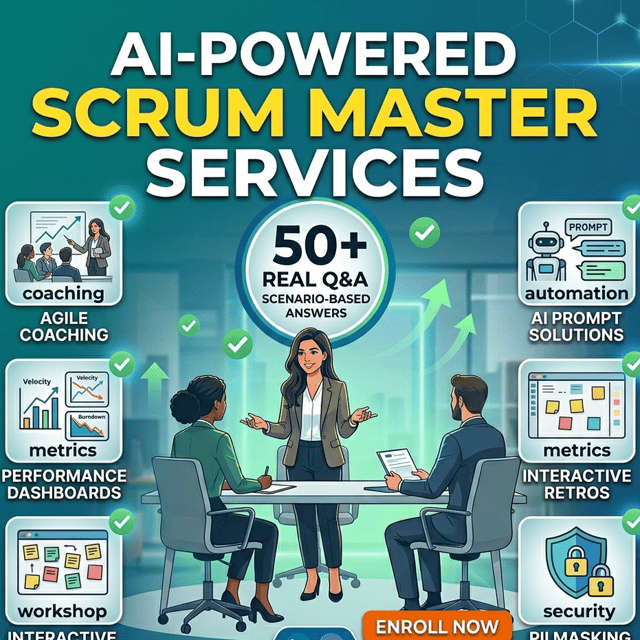
Top 50 Scrum Master Interview Questions
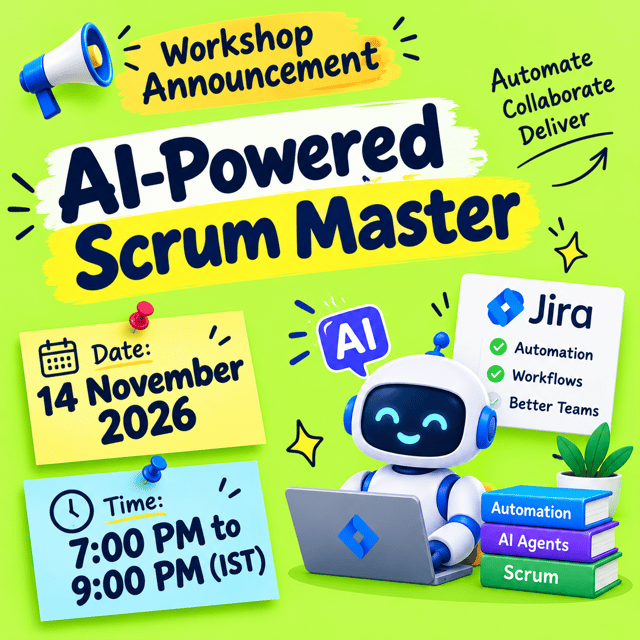
AI-Powered Scrum Master
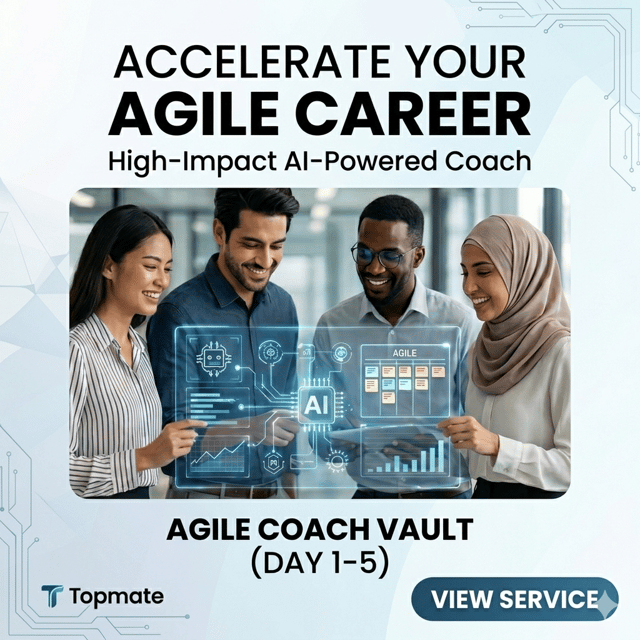
Exclusive 5-Day Scrum Master Bootcamp-Resources

The AI-Powered Scrum Master
About me
Frequently asked questions
How to crack a Scrum Master interview?
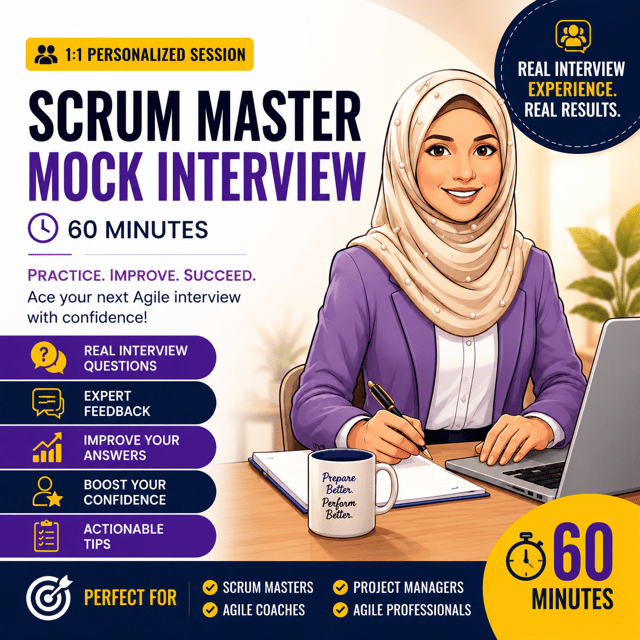
Focus on practical application rather than definitions. Interview panels usually test three things: how well you know Scrum theory (roles, events, artifacts), how you handle real team situations, and how clearly you communicate. Prepare 8–10 real stories from your work — conflicts you resolved, impediments you removed, deadlines you protected — and frame them using the STAR method. Revise the Scrum Guide, practice the most-asked questions, and complete at least a couple of mock interviews before the actual one; confidence and storytelling are usually what separate selected candidates from rejected ones.
How to crack a Scrum Master interview without experience?
Be honest about your experience but strong on transferable skills. Hiring managers readily consider candidates from developer, QA, business analyst, support, and project coordination backgrounds if you can show facilitation, stakeholder handling, and delivery ownership. Get certified (PSM I or CSM) to validate your fundamentals, learn the basics of Jira and Agile tooling, and prepare stories that show leadership even without the official title. Then rehearse your answer to "You have never been a Scrum Master — why should we hire you?" — mock interviews are the fastest way to make that answer convincing.
What are the most common Scrum Master interview questions and answers?
Most interviews rotate around the same themes: Scrum roles, events, and artifacts; the difference between Scrum and Kanban; handling an underperforming or disengaged team member; velocity vs capacity; managing scope changes mid-sprint; and resolving conflicts between developers or with stakeholders. Prepare your own answers with real examples instead of memorizing definitions — interviewers can spot rehearsed theory instantly. Many candidates also keep a well-organized Scrum Master interview questions and answers PDF for quick revision in the final week, but make sure it explains the reasoning behind each answer, not just the answer itself.
How do I answer scenario-based Scrum Master interview questions?
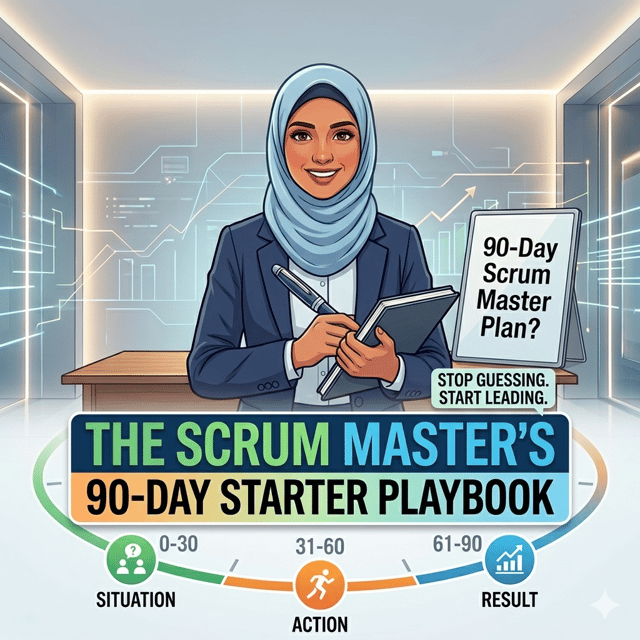
Treat every scenario question as a test of how you think, not what you memorize. Structure your answer as the situation, the action you took as a servant leader, and the result — ideally with a metric or observable outcome. Panels look for a coaching mindset, data-driven decisions, and whether you protect Scrum values under pressure, so avoid answers where the Scrum Master becomes a command-and-control manager. The best preparation is speaking your answers out loud with a peer or mentor, because scenario questions quickly expose candidates who know theory but have never handled a real team.
How should I plan my Scrum Master interview preparation?
Give yourself at least 3–4 weeks and split it into phases. Week 1: revise Scrum fundamentals from the Scrum Guide and your certification material. Week 2: build a personal story bank of 8–10 situations covering conflict, impediments, deadlines, and stakeholder management. Week 3: practice the top interview questions, including scenario-based ones, and refine your resume around the role's keywords. Week 4: do mock interviews, research the specific company's Agile maturity, and prepare questions to ask the panel. A structured plan consistently outperforms last-minute cramming.
How to get a Scrum Master job without experience?
Start with internal transitions — the first Scrum Master job most people land comes from within their current company, where they already know the domain and the people. Express interest to your reporting chain, volunteer to facilitate standups, retrospectives, and sprint planning, and get certified to signal seriousness. Externally, target associate or junior Scrum Master roles, optimize your resume and LinkedIn with keywords from actual job postings, and stay active in Agile meetups and communities where referrals happen. Without direct experience, your resume, certification, and interview storytelling have to carry the weight — so invest in all three.
How to start a Scrum Master career?
Follow a simple sequence: understand what the role involves day to day, get trained on Scrum fundamentals, earn a recognized certification like PSM I or CSM, and build facilitation and coaching skills through practice — meetups, volunteering, or internal team ceremonies. Alongside, learn the tools recruiters expect (Jira, Confluence, basic delivery metrics) and start applying for junior or associate positions while networking in Agile communities. Treat your first role as a learning platform — skills like AI-enabled Scrum practices are quickly becoming the differentiator for faster growth.
What does a Scrum Master career path look like?
A typical progression runs from Scrum Master to Senior Scrum Master, then to Agile Coach or Release Train Engineer, and onwards to roles like Agile CoE lead or delivery leadership. Many professionals also branch sideways into Product Owner, delivery manager, or Agile consulting positions after a few years. Progression depends less on titles and more on how well you coach teams, handle organizational impediments, and demonstrate measurable business impact. Adding niche expertise — for example AI-driven Agile practices — can significantly accelerate movement into senior and coaching roles.
What jobs can you get with a Scrum Master certification?
A Scrum Master certification opens doors to roles like Scrum Master, Associate Scrum Master, Agile Coach (with experience), Delivery Lead, and Release Train Engineer if you add SAFe certifications. It also strengthens applications for Project Manager, Product Owner, and Agile Business Analyst positions in Agile-driven organizations. In India, IT services companies, product startups, banking, and consulting firms actively hire for these roles. The certification alone will not get you the job — pairing it with practical facilitation skills and interview readiness is what converts.
What does a typical Scrum Master job description include?
Most postings in India include facilitating all Scrum events, removing impediments, coaching teams on Agile and Scrum principles, shielding developers from disruptions, tracking metrics like velocity and burndown, and coordinating with stakeholders and other teams. Job descriptions commonly ask for a certification (PSM, CSM, or SAFe), familiarity with Jira, and relevant experience. Read each posting carefully before applying and mirror its keywords in your resume — recruiters and applicant tracking systems filter heavily on exact keyword matches.
How much does a Scrum Master make?
It depends on experience, city, certification, and the type of company. Early-stage Scrum Masters in India usually start modest, while professionals with 5–10 years of experience in IT hubs like Bengaluru, Hyderabad, and Pune command significantly higher packages, especially in product companies and MNCs. Certifications, strong interview performance, and in-demand skills such as AI-powered Agile practices push you toward the top of the pay band. Check current salary reports on job portals for role-specific and city-specific figures before negotiating.
What is the main reason for the Scrum Master to be at the Daily Scrum?
The main reason is to ensure the Daily Scrum stays effective — the Scrum Master attends to coach the Developers on self-management, keep the discussion focused and within the 15-minute time-box, and help the team surface impediments early. Importantly, the Daily Scrum is not a status report to the Scrum Master; it is a planning and inspection session owned by the Developers to track progress toward the Sprint Goal. This distinction between "running a status meeting" and "coaching self-management" is exactly what interviewers want to hear.
What is AI in Agile?
AI in Agile refers to using artificial intelligence — generative AI, automation, and increasingly AI agents — to make Agile ways of working faster and smarter. Practical examples include drafting user stories and acceptance criteria, summarizing standups and retrospectives, analyzing sprint data, automating repetitive Jira updates, and generating insights from stakeholder feedback. The key point: AI supports the Agile mindset, it does not replace it. Teams still need humans who can coach, facilitate, and make judgment calls — which is exactly why Scrum Masters who understand AI are becoming more valuable, not less.
How to use AI in Agile as a Scrum Master?
Start with the work you already do every week. Use AI to draft and refine backlog items, generate retrospective formats, summarize long stakeholder threads, and prepare sprint reports; use AI features inside tools like Jira to automate updates and surface bottlenecks. Build a small personal prompt library for recurring Scrum tasks — sprint planning, risk flags, coaching questions — so your output stays consistent. Practicing these openly also gives you strong, current interview answers, because employers are actively looking for Scrum Masters who bring an AI edge rather than textbook Scrum.