Testimonials
Services
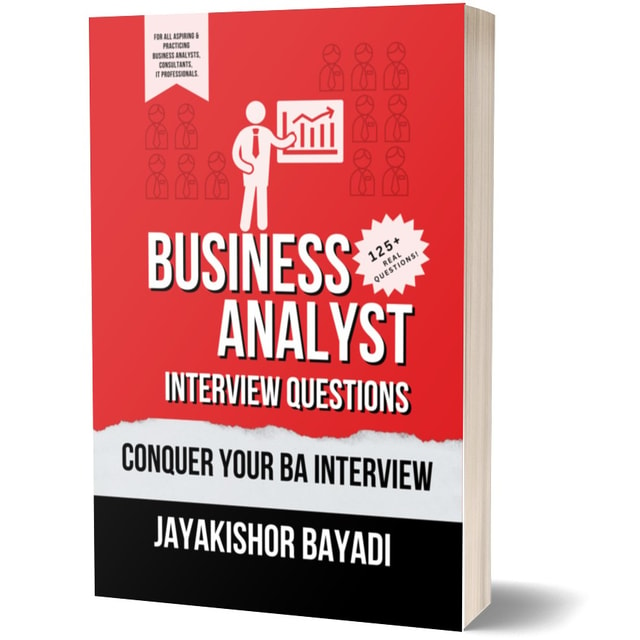
Business Analyst Interview Questions - Free Guide
Have Questions?
1-1 BA or D365 CE Functional Mock Interview
1-1 Generic IT Career Guidance For Freshers
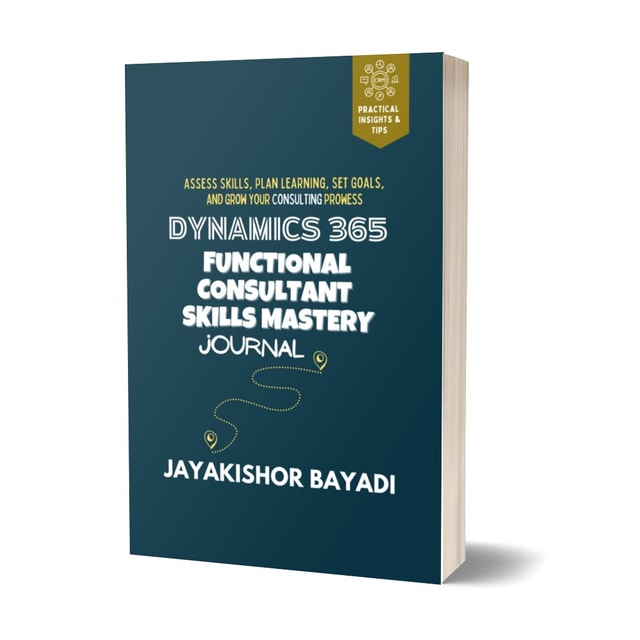
D365 Functional Consultant Skills Mastery Journal
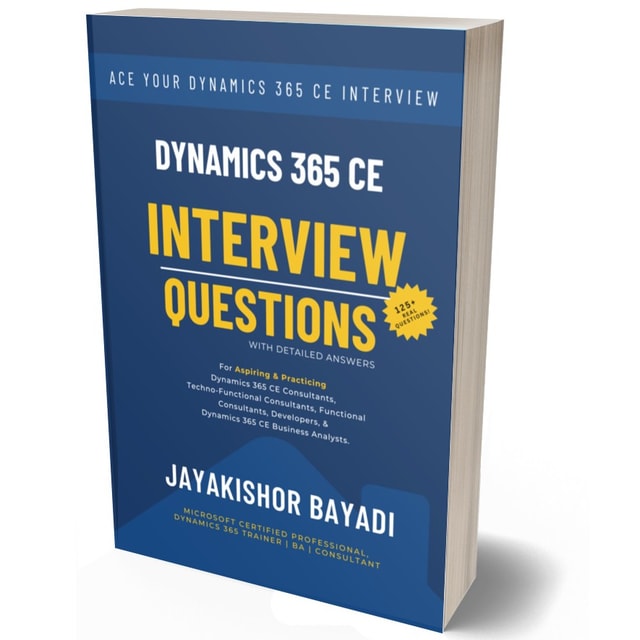
Dynamics 365 CE Interview Questions - Free Guide
Discovery Call - BA Roadmap & Clarification
1-1 Guidance on Transition as BA/D365 Consultant
About me
- Buy My Book | Subscribe to My LinkedIn Newsletterhttps://linktr.ee/jayakishorbayadi

Frequently asked questions
What is business analysis in simple words?
In simple words, business analysis is the process of understanding a business problem, studying how the current process works, and clearly defining what needs to change so that the IT team can build the right solution. A business analyst acts as the bridge between business stakeholders and technical teams. It is important because unclear or incomplete requirements are one of the biggest reasons IT projects fail, and a good BA prevents exactly that.
Business analysis vs business analytics — what is the difference?
Business analysis focuses on understanding business problems, processes, and requirements, and recommending process or software solutions. Business analytics focuses on data — using Excel, SQL, Python, and Power BI to find insights and patterns. In the Indian IT industry, a BA role revolves around requirements gathering, documentation, and stakeholder management, while an analytics role is numbers and data heavy. Choose business analysis if you enjoy talking to people and structuring problems; choose analytics if you enjoy working with data.
What is a business analysis course?
A business analysis course teaches the core skills needed for the BA role — requirement elicitation, writing BRDs/FRDs and user stories, process mapping, SDLC and Agile/Scrum basics, stakeholder communication, and tools like JIRA with basic SQL. For freshers in India, the most useful business analysis course is a practical, scenario-based one with real project examples and feedback, rather than a purely theoretical one. Structured practice journals or mentor-led sessions often deliver better results than passively watching videos.
Which business analysis fundamentals should a fresher focus on?
Focus on these business analysis fundamentals: SDLC and Agile basics, requirement gathering techniques (interviews, workshops, document analysis), writing clear requirements and user stories, process flow diagrams, prioritisation, stakeholder communication, and a working knowledge of JIRA along with basic SQL. Interviewers rarely ask for definitions alone — they check whether you can apply these fundamentals to a real scenario, so practise explaining each one with an example.
Is a business analysis certification necessary to become a business analyst?
No, a certification helps but is not compulsory. Companies in India hire business analysts mainly on communication skills, analytical thinking, documentation ability, and how confidently you handle scenarios in the interview. A business analysis certification (such as ECBA, or Microsoft certifications if you move towards Dynamics 365) definitely strengthens your resume — especially as a fresher — but it cannot replace practical understanding. Certification combined with mock interview practice is the strongest combination.
How should I start my business analyst interview preparation?
Follow a simple 4–6 week plan: in weeks 1–2, revise BA fundamentals (SDLC, Agile, requirements, user stories) and go deep into your own resume projects; in weeks 3–4, prepare answers for common questions and scenario-based ones; in the final weeks, do mock interviews and refine your communication. Keep 8–10 real examples ready using the STAR format. Structured business analyst interview preparation with spoken practice works far better than silently reading long question lists.
How to crack a business analyst interview?
Crack it by showing how you think, not what you memorised. Understand the company's domain, listen carefully to each question, structure your answer (brief definition → real example → outcome), and ask clarifying questions the way a real BA would. Be thorough with everything on your resume, since most questions come from there. Vague, bookish answers are the most common reason for rejection — a mock interview with an experienced BA helps you identify and fix these gaps early.
How to answer business analyst interview questions?
Use a simple structure: give a short definition, explain how you applied it in a real situation, and end with the result. For example, when asked how you gather requirements, name the techniques you know, then walk through one situation where you used them and what happened. For behavioural questions, use the STAR method (Situation, Task, Action, Result). Keep answers to 1–2 minutes, use simple language, and always prefer a real example over a textbook explanation.
What are the common business analyst interview questions for freshers?
Freshers are usually asked: what is business analysis and the role of a BA, SDLC vs STLC, Agile and Scrum basics, requirement gathering techniques, what a BRD/FRD/user story is, how you would handle changing requirements, and scenario questions like "two stakeholders give you conflicting requirements — what do you do?". Some companies also test basic SQL, Excel, or a small guesstimate. Prepare answers with your own examples instead of rote learning lists — interviewers can tell the difference immediately.
How are business analyst interview questions for 3 years of experience different from fresher-level questions?
With around 3 years of experience, interviewers test judgement, not definitions. Business analyst interview questions for 3 years of experience focus on end-to-end project ownership, handling difficult stakeholders, managing scope changes and conflicting requirements, prioritisation, the artefacts you produced (BRD, user stories, process flows), the Agile ceremonies you were part of, and domain depth. Prepare 4–5 detailed stories from your own projects with measurable outcomes, because follow-up questions will go deep.
Where can I find a business analyst interview questions and answers PDF?
Free BA question PDFs are widely shared on job portals, LinkedIn posts, and by mentors who work as BAs — for example, Jayakishor Bayadi offers a free Business Analyst Interview Questions guide on Topmate. Whichever business analyst interview questions and answers PDF you download, do not memorise it. Write your own answer for every question in your words and practise saying it aloud — that is what converts a question list into actual interview readiness.
What is Dynamics 365?
Dynamics 365 is Microsoft's suite of cloud-based business applications covering both CRM and ERP needs — customer engagement apps like Sales, Customer Service, and Marketing, and ERP apps like Finance & Operations and Business Central. It integrates seamlessly with Microsoft 365, Teams, and Power Platform, which is why many Indian enterprises and mid-sized companies are adopting it. This adoption has created strong, growing demand for Dynamics 365 functional consultants in India.
What is Dynamics 365 CRM?
Dynamics 365 CRM refers to the customer-facing applications within Dynamics 365 — mainly Sales, Customer Service, and Marketing — now known as Dynamics 365 CE (Customer Engagement), built on Power Platform and Dataverse. A Dynamics 365 CRM functional consultant configures the system — entities, forms, business rules, workflows, security roles, and integrations — to match a company's sales and service processes. It is one of the most in-demand Microsoft functional career paths in India right now.
How to learn Dynamics 365?
Start with the free Microsoft Learn paths on Dynamics 365 and Power Platform fundamentals, then get hands-on in a free trial environment — explore the Sales and Customer Service apps and practise configuring forms, fields, and business rules. After that, prepare for Microsoft certifications at the functional consultant level for Dynamics 365 CE and Power Platform. Guidance from an experienced D365 functional consultant — through mentorship or mock interviews — helps you understand what companies actually expect beyond the syllabus.
What is the difference between Dynamics 365 Business Central and Dynamics 365 F&O?
Both are ERP products within Dynamics 365. Dynamics 365 Business Central is built for small and mid-sized businesses and is quicker and simpler to implement, while Dynamics 365 F&O (Finance & Operations) serves large enterprises with complex finance, manufacturing, and supply chain needs. Note that both sit on the ERP side — if you are more interested in customer-facing work such as sales and service, the CRM/CE side of Dynamics 365, where functional consultant roles are in high demand, is a separate track worth exploring.