Testimonials
Services
Data Analyst Interview Mastery Bundle
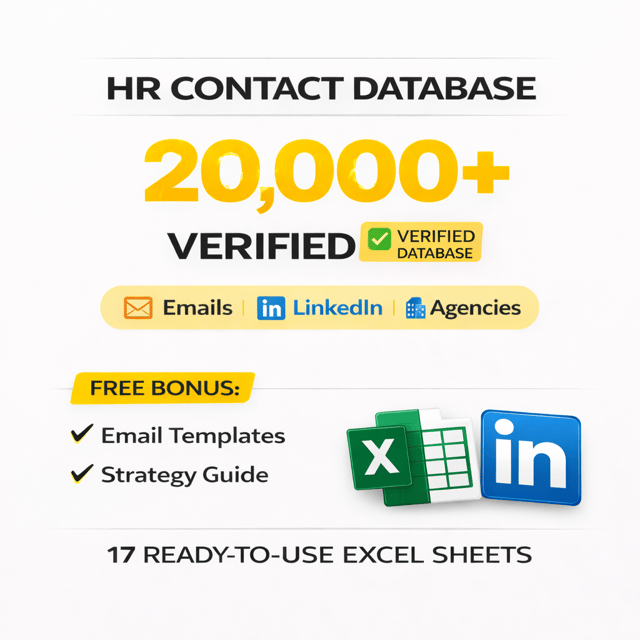
20000+ HR Emails + Job Outreach Playbook
Power BI DAX Master Cheat Sheet
Data Analyst Interview Mastery Bundle
Data Analyst Resume Template 85 ATS Score
50+ Real Interview Experiences (MNC Based)
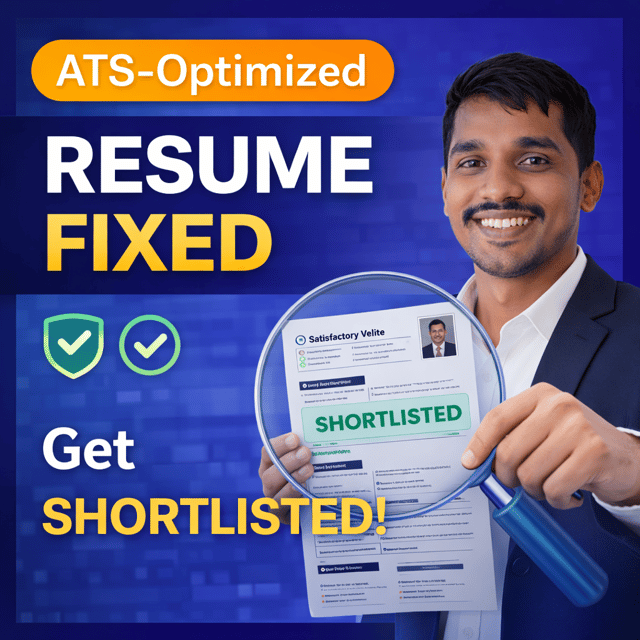
Job-Ready ATS Resume Writing Package
About me
Frequently asked questions
How to make a data analyst resume with no experience?
Start with what you do have: education, certifications, and 2–3 hands-on projects using SQL, Excel, and Power BI. Build projects on real datasets (sales, HR, e-commerce), quantify results (e.g., "reduced manual reporting time by 30%"), and use a clean, single-column ATS-friendly format with standard headings like Skills, Projects, and Certifications. Skip photos, graphics, and text boxes — they confuse ATS scanners. If you're unsure, getting your resume professionally reviewed and ATS-scored before applying can save months of rejected applications.
What should a data analyst resume look like?
A strong data analyst resume for freshers is one page, with sections in this order: Contact → Career Summary → Skills (SQL, Excel, Power BI, Python if applicable) → Projects with tools used and measurable outcomes → Certifications → Education. Use a reverse-chronological layout, standard fonts, bullet points that start with action verbs, and mirror keywords from each job description so it passes ATS filters. Avoid multi-column designs, tables, and icons — recruiters and software both prefer simple structure.
Which data analyst resume template for freshers actually gets past ATS?
The simplest one: single column, .docx or clean PDF, standard section headings, and no text boxes. Many freshers lose interview calls because designer templates score 40–50 on ATS scanners instead of the 80+ you need. A reliable data analyst resume sample will always show projects with the tools used and the business impact — not just a list of skills. Jay's ready-made template is built to score 85+ on ATS if you want a proven starting point instead of guessing.
What are the most common data analyst interview questions and answers for freshers?
Expect a mix of technical and scenario questions: SQL joins and GROUP BY problems, Excel functions (VLOOKUP/XLOOKUP, pivot tables), Power BI basics like measures vs calculated columns, statistics (mean vs median, outliers, correlation), and "walk me through a project" questions. Most data analyst interview questions in 2026 also include a small case study, such as "how would you analyse a drop in sales?". Prepare 8–10 polished project stories and practise structuring every answer as problem → approach → result.
How to answer data analyst interview questions without work experience?
Use your projects as your experience. For every technical question, connect the answer to something you actually built — "I used a LEFT JOIN in my sales dashboard project when I needed to keep all customers even without purchases." For behavioural questions, follow the STAR format (Situation, Task, Action, Result). Interviewers don't expect freshers to have corporate experience; they test clarity of thinking and how well you explain your work. A few mock interviews with a coach who knows what interviewers look for will quickly expose and fix your weak spots.
What SQL interview questions for data analyst roles are asked most often?
The most repeated ones are: differences between INNER, LEFT, RIGHT, and FULL JOIN; WHERE vs HAVING; finding the second highest salary; finding and removing duplicates; GROUP BY aggregations; subqueries vs CTEs; window functions like ROW_NUMBER and RANK; and handling NULLs. MNC interviewers usually give 2–3 live queries to solve on the spot, so practise writing SQL, not just reading solutions.
How to prepare for SQL interview questions as a fresher?
Learn the core theory first (joins, aggregations, window functions), then solve questions daily for 3–4 weeks on real datasets. Any solid set of SQL interview questions and answers for freshers will cover joins, GROUP BY, subqueries, and window functions — master those before touching advanced topics. Then practise explaining your query logic aloud, because interviews test communication as much as syntax. One or two mock SQL interviews before the real thing helps you find gaps early instead of during the actual call.
Can I become a data analyst without a technical degree or coding background?
Yes. Most entry-level data analyst roles hire based on demonstrable skills, not your degree stream. Commerce, science, and even arts graduates land these jobs every year after building 2–3 solid projects in SQL, Excel, and Power BI, plus a basic statistics foundation. What matters is a portfolio that proves you can clean data, build dashboards, and explain insights clearly — and a resume that gets past ATS. A structured career roadmap helps you avoid the most common mistake: spending months learning tools in the wrong order.
Should I learn SQL, Excel, or Power BI first as a fresher?
Start with Excel (fastest to learn and used in almost every company), then SQL (the number one skill in data analyst job descriptions), then Power BI (to visualise and present your insights). Learn them in that sequence with one project per tool, and add Python later once you start getting interview calls. Trying to learn everything together is the most common reason freshers stay stuck for months without getting job-ready.
How many projects should a fresher add to a data analyst resume?
Two to three quality projects are enough — recruiters spend under a minute per resume. Pick real business scenarios (sales analysis, HR attrition, e-commerce customer behaviour), use a different tool for each project (one Excel, one SQL, one Power BI), and write one line of measurable business impact under each. Ten tutorial clones with no outcomes look weaker than three projects with clear results. Host them on GitHub or a portfolio link so recruiters can verify your work.
Why am I not getting interview calls even after applying to so many data analyst jobs?
Usually one of five reasons: your resume isn't ATS-optimised so it never gets shortlisted, you're only applying through portals instead of reaching HRs directly, your Naukri/LinkedIn profile isn't keyword-optimised for recruiter searches, you're sending the same resume to every job without matching the description, or your portfolio doesn't show proof of skills. Fix the resume first, then combine portal applications with direct HR outreach and referral requests. Tracking applications in a sheet and following up after 5–7 days also noticeably improves response rates.