Testimonials
Services
Crack Any ML Case Study Round
Google, Microsoft ML Case Study Framework
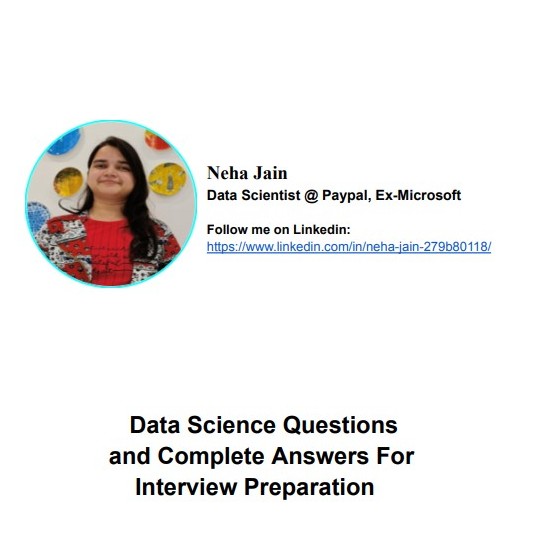
500+ Data Science Interview Prep. Kit + Solution
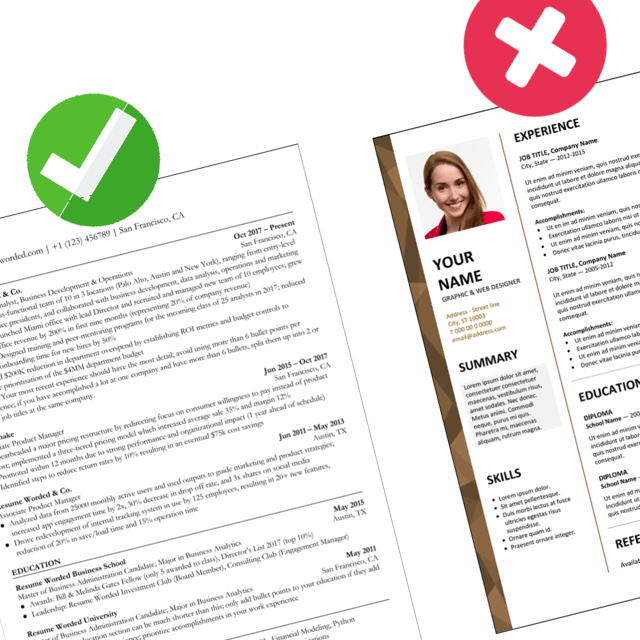
Editable DS/ML/AI Resume Template
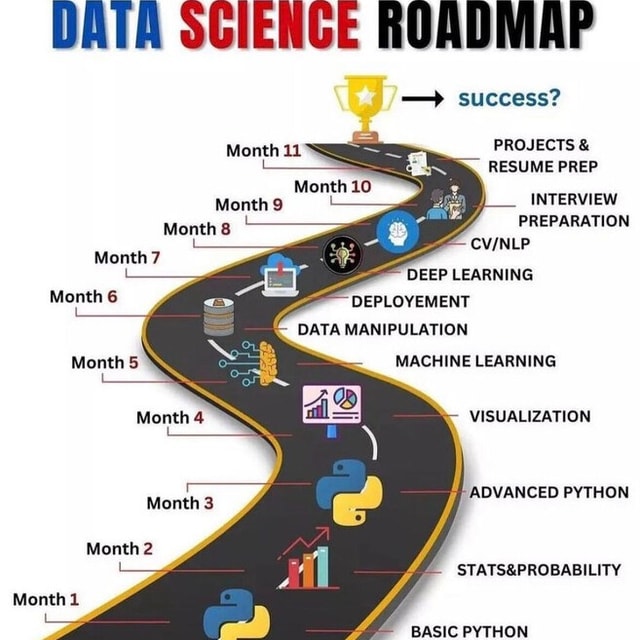
Comprehensive Data Science Roadmap & Blueprint
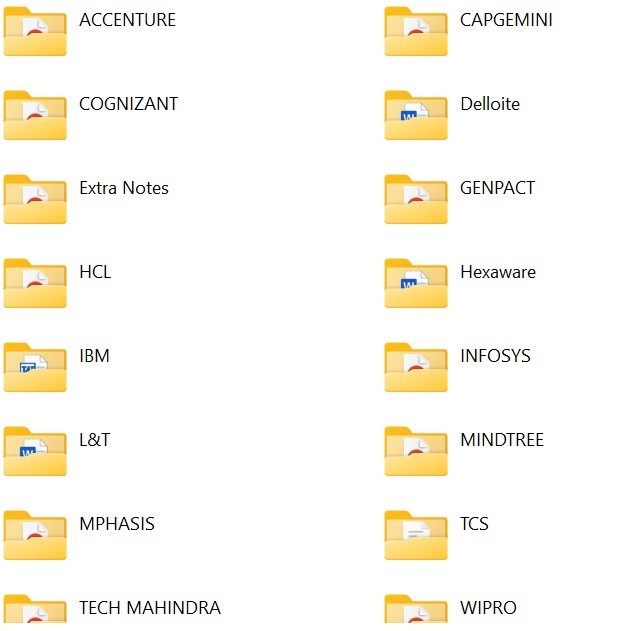
Interview Prep for Top 15 Service-Based Companies
Resume Review | Data , AI , ML and SDE roles
Data Analyst Roadmap
500+ SQL & Python Ques. and Resources (SDE & Data)
750+ Data Engineering Interview Prep. Kit & Sol.
Resume Template -Software Dev -Product Based Comp.
Data Science Career Accelerator Package
Resume Makeover: Land Interviews Faster
About me
- Neha excels in mentoring data science, providing valuable insights, personalized advice, and effective session guidance.
 AI-generated based on testimonials
Frequently asked questions
How to crack a data science interview?
Cracking a data science interview needs focused data science interview preparation across four pillars: SQL and Python coding, statistics and probability, machine learning fundamentals, and your own projects. Start by reading the job description, then practise SQL joins, aggregations and window functions daily along with Python and pandas problems. Revise core ML concepts such as bias-variance tradeoff, overfitting, regularization and evaluation metrics like precision, recall and AUC. Prepare to explain every project end-to-end, including the business impact. Solve 100–150 real interview questions from your target companies and take at least two mock interviews for honest feedback. Six to eight weeks of consistent preparation is realistic for most candidates.
What is asked in a data science interview?
A typical data science interview has four to five rounds: an online assessment, one or two technical rounds, a case study round and an HR discussion. The data science interview questions in these rounds usually cover SQL (joins, group by, window functions), Python and pandas, statistics and probability, machine learning concepts such as regression, classification, clustering, overfitting and evaluation metrics, plus a deep-dive into your past projects. Product companies often add a case study or guesstimate, like estimating monthly sales for an e-commerce category, while senior roles include ML system design.
What are the most common data science interview questions for freshers?
The data science interview questions for freshers mostly test clarity of basics: supervised vs unsupervised learning, bias-variance tradeoff, overfitting and how to reduce it, precision vs recall, handling missing values and outliers, correlation vs causation, and simple to medium SQL queries. Freshers are almost always asked to walk through one academic or personal project in depth, along with basic Python coding. Some interviews include a light guesstimate such as "How many cups of chai are sold in Mumbai every day?" Interviewers assess thinking and communication more than memory, so practise explaining every concept in simple language.
How to prepare for a machine learning interview?
Work backwards with a 6–8 week plan. Weeks 1–2: revise ML fundamentals — linear and logistic regression, decision trees, random forests, boosting, clustering, regularization, cross-validation and evaluation metrics — along with the underlying statistics and linear algebra. Weeks 3–4: practise Python coding and SQL daily, and add DSA if the role demands it. Weeks 5–6: build or polish two end-to-end projects and be ready to defend every choice of data, model and metric. In the final stretch, solve previously asked machine learning questions and take mock interviews. If you are targeting product companies, add ML case studies to this plan.
What are machine learning interviews like?
They are usually longer and more layered than standard software interviews. Expect a screening round on ML basics and your projects, one or two coding rounds (Python, SQL, sometimes DSA), a core ML round on algorithms and the maths behind them, an ML case study or system design round where you may be asked to build a recommendation, ranking or fraud-detection system, and a behavioral round. What makes them tough is the follow-ups: interviewers keep asking why you chose a particular model, metric or data split, and how you would handle messy data, class imbalance or scale. Thinking aloud with clear trade-offs matters as much as the final answer.
What are the most common machine learning interview questions?
The most frequently asked machine learning interview questions include: what is overfitting and how do you prevent it, explain the bias-variance tradeoff, L1 vs L2 regularization, how random forests and gradient boosting work, what is cross-validation, precision vs recall and when to use each, handling imbalanced datasets, the curse of dimensionality, and missing-value treatment. Machine learning interview questions for freshers stay closer to definitions and small worked examples, while experienced candidates face follow-ups on real projects, model trade-offs and deployment at scale. Practise answering each concept with a one-line definition, an example and a real use case.
How to crack machine learning interviews at FAANG?
FAANG machine learning rounds test depth, coding and scale together. Along with strong DSA and SQL, you need airtight ML fundamentals, comfort with ML system design (designing a recommendation, search-ranking or fraud-detection system for millions of users), and a repeatable case study framework similar to the ones used in Google and Microsoft style rounds. A realistic split: 4–6 weeks of daily coding, two weeks revising core ML with the maths, practice on 15–20 ML case studies covering metrics, data pipelines and A/B testing, and several mock interviews with people who have cleared these loops. Always think aloud and justify trade-offs, since these interviewers score structured reasoning.
How to become a data analyst in India?
Follow a structured data analyst roadmap for freshers: master Excel and SQL first, since most analytics interviews in India are SQL-heavy; then learn Python with pandas and a visualisation tool like Power BI or Tableau; build statistics basics such as distributions, correlation and hypothesis testing; and finally create two or three portfolio projects on real datasets — for example, an e-commerce sales dashboard — published on GitHub. Apply through off-campus drives, LinkedIn and referrals, and prepare specifically for live SQL rounds. Freshers from any degree can break into analytics; hiring managers mostly look for query skills and demonstrable projects.
How to become a data scientist in India?
Build the stack in sequence: Python and SQL first, then statistics and machine learning — regression, classification, clustering and model evaluation — and then deeper areas like deep learning or NLP depending on your target roles. Instead of jumping between random tutorials, follow a stepwise data science roadmap: roughly two months each for programming and statistics, machine learning with hands-on projects, and finally case studies, portfolio building and interview preparation. Since entry-level data science openings in India are competitive, many freshers enter through data analyst or data engineer roles and move into data science internally after a year or two of proven work.
What are the most common data analytics interview questions?
Expect four broad buckets. SQL: joins, group by, window functions and classic problems like finding the second-highest salary. Excel and BI tools: VLOOKUP, pivot tables and dashboard-based questions. Statistics: mean vs median, standard deviation, hypothesis testing and correlation. And scenario-based questions such as "sales dropped 20% last month — how would you investigate?" Many companies also add a guesstimate and a round of live query writing. Strong preparation therefore means daily SQL practice, one solid dashboard project you can discuss confidently, and a rehearsed, structured approach for metric-based case questions.
Which are the best data science interview books?
Widely recommended picks include "Ace the Data Science Interview" for solved questions and case studies, "An Introduction to Statistical Learning" for statistics and ML fundamentals, and "Cracking the Coding Interview" for coding rounds. Books are good for building theory, but most product-company interviews now lean on recently asked and company-specific questions, so pair one core book with a solved question bank, daily SQL practice and mock interviews. A simple rule: spend about 30% of your time reading and 70% solving actual interview questions, because recall under pressure comes from practice, not passive reading.