Testimonials
Services
MA Society and Culture Entrance Exam Question Pape
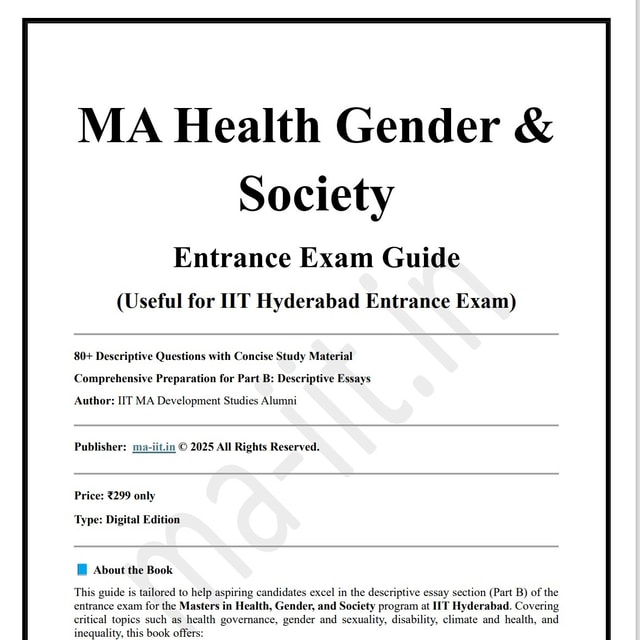
MA Health Gender and Society Entrance Exam Guide
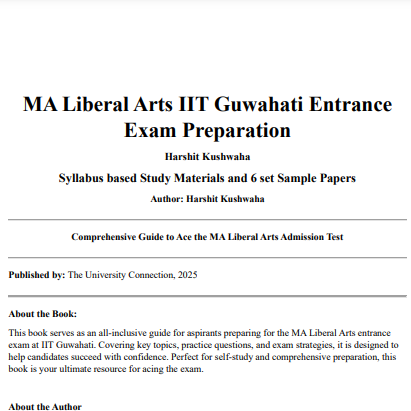
IITG MA Liberal Arts Entrance Exam Book
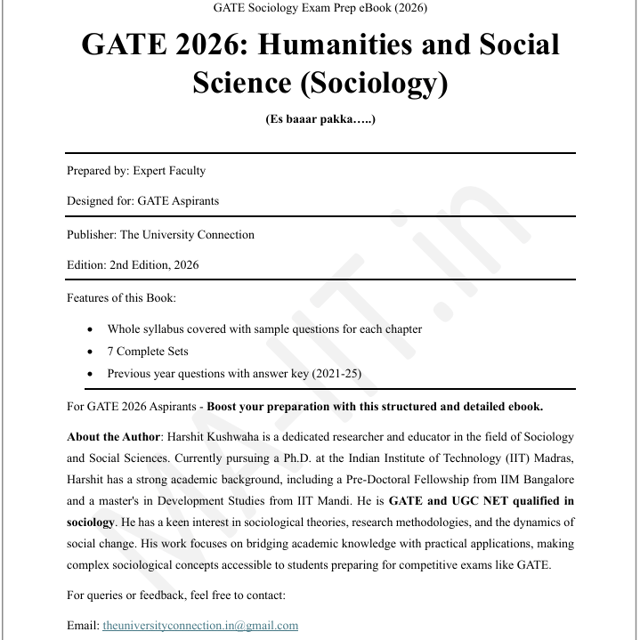
GATE Sociology Book 2026 (All in one)
IITB MA-PhD Philosophy (DEEP) Entrance Exam Guide
MA @ IIT 2026
GATE English XH-C2 Exam eBook
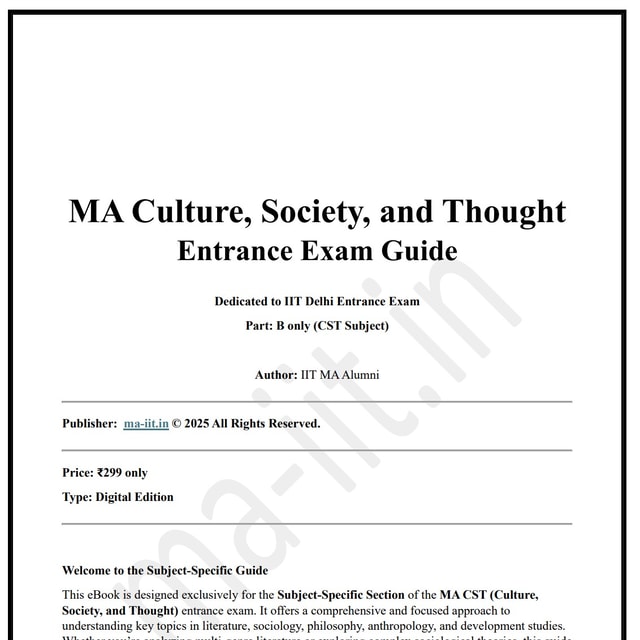
MA Society Culture Thought Entrance Exam eBook IIT
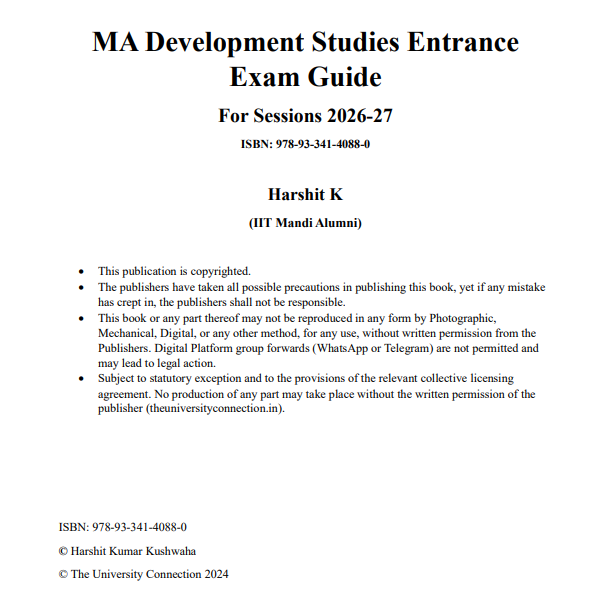
MA Development Studies Entrance Exam Book
Masters in Public Policy Entrance Exam Guide

About me
Frequently asked questions
What is a Development Studies degree?
A Development Studies degree is an interdisciplinary social science programme that studies how societies change and grow, combining ideas from economics, sociology, political science, and public policy. In India, it is mostly offered as a two-year MA at institutions such as the IITs, TISS, and Azim Premji University, and it prepares students for careers in research, policy, and the development sector.
What can I do with a Masters in Development Studies?
After a Masters in Development Studies, common career paths include roles in NGOs and grassroots organisations, CSR and sustainability teams, public policy and government programmes, international development organisations, monitoring and evaluation, research and consulting, and teaching or a PhD. Many graduates also pursue policy fellowships or civil services, since the degree builds strong analytical and fieldwork skills.
Is Development Studies a good degree?
Development Studies is a good degree if you want a career in the social sector, public policy, research, or international development, because it combines theoretical grounding with practical field exposure. It makes the most sense for students who enjoy subjects like sociology, economics, and politics; if your goal is a purely corporate role, a more specialised degree may suit you better, so weigh your career goals before enrolling.
Can I pursue MA Development Studies at IIT Guwahati without a background in Sociology?
Yes. The entrance exam for MA Development Studies at IIT Guwahati is designed for graduates from different streams, and aspirants from commerce, science, and humanities backgrounds regularly prepare for it. The paper tests conceptual clarity in the social sciences, reasoning, and awareness of development issues rather than prior specialisation, so with structured preparation, regular MCQ practice, and previous year papers, a first-time social science aspirant can crack it.
Which is better for MA Development Studies: TISS or IGNOU?
MA Development Studies at TISS is a full-time, campus-based programme with strong faculty, fieldwork, and placement support, so it suits students who want an immersive academic experience in the development sector. MA Development Studies at IGNOU is a flexible distance option that works better for working professionals or those preparing for other exams alongside. Choose based on whether you want full-time campus learning or low-cost flexibility.
What is the MA Development Studies syllabus?
The MA Development Studies syllabus generally covers development economics, sociological theory, politics of development and public policy, research methodology and statistics, rural and urban development, environment, gender, and a dissertation or fieldwork component. The exact papers vary by university, so always check the syllabus of the specific institute you are applying to, especially the topics emphasised in its entrance exam.
How should I prepare for the IIT MA entrance exam?
Start by reading the admission notification of the specific IIT, because each institute conducts its own IIT MA entrance exam or accepts GATE scores, and the pattern differs. Build your basics in sociology, economics, and political thought, practise previous year papers and MCQs, follow current affairs related to development and policy, and improve speed with timed mock tests. A disciplined 4-6 month preparation window is usually enough for a consistent aspirant.
What is the IIT PG entrance exam eligibility?
The IIT PG entrance exam eligibility criteria generally require a bachelor's degree in any discipline with the minimum marks specified by the institute, which can vary between programmes. Some IITs admit MA students through their own written entrance or interview, while several accept valid GATE scores, so check the latest admission notification of the particular IIT and programme before applying.
How to prepare for GATE Sociology?
To prepare for GATE Sociology, first understand the XH (Humanities and Social Sciences) paper pattern, including the common reasoning and comprehension section and the Sociology part. Cover core sociological theory, research methods, and Indian society from standard texts, then solve PYQs and sectional mocks every week. Since the paper is fully objective, focus on conceptual clarity and regular revision rather than long written answers.
What is the GATE exam for Sociology?
The GATE exam for Sociology is conducted under the XH (Humanities and Social Sciences) paper, in which candidates attempt a common reasoning and comprehension section along with a chosen subject section such as Sociology, English, Economics, Philosophy, Linguistics, or Psychology. The score is used for admission to MA and PhD programmes in humanities and social sciences at IITs and other institutions, and a valid score remains usable for three years.
What does the GATE Sociology syllabus include?
The GATE Sociology syllabus includes a common Reasoning and Comprehension section plus the Sociology section, which broadly covers classical and contemporary sociological theory, research methodology and statistics, core sociological concepts, and the structure of Indian society, including themes like caste, class, gender, and social change. Download the latest official syllabus before planning, as GATE updates pattern details from time to time.
Where can I find GATE Sociology PYQs?
You can find GATE Sociology PYQs on the official GATE website, which archives previous year question papers along with answer keys. Since the XH paper is relatively new, only a few years of papers are available, so it also helps to use a compiled book with solved PYQs and practice MCQs to get enough questions for thorough revision.
What is the GATE Sociology eligibility for students from non-sociology backgrounds?
GATE Sociology eligibility is the same as for any other GATE paper: anyone who has completed a bachelor's degree of at least three years, or is currently in the third year or higher of such a programme, can appear. There is no requirement to have studied Sociology earlier, so graduates from commerce, science, and arts streams can choose the XH paper with the Sociology section.
Which GATE Sociology book should I choose for preparation?
A good GATE Sociology book should explain the full XH paper pattern, cover the Sociology syllabus with theory and research methods, include solved PYQs, and offer plenty of MCQs for practice, because the exam tests applied understanding rather than memorisation. Pick one main book for revision and supplement it with standard sociology texts and the official previous papers instead of collecting too many resources.
What can I do after GATE Sociology?
After GATE Sociology, you can use your valid score to apply for MA and PhD programmes in humanities and social sciences at IITs and other institutes that accept GATE, and some institutions also consider it for research assistantships and fellowships. The score is valid for three years, so you can plan admission in the same year or a later cycle, and adding research or internship experience strengthens your application.