Testimonials
Services
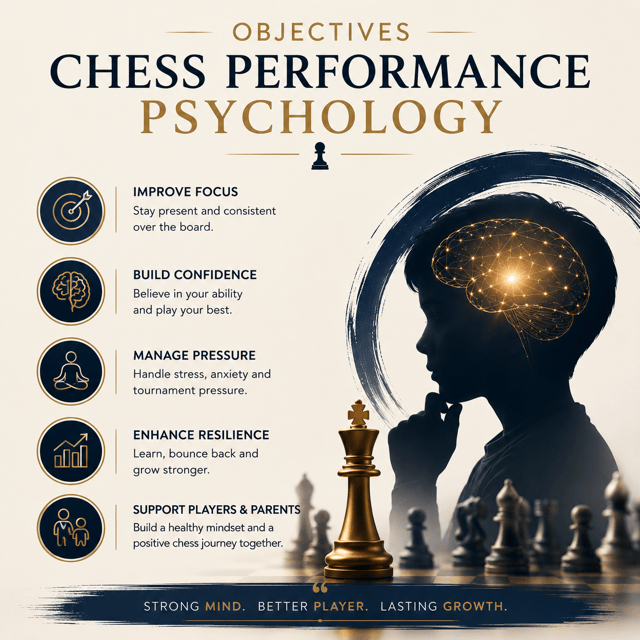
Chess Performance Psychology Session
About me
- CM Gaurav Zagade coaches chess students • lichess.orghttps://lichess.org/coach/gauravthegm
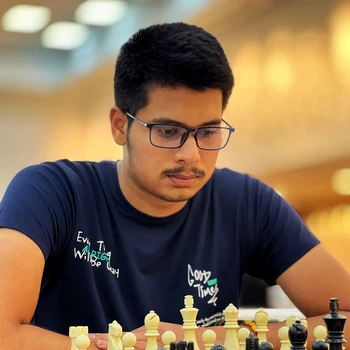
- CM Gaurav Zagade - Chess Profile - Chess.comhttps://www.chess.com/member/gauravthegm
Frequently asked questions
What does a chess coach do?
A chess coach assesses your current level, identifies the weak areas holding you back, and builds a structured plan around tactics, openings, endgames, and deep analysis of your own games. Beyond teaching theory, a good coach prepares you for tournaments and shows you why certain mistakes keep repeating in your play, so you improve between lessons and not just during them.
How to train for chess if I want to improve my rating?
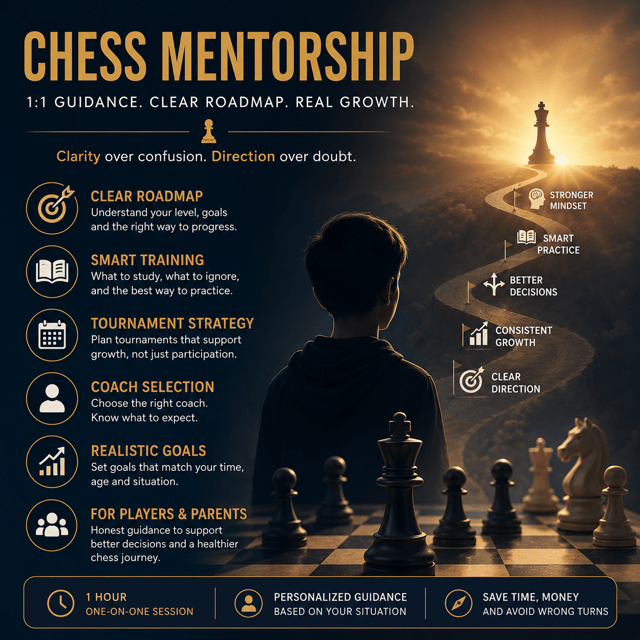
Serious chess training is a mix of daily tactics, regular analysis of your own games, a small well-understood opening repertoire, and endgame practice — done consistently rather than in random long sessions. Most improving players follow a fixed weekly routine and review every serious game they play to catch repeating mistakes. If you're unsure what to prioritise, a mentorship session with a coach can give you a clear, personalised path instead of guesswork.
What is chess theory, and how much of it do you actually need?
Chess theory is the body of established knowledge in the game — analysed opening lines, standard plans, and evaluated positions proven through study and practice over decades. Theory matters, but it alone rarely wins games; most club-level losses come from middle-game decisions, time trouble, and repeated tactical oversights. Understanding the ideas behind your openings is far more valuable than memorising long variations.
How to improve chess psychology before a big tournament?
Start by studying your own games for emotional patterns — where you rushed, played scared of losing rating, or lost control after a mistake. Then build habits: a consistent thinking process for every move, a reset routine after errors, and process goals like "play every position on its merits" instead of only result goals. Working with a coach who focuses on chess performance psychology speeds this up, because your triggers are visible in your actual games and can be corrected directly.
What is the psychology behind chess?
The psychology behind chess is about how pressure, confidence, fear of losing, emotional reactions, and thinking patterns shape the decisions you make at the board. Two players with identical knowledge can perform very differently because one recovers from blunders and time pressure while the other falls apart. That is why mindset work is now treated as a core part of chess improvement, not an optional extra.
How to play chess mentally strong instead of collapsing after one mistake?
Mental strength at the board comes from routines, not willpower — a fixed thinking process before every move, double-checking candidate moves in critical positions, and a deliberate reset ritual after a blunder. Reviewing your games specifically to find the moment you lost emotional control builds this skill faster than simply playing more games. Over time, this is what keeps your decisions clean in must-win rounds.
Is chess coaching online as effective as in-person coaching?
Yes — chess coaching online works just as well for most students because the core work (game analysis, targeted exercises, corrected thinking, and tournament preparation) happens on a shared board either way. The bigger advantage is choice: you can train with a coach who fits your level and goals instead of limiting yourself to whoever is nearby. Players across India and abroad improve steadily through structured 1:1 online video sessions.
What is the right age to start chess coaching for kids?
Most children are ready for structured chess coaching between 5 and 8 years old, but readiness matters more than age — being able to sit through a session, know the rules, and genuinely enjoy the game. With a coach who trains a child according to their strengths and weak areas rather than a one-size-fits-all syllabus, young students can make rapid rating progress within months. If your child already plays at home and asks questions about the game, that's usually the signal to begin.
Is a chess psychology course worth it for club players?
If you regularly underperform your training level — blundering under pressure, losing winning positions, or playing scared against lower-rated opponents — a structured chess psychology course or session is often the missing piece. It works best when it is practical: your own games are analysed for decision patterns and emotional triggers rather than generic motivational talk. Club players usually feel the difference within a few events because the corrections apply straight to their games.
Do chess psychology books really help?
Chess psychology books are a good starting point for understanding concepts like tilt, fear of losing rating, and overconfidence, but reading alone rarely changes what you do at the board. They help most when combined with honest analysis of your own games to see exactly where those patterns appear in your play. If you've read the books and still freeze in decisive games, guided 1:1 work on your specific reactions usually produces faster, more lasting change.
How far in advance should chess tournament preparation start?
Realistic chess tournament preparation needs around 4–8 weeks before the event. That window is enough to sharpen your opening repertoire for the expected field, patch the weaknesses showing up in your recent games, practise time management, and plan your rest, food, and round routines. Last-minute opening cramming usually backfires — arriving mentally fresh matters as much as the theory you carry.
What chess tournament tips actually make a difference on game day?
The tips that consistently move results: use the same pre-move routine in every game, manage your clock so critical decisions never happen in seconds, eat light and walk between rounds, and never replay a lost game right before the next round — note the lesson, close the file, reset. Most tournament points are lost to emotional carryover from the previous round, not to gaps in theory.
What is the standard chess tournament structure in India?
Most events in India follow the Swiss system, where everyone plays a fixed number of rounds — usually 6 to 9 — and each round pairs you against an opponent on a similar score, so nobody gets knocked out. Tournaments are held in classical, rapid, or blitz time controls, and your rating rises or falls based on results against rated opponents. Knowing the structure in advance helps you plan your energy, preparation, and expectations round by round.
Which chess starting techniques should beginners learn first?
Beginners progress fastest with opening principles rather than memorised lines: control the centre, develop every piece toward the middle, castle early for king safety, and avoid moving the same piece repeatedly or bringing the queen out too soon. Once these habits are automatic, learning one simple opening for White and one for Black — along with the plans that follow — beats collecting theory you can't use. Strong fundamentals here make every later stage of improvement easier.