Testimonials
Services
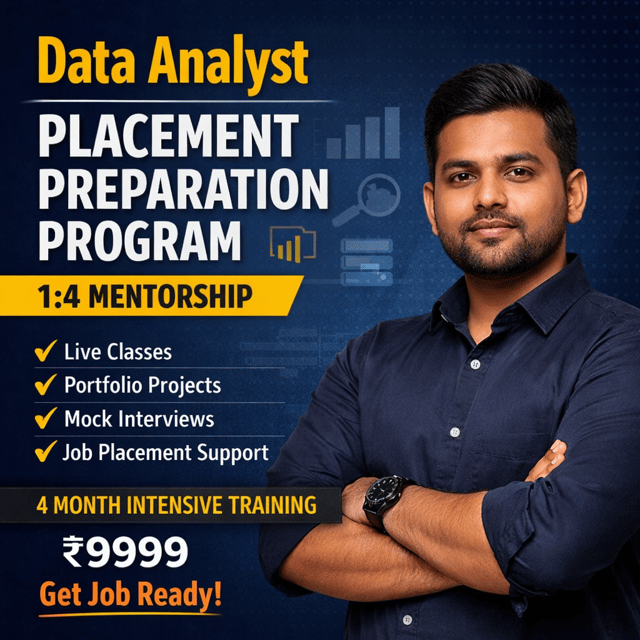
Placement Preparation Program (1:4 Mentorship)
Free Trial Service
Resume Review & Building
About me
- Durgesh is praised for his expert resume guidance, engaging teaching, and deep knowledge in data.
 AI-generated based on testimonials
 - LBA Analytics and AIhttps://www.letsbeanalyst.com/

Frequently asked questions
How to learn SQL for data analysis as a complete beginner?
Start with the core SQL concepts that analysts actually use — SELECT, WHERE, GROUP BY, JOINs, and aggregations — before moving into window functions and query optimisation. Rather than collecting certificates, focus on writing queries against realistic datasets, because hiring managers test practical SQL skills, not theory. A structured 1:1 SQL mentorship can help you skip months of random tutorials and focus only on what companies expect from a data analyst.
How to practice SQL for data analysis without any paid resources?
Use free practice platforms that offer real business-style datasets and query challenges. The key is to solve problems that mimic actual analyst work — cohort analysis, sales aggregation, duplicates, and date-based queries. Practising daily on such problems builds the muscle you need for SQL rounds in interviews, far more than reading SQL for data analysis PDFs or books alone.
What is SQL for data analyst roles and why is it so important?
SQL is the primary tool analysts use to extract, clean, and summarise data from company databases. In most data analyst interviews in India, SQL is the first technical round, and candidates from non-tech backgrounds are screened heavily on it. Knowing what SQL is used for in data analysis helps you prioritise your learning instead of overlearning tools that hiring teams rarely test.
How to prepare for a data analyst interview in 15 to 30 days?
Follow a role-aligned plan: revise SQL and Excel fundamentals, practise 2–3 SQL problems daily, build a clear narrative around your projects, and rehearse common data analyst interview questions out loud. Mock interviews are the most effective way to identify gaps — they simulate real pressure and show you exactly what interviewers at companies like American Express, Target, or Microsoft-style analytics teams look for.
Is data analyst interview preparation different for freshers?
Yes. For freshers, interviewers focus more on fundamentals — SQL queries, Excel functions, basic statistics, and project explanations — rather than prior work experience. Freshers from tier-3 colleges often struggle not because of skills but because of poor interview strategy and resume visibility, so structured data analyst interview preparation for freshers with mentor feedback can make a significant difference.
How to answer data analyst interview questions with real examples?
Structure every answer around a problem–approach–result framework. For technical questions, explain your thinking out loud before writing SQL or Python code. For scenario-based questions, draw from your own projects. Practising this format in mock interviews helps you sound like an analyst who solves business problems, not a candidate reciting definitions.
Can I make a data analyst career transition from a non-tech background?
Yes, but it requires a structured, execution-first approach rather than trial and error. Many professionals from sales, operations, finance, and other non-technical roles have successfully moved into data analytics by building role-aligned skills, working on practical projects, and targeting the right openings. The biggest mistake people make is overlearning courses without any job-hunting or interview strategy — clarity and realistic timelines matter more than collecting certificates.
Is a data analyst career change possible after 30 or mid-career?
Yes, a data analyst mid career switch is realistic when you leverage your domain experience. Companies value analysts who understand business context, so your previous industry knowledge becomes an advantage rather than a liability. The key is building the technical stack companies test — SQL, Excel, and a BI tool — and presenting your past roles with a data-driven narrative instead of starting over as a fresher.
Do I need a data analyst interview preparation course or is self-study enough?
Self-study works for fundamentals, but most candidates fail at interview strategy, not concepts. A focused preparation course or mentorship gives you mock interviews, resume feedback, accountability, and exposure to how companies actually hire analysts. If you keep applying without interview calls or keep rejecting yourself in final rounds, guided preparation usually shortens the process significantly.
How do I optimise my Naukri profile to get data analyst interview calls?
Most profiles fail because of poor keywords, generic titles, and weak project descriptions rather than lack of skills. Your Naukri profile should be structured around the exact terms recruiters search for, with role-aligned keywords in your headline, skills, and project sections. A properly optimised profile can dramatically increase recruiter views, which is why profile optimisation is often the fastest fix for people getting zero callbacks despite having skills.