Testimonials
Services

🚀 Mock Interview Mastery for Product-Based Roles 🎯
End to End Power BI Course | Interview Prep Kit
🔥 Ace Your Next Interview with Confidence! 🚀
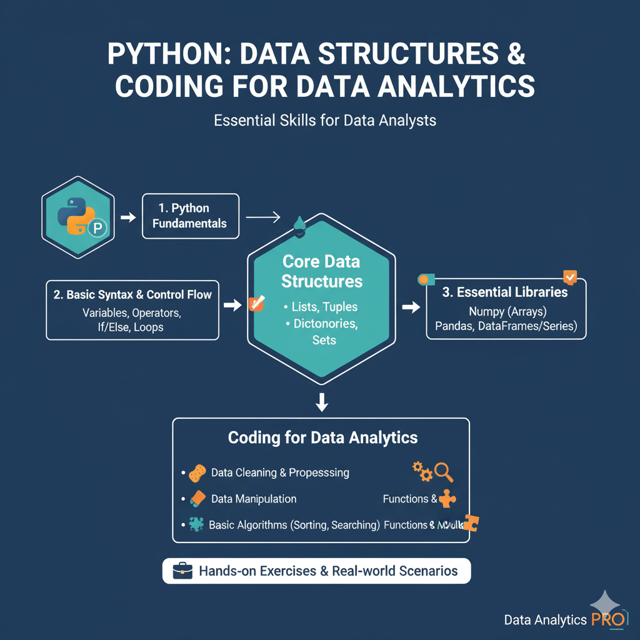
Learn ChatGpt 🤖with Prompts & Ace your Skills
PrepNPlaced Demo to make you Place in 3 Months

Data Analytics 0 to 100 % in 3 Months (Self Paced)
100% Data Analytics Interview Preparation
Let's Connect for Data Analytics (India)
Placement Crash Course | Data Analytics 🚀
Ask me Anything ✅ & Get Replied in a Week 🎯
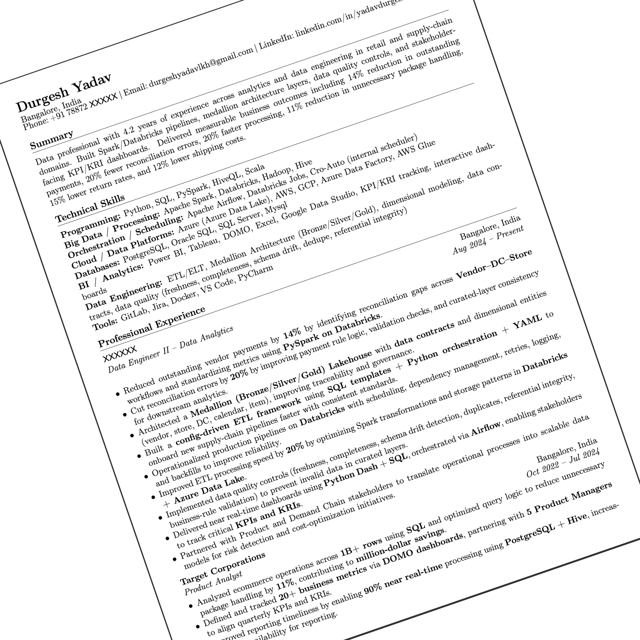
📄 My Resume Template | LaTeX Code Snippet ✨
📄 Craft Your Perfect Resume for Data Analyst Role🚀
About me
- Durgesh Yadav – an expert mentor in data analysis, known for his clarity, patience, and practical guidance. Highly recommended for tailored, insightful sessions.
 AI-generated based on testimonials
 - PerpNPlaced - YouTube | Durgesh Yadavhttps://www.youtube.com/@prepnplaced
- Instagram | Durgesh Yadavhttps://www.instagram.com/iamengineer_durgesh/


Frequently asked questions
How to start a data analytics career with no background in tech?
The best way to start a data analytics career from scratch is to build skills in a structured order — SQL and Excel first, then Python and Power BI — and back every skill with a real project you can show on your resume. Hiring managers value proof of work over certificates alone, so focus on industry thinking, portfolio projects, and interview readiness rather than collecting course completions. A clear roadmap and mentorship can help you avoid wasting months on random tutorials.
Can I switch to data analytics career from a non-technical or service-based background?
Yes, switching to a data analytics career from a non-technical or service-based background is very achievable, but it needs a transition strategy — not just learning tools. You should focus on SQL, Python, Excel, and Power BI, build 2–3 strong portfolio projects, optimize your resume for ATS, and reposition your LinkedIn profile for data roles. Many working professionals successfully make this switch within a few months when they follow a structured plan with resume proof and mock interview practice.
What is the data analyst career path in India?
A typical data analyst career path starts with a Data Analyst role focused on SQL, Excel, and dashboards, then progresses to Senior Data Analyst or Analytics Engineer, and can grow into Data Engineering, BI Lead, or analytics management roles. Career growth accelerates when you move beyond tools into real-world problem solving, project execution, and business thinking — the skills product-based companies actually test in interviews.
What are the data analytics career options and growth opportunities in India?
Data analytics career options include Data Analyst, Business Intelligence Analyst, Analytics Engineer, Data Engineer, and Data Scientist roles across product companies, startups, and consulting firms. Data analytics career growth in India is strong because every organization now needs people who can turn raw data into decisions, and professionals with strong SQL, Python, Power BI, and cloud data skills (like Databricks and Snowflake) command premium salaries as they move into senior and engineering-focused roles.
What is the data engineering roadmap for beginners in 2026?
A practical data engineering roadmap for beginners in 2026 is: master SQL and Python first, then learn data modeling and warehousing with Snowflake or Databricks, followed by PySpark, dbt, Airflow, and Kafka for pipelines and streaming. Alongside tools, build end-to-end real-world projects, since a data engineering roadmap without portfolio proof rarely clears product-based company interviews. Aim for depth over breadth — one well-executed pipeline project beats ten tutorials.
How do I prepare for SQL interview questions as a fresher?
To prepare for SQL interview questions as a fresher, start with fundamentals — joins, group by, subqueries, window functions, and aggregate functions — then practice writing queries on real datasets rather than just reading theory. Most fresher SQL interviews test practical problem solving, so solve query-based questions daily, understand how each concept maps to a business scenario, and rehearse explaining your logic out loud, since interviewers evaluate your thought process as much as your output.
What kind of SQL interview questions are asked for data analyst roles?
SQL interview questions for data analyst roles usually focus on joins, aggregations, window functions, handling NULLs and duplicates, date-based queries, and scenario problems like finding month-over-month growth or top-N customers. Interviewers often give a business case and expect you to write a clean, optimized query. Practicing SQL interview questions and answers specifically designed for data analyst scenarios prepares you far better than generic SQL theory.
What SQL interview questions should data engineers expect in interviews?
SQL interview questions for data engineer roles go beyond basic querying — expect optimization, window functions, large dataset handling, partitioning, incremental logic, and queries involving PySpark or Databricks contexts. You may also be tested on designing pipelines and writing efficient transformations. Experienced candidates should be ready to explain trade-offs in their query design, since product-based companies evaluate both correctness and performance.
How should experienced professionals practice SQL interview questions for 3–10 years of experience?
SQL interview questions and answers for experienced professionals demand more than syntax knowledge — you must practice medium-to-hard query problems, optimize slow queries, and explain real project scenarios where you used SQL at scale. Mock interviews are highly effective here: they simulate pressure, expose gaps in your reasoning, and build the confidence to walk interviewers through your logic step by step, which is exactly what panel interviews at product companies test.
How to practice SQL interview questions effectively before a product-based company interview?
The most effective way to practice SQL interview questions is a three-layer approach: daily query solving on realistic datasets, timed mock interviews with feedback, and reviewing failed attempts to fix gaps in fundamentals. Randomly watching solution videos creates false confidence — instead, write every query yourself, explain your approach aloud, and focus on the patterns interviewers reuse (joins, window functions, ranking, deduplication). Structured practice over 4–6 weeks significantly improves interview conversion.
How do I crack a data analytics interview at a product-based company?
Cracking a data analytics interview at a product-based company requires preparation across four areas: strong SQL and Python problem solving, a portfolio of real-world projects you can defend in depth, an ATS-optimized resume that highlights measurable impact, and mock interview practice for both technical rounds and case discussions. Product companies test how you think through ambiguous business problems, so practice structuring your answers around business impact, not just tool syntax.