Testimonials
Services
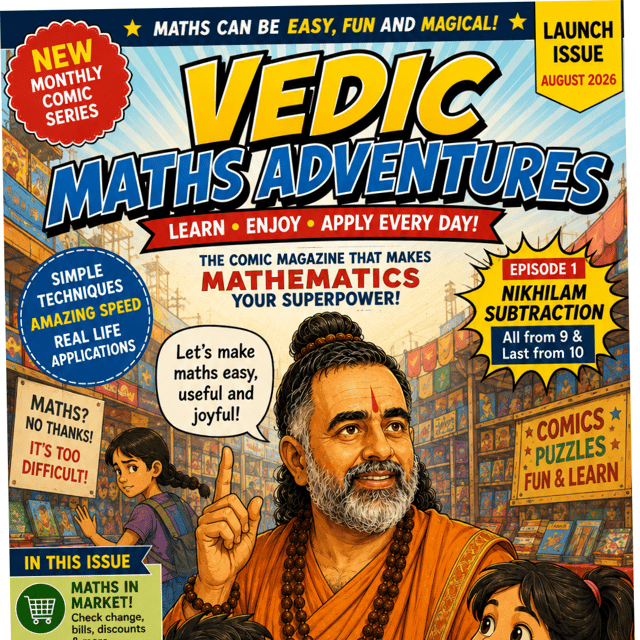
Vedic Mathematics Comic Series -Episode 1

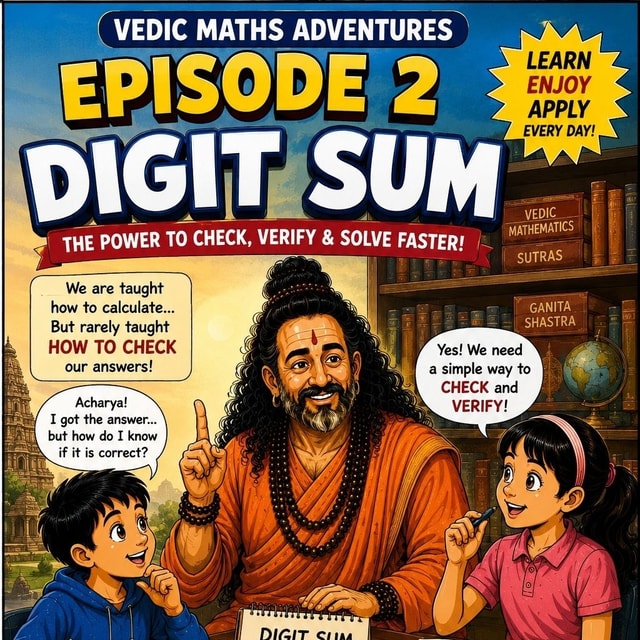
VEDIC MATHS ADVENTURES — EPISODE 2: DIGIT SUM
Vinculum Numbers-Introduction & Worksheets
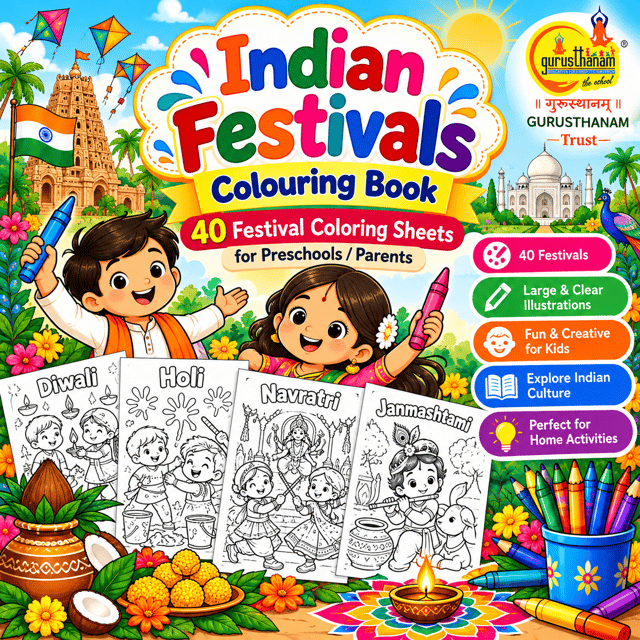
Indian Festivals Colouring Book – 40 Worksheets
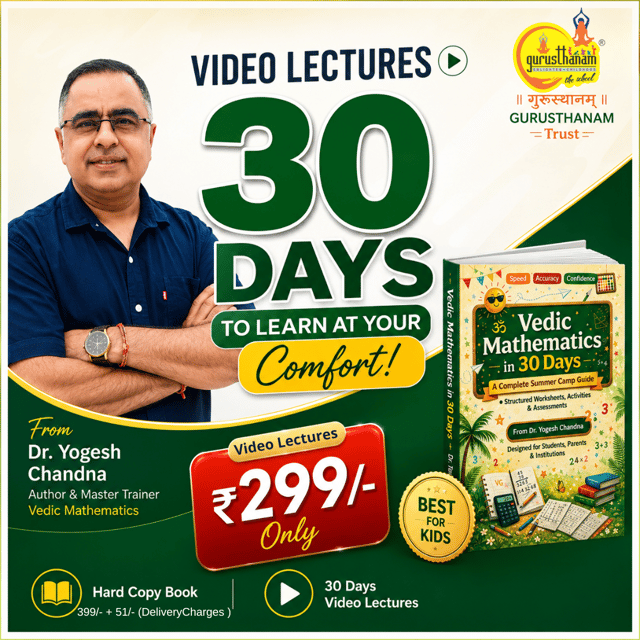
Video Lectures (Learn Vedic Maths in 30 Days)
Flag Method Division (Vedic Mathematics)
Vedic Mathematics Teachers Training Program
Worksheets (Digit Sum & its Applications )
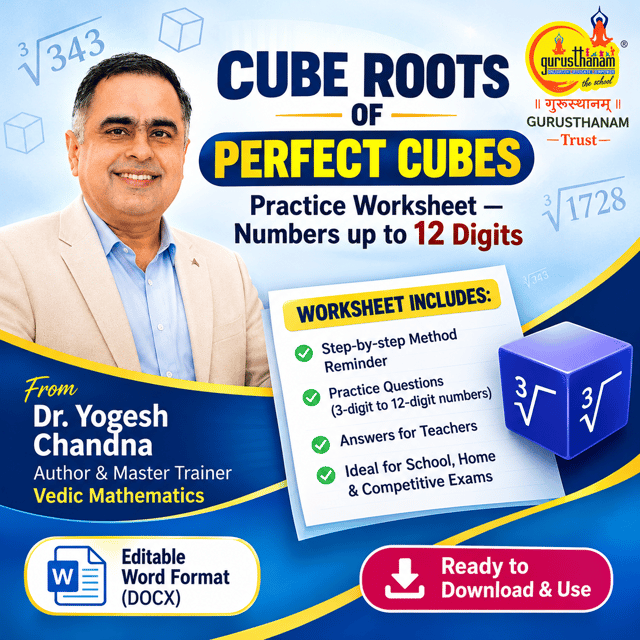
CUBE ROOTS ,PERFECT CUBES Worksheet upto 12 Digits
Worksheets : Doubling & Halving :400 + Questions
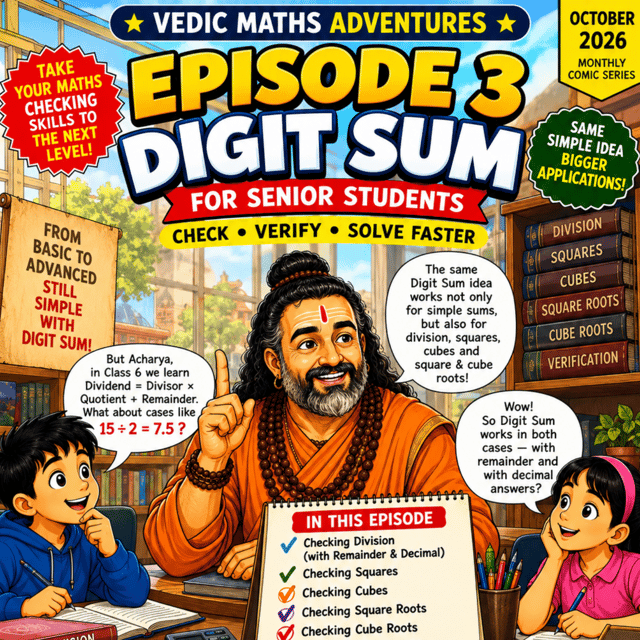
VEDIC MATHS ADVENTURES — EPISODE 3: DIGIT SUM
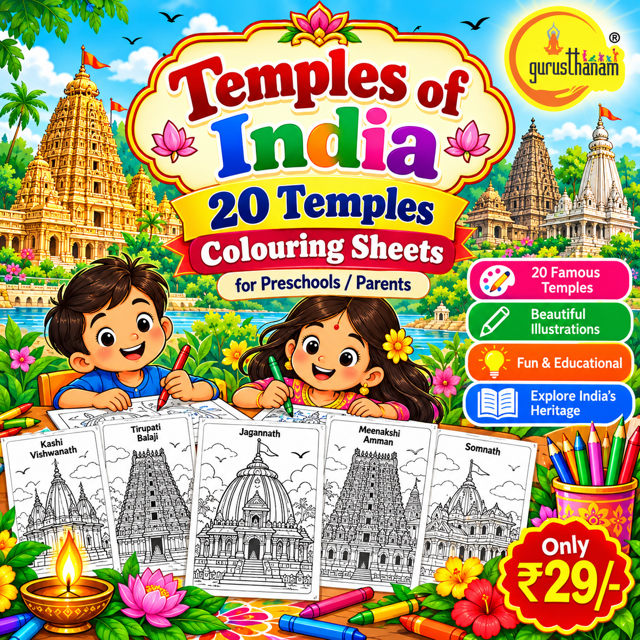
Temples of India – 20 Colouring Sheets: Download
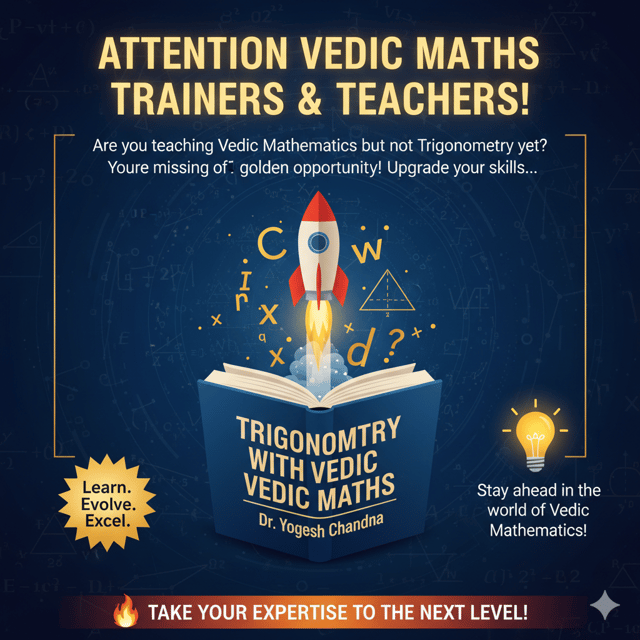
Notes :Trigonometry with Vedic Maths (10 Days )
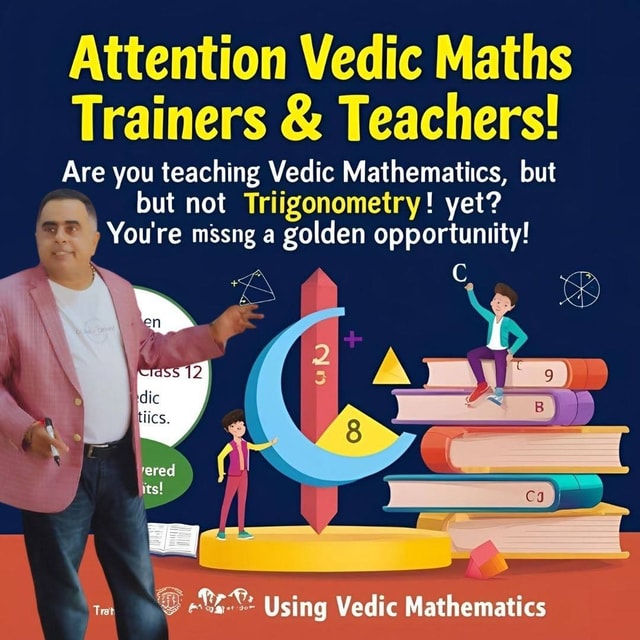
Notes&Videos :TrigonometrywithVedic Maths(10 Days)
About me
Frequently asked questions
What is Vedic mathematics with examples?
Vedic mathematics is a system of mental maths built around 16 sutras (short formulas) that turn lengthy calculations into quick, pattern-based steps. For example, to multiply any two-digit number by 11, you add the two digits and place the sum in between (23 × 11 = 253), and to square a number ending in 5, you multiply the first digit by the next higher digit and attach 25 (35² = 1225). Other staples include verifying answers instantly with digit sums and multiplying numbers near 100 using the base method.
How to learn Vedic mathematics?
Start with the foundation — complements to 10 and 100, digit sums, and doubling and halving — and drill each technique until it becomes automatic before moving to the next. Practising 20–30 minutes daily, following a structured sequence such as a 30-day beginner course, and applying one trick at a time to school-level or exam-level problems works far better than watching random videos. Teachers can go a step further with a dedicated teachers' training programme so the methods can be passed on in classrooms.
How to learn Vedic maths for free?
Use free YouTube playlists, sample PDF chapters, library copies of Vedic mathematics books, and free practice worksheets on education websites. A simple free plan is to learn one trick per week, create 10–15 practice sums for it yourself, and time your speed each round. Free material is enough to build a strong base, and you can consider a paid course or worksheet set later if you want a fully guided, step-by-step path.
How many Vedic maths tricks are there?
The classical system is organised into 16 sutras and 13 sub-sutras, and each sutra expands into several practical techniques for addition, multiplication, division, squares, cubes, fractions, and divisibility. Depending on how a book or course groups them, learners typically come across 25 to 50 named tricks. In practice, mastering around 10–12 core techniques covers most school homework and competitive exam questions.
What are the best Vedic maths tricks for fast calculation?
Most fast calculation tricks in maths come from a small set of core methods: the base (Nikhilam) method for numbers close to 10, 100, or 1000, vertically-and-crosswise multiplication, complements for instant subtraction, digit sums for verifying answers, and doubling and halving. Squaring numbers ending in 5 and divisibility rules are two more that pay off quickly. Pick two or three, practise them daily until they are automatic, and then add the rest one by one.
What are the easiest Vedic maths tricks for multiplication?
Three beginner-friendly ones are: multiplying by 11 by adding neighbouring digits and placing the sum in between (23 × 11 = 253); multiplying by 5 by halving the number and multiplying by 10; and the base method for numbers near 100, where 97 × 98 is solved crosswise as 95 and 06 to give 9506. Each of these replaces long multiplication with one short mental step.
What are some quick Vedic maths tricks for addition?
One of the handiest Vedic maths tricks for addition is "completing the whole": round one number up to the nearest base first. For example, 96 + 47 becomes 96 + 4 = 100, and then 100 + 43 = 143. Combine this with adding left to right and pairing digits that make 10, and multi-digit sums become noticeably faster and less error-prone.
Are there simple Vedic maths tricks for kids?
Yes — doubling and halving, complements of 10, multiplying by 11, and checking answers with digit sums are all simple enough for children from around Class 3–4 onwards, and they feel more like number games than maths. Short daily drills of about 10 minutes, colourful worksheets, and story or comic-based material keep kids engaged. These tricks also build the mental maths base that makes school arithmetic faster later.
Where can I find Vedic maths tricks with examples?
Books by certified Vedic mathematics authors, structured worksheet sets, and video lecture series all teach tricks with fully solved examples. Whatever source you pick, make sure every rule is followed by worked examples and a graded practice set — a good Vedic maths tricks PDF or workbook typically contains several hundred practice questions with answers. Free sample chapters and demo videos are the easiest way to judge explanation quality before buying.
Which Vedic mathematics book is best for beginners?
A good beginner book should explain the 16 sutras in plain language, show every trick with step-by-step solved examples, and include practice exercises with answers. Titles written by certified trainers — especially authors accredited by international Vedic mathematics bodies or recognised with awards for education writing in this field — are usually a safe choice. Preview a few pages first to check that the explanation style and difficulty progression suit the learner.
How do I find good Vedic mathematics classes near me?
Search for Vedic mathematics classes near me along with your city, then shortlist trainers who are certified or accredited, follow a clear syllabus (sutras first, then application to school and exam maths), and offer a demo session before enrolment. Compare batch size, worksheet-based practice, and student reviews. Also check live online options — many reputed trainers based in India teach students across the country, so the right class is not always the nearest one.
What are the most useful Vedic maths tricks for bank exams?
For bank exams, focus on base-method multiplication for simplification questions, instant squares of two-digit numbers, fraction-to-percentage conversions, divisibility rules for quick option elimination, and digit-sum checks to verify answers without re-solving. This is why fast calculation tricks for competitive exams have become standard preparation for IBPS, SBI, and SSC tests — saving even 10–15 seconds per question converts directly into extra attempts. Practise them with a timer against previous-year papers.
Where can I find fast calculation tricks in Hindi?
Hindi-medium editions of popular speed-maths books, YouTube channels, and coaching material for state-level exams cover the same sutra-based shortcuts in Hindi. Many educators also share fast calculation tricks in Hindi through free videos and downloadable notes. When comparing options, prefer material with fully solved examples over formula lists alone, and check a sample lesson to confirm the teaching style matches the learner's comfort.
What is the connection between Vedic mathematics and computational thinking?
Both rest on the same core habit: recognising a pattern and applying a fixed, repeatable procedure to solve the problem. Every sutra works like an algorithm — a step-by-step method reusable across thousands of sums — while selecting the right sutra for a given number pattern mirrors how programmers decompose problems. That is why educators often use Vedic mathematics to build the mental flexibility, estimation, and verification skills that underpin computational thinking.