Testimonials
Services
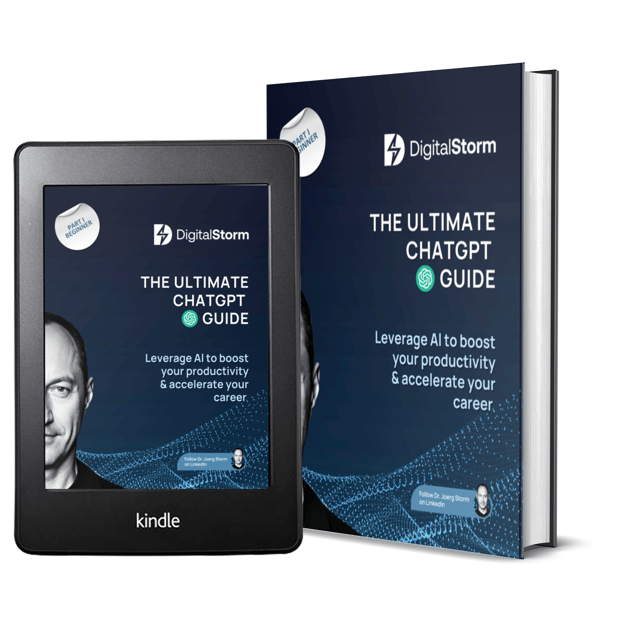
Ultimate ChatGPT Prompt Guide – 1000+ prompts
5 Mentoring Sessions with 10% discount
Speaker Invitation
About me
Frequently asked questions
What is personal branding?
Personal branding is the deliberate practice of shaping how you are perceived professionally — your skills, values, expertise, and personality — across your CV, online profiles, and public content. On platforms like LinkedIn, it means positioning yourself as a recognizable authority in your niche so recruiters, clients, and opportunities find you. A strong personal brand combines a clear message, consistent visibility, and social proof such as recommendations and engagement.
How to use LinkedIn for personal branding?
Start with a fully optimized profile: a headline that states who you help and how, an about section written for your target audience, and a professional photo. Then post consistently within your niche, comment thoughtfully on relevant industry content, and showcase results through case studies and recommendations. LinkedIn rewards native content and genuine interaction, so strategic commenting is one of the fastest ways to grow visibility.
How to build a LinkedIn personal brand?
Building a LinkedIn personal brand starts with choosing a clear niche and defining exactly who you want to reach. From there, a strong LinkedIn personal branding strategy usually means rewriting your headline and about section around that positioning, posting several times a week, engaging daily with your target community, and reviewing analytics monthly to double down on what works. Most people see real traction after 60–90 days of consistency.
What are some good LinkedIn personal branding examples?
The best LinkedIn personal branding examples share common traits: a headline naming a specific expertise, an about section that tells a story, and content that stays within one recognizable theme — for instance, a finance professional breaking down market news or a tech leader explaining AI trends in simple terms. Study creators in your industry with strong engagement and note their posting rhythm, hook lines, and how they mix personal stories with professional insights.
Should you take a LinkedIn personal branding course or hire a LinkedIn personal branding consultant?
A LinkedIn personal branding course works best when you want to learn the framework and implement it yourself on a budget, while a consultant gives personalized feedback on your positioning, profile, and content plan. Many professionals combine both: a course for fundamentals, then a 1:1 profile audit or strategy session to fix blind spots. If your career or business depends directly on LinkedIn, tailored expert feedback usually delivers results faster.
What is ChatGPT prompt engineering?
ChatGPT prompt engineering is the practice of structuring instructions so an AI model reliably produces accurate, high-quality output. It involves techniques like assigning the model a role, providing context and examples, setting constraints, and iterating with follow-up prompts. The difference between a vague request and a well-engineered prompt is often the difference between unusable text and a finished draft.
How to write ChatGPT prompts?
Write effective ChatGPT prompts by including five elements: a role for the AI, context about your situation, a specific task, the output format, and tone or length limits. For example: "Act as a career coach. Here is my CV [paste]. Rewrite my LinkedIn headline in under 120 characters — confident, not clickbait." Vague prompts produce vague answers, so treat every prompt like a brief you would give a freelancer.
What is a ChatGPT prompt optimizer?
A ChatGPT prompt optimizer is a tool or structured framework that takes your rough instruction and rewrites it into a clearer, more complete brief by adding role, context, constraints, and output format. It is most useful for complex tasks like content creation, coding, or analysis, where small wording changes dramatically affect output quality. You can also optimize prompts manually by testing one variable at a time.
What are the best ChatGPT prompts for pictures of yourself?
The best ChatGPT prompts for pictures of yourself start with uploading a reference photo, then describing style, lighting, background, and mood in detail — for example: "Create a professional headshot of the person in this photo with soft studio lighting, a neutral background, and business attire." The more specific you are about camera angle, clothing, and setting, the closer the result matches what you want, and words like "candid," "editorial," or "corporate" help control the overall aesthetic.
What is the ChatGPT prompt for Ghibli art?
The viral ChatGPT prompt for Ghibli art is an instruction to transform an uploaded photo into a hand-drawn anime scene in the soft, painterly Studio Ghibli style — for example: "Turn this photo into a Ghibli-style illustration with warm colors, gentle lighting, and detailed natural backgrounds." You can refine the output by adding details about mood, season, or scene, though imitating a specific studio's style can raise copyright questions for commercial use.
What are good ChatGPT prompts for studying?
Some of the most effective ChatGPT prompts for studying ask the AI to explain a concept at three difficulty levels, generate practice questions from your notes, build a revision schedule, or quiz you chapter by chapter. A strong pattern is: "You are my tutor for [subject]. Explain [topic] simply, then ask me five questions and correct my answers." Active recall like this beats passively re-reading notes.
How to write Midjourney prompts?
Midjourney prompts work best as short, comma-separated descriptions that lead with the subject, then add style, lighting, composition, and medium — for example: "modern glass office tower at dusk, golden hour light, wide-angle architectural photography." Learning how to write Midjourney prompts also means using parameters like --ar for aspect ratio and --stylize to control artistic intensity. Start simple, generate variations, and refine one element at a time.
How do you write Midjourney prompts for realistic photos?
For photorealistic results, describe an actual camera setup: subject, lens, lighting, and setting — for example, "portrait of an engineer in a factory, shot on 85mm lens, natural window light, shallow depth of field." Midjourney prompts for realistic photos improve further with terms like "photorealistic" and "natural skin texture," plus the --style raw parameter, which reduces the default artistic smoothing. Specific photographic language beats long lists of adjectives.
What is a Midjourney image prompt?
A Midjourney image prompt is a reference image you attach so Midjourney bases its output partly on that picture instead of text alone. The image influences composition, color palette, and style, and you can control how strongly it steers the result using image weight settings. It is a popular technique for keeping a consistent visual style across a series of images or reworking the mood of an existing picture.
Where can you find free Midjourney prompts?
Good sources for free Midjourney prompts include the official Midjourney documentation and community feed, prompt-sharing threads on Reddit and Discord, and free prompt libraries published by AI creators and newsletters. Free lists are useful for inspiration, but you improve fastest by taking a prompt you like and systematically swapping one element at a time — subject, lighting, style, or camera angle — so you learn what actually changes the result.