Testimonials
Services
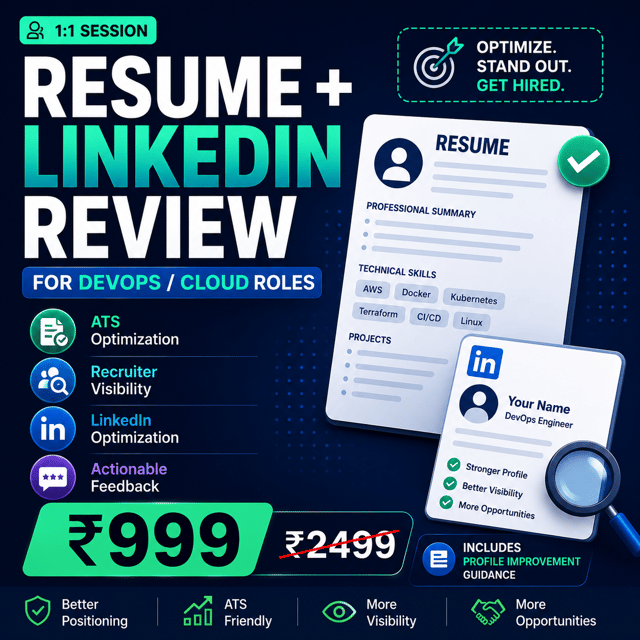
Resume + LinkedIn Review for DevOps/Cloud Roles

Priority Career Guidance DM
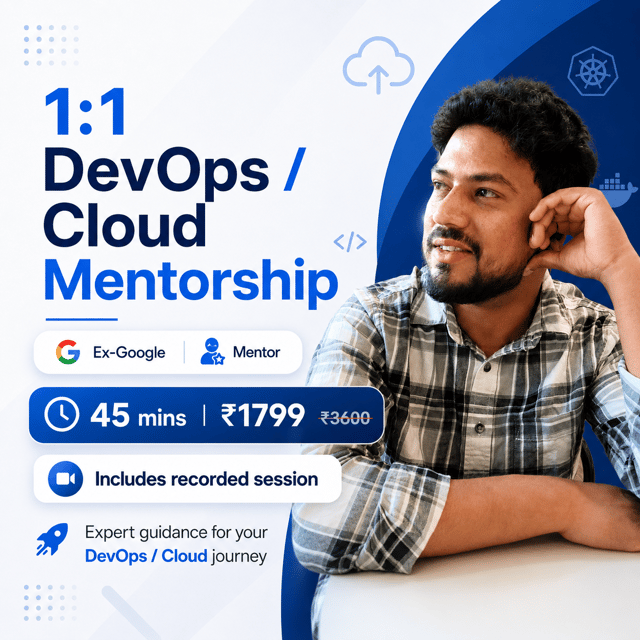
1:1 DevOps / Cloud Mentorship

DevOps / Cloud Mock Interview + Detailed Feedback
About me
Frequently asked questions
What is the DevOps roadmap for beginners, and how is the DevOps roadmap 2026 different?
The DevOps roadmap for beginners follows a stable sequence: Linux and networking basics, one scripting language (Bash or Python), Git, CI/CD pipelines, Docker, Kubernetes, one cloud platform such as AWS or GCP, and Terraform for infrastructure as code. The DevOps roadmap 2026 adds heavier weight to platform engineering, GitOps workflows, observability, and cloud security, since employers now expect these on top of the fundamentals. Follow the sequence, build one small project at every stage, and get the plan reviewed by someone who works on production systems so you don't spend months on low-impact tools.
Where can I find a DevOps roadmap with resources?
You can find a DevOps roadmap with resources on popular community roadmap platforms and open-source GitHub repositories, most of which break the journey into stages like Linux, networking, Git, CI/CD, Docker, Kubernetes, cloud, and monitoring with free learning links for each. The real gap for most aspirants is not finding resources — it is sequencing them around their current job, experience level, and target roles. Curating these resources into a realistic plan is where a roadmap session with a working DevOps professional can replace weeks of trial and error.
How to become a DevOps engineer without any prior experience?
You can become a DevOps engineer without prior experience by building fundamentals first — Linux, networking, and scripting — then moving to Git, CI/CD, Docker, Kubernetes, one cloud platform, and Terraform, while creating 2–3 end-to-end projects such as deploying and automating a real application. Entry routes that work well in India include internal transfers from support/QA/development roles, junior DevOps or cloud support positions, and internships. Certifications like AWS Solutions Architect Associate or CKA add credibility when your resume has no DevOps job title yet, and mock interviews help you present your transferable experience convincingly.
What is DevOps and why is it used?
DevOps is a set of practices that combines software development (Dev) and IT operations (Ops) to build, test, and release software faster and more reliably using automation, CI/CD pipelines, infrastructure as code, and continuous monitoring. Companies use DevOps because it shortens release cycles, reduces deployment failures, improves collaboration between teams, and keeps applications stable at scale. This is why DevOps and platform engineering roles remain among the most in-demand and well-paid technology careers in India.
What is Kubernetes with an example?
Kubernetes is an open-source container orchestration platform that automates deploying, scaling, and managing containerized applications. For example, if you run an online store whose app is split into containers, Kubernetes automatically restarts containers that crash, adds more replicas during a sale-driven traffic spike, distributes load across servers, and rolls out new versions without downtime — tasks that would otherwise need someone doing them manually at scale.
Which Kubernetes tutorial for beginners is the best one to start with?
The best Kubernetes tutorial for beginners is a hands-on one that covers pods, deployments, services, ConfigMaps, and secrets using a local cluster with minikube or kind, and then moves you toward managed clusters and real projects. Pick one structured tutorial and complete it end-to-end instead of hopping between playlists, practice on free browser-based labs alongside it, and if Kubernetes will be central to your career, working toward the CKA certification gives your learning a clear target.
Is Kubernetes free for commercial use?
Yes. Kubernetes is open source, governed by the CNCF, and free for commercial use — companies can run it in production and even build products on top of it without paying any license fees. What you pay for is the underlying infrastructure and, if you choose managed offerings like Amazon EKS, Google GKE, or Azure AKS, the control-plane and node costs those providers charge. Kubernetes certifications such as CKA are priced separately.
How to get AWS certification as a complete beginner?
To get AWS certification as a beginner, choose your first exam — usually AWS Certified Cloud Practitioner — create a free AWS account for hands-on practice, complete one structured course, go through the official exam guide, and finish with timed practice tests before booking the exam online or at a test center. Most working beginners in India prepare in four to eight weeks alongside a job. If you are unsure which certification fits your DevOps or cloud goal, get your certification plan reviewed once so you don't take the wrong exam first.
What is the right AWS certification path for DevOps and cloud roles?
A practical AWS certification path for DevOps and cloud careers starts with AWS Certified Cloud Practitioner, moves to AWS Solutions Architect Associate or Developer Associate, and then advances to DevOps Engineer Professional, SysOps Administrator Associate, or specialty exams like Security depending on your target role. For DevOps specifically, pairing these certifications with hands-on Docker, Kubernetes, Terraform, and CI/CD skills matters more than collecting certificates. Freshers should start at the foundational level, while experienced professionals can usually go straight to associate level.
What is the AWS certification cost in India?
The AWS certification cost in India is USD 100 for the foundational level (Cloud Practitioner), USD 150 for associate-level exams, and USD 300 for professional and specialty exams, plus applicable taxes. A discounted retake fee applies if you need to attempt an exam again. The exam fee itself cannot be avoided, but your preparation can be nearly free using the AWS free tier, official documentation, and free learning content — so budget mainly for the exam.
Can I switch to DevOps from a non-IT or support background?
Yes — a large share of DevOps engineers in India switched from manual testing, technical support, networking, BPO, and even completely non-IT careers. The switch works best when you build hands-on skills in Linux, scripting, Git, Docker, Kubernetes, and one cloud platform, document them through real projects, and position your existing experience (troubleshooting, ownership, processes) as a transferable strength. A structured plan spanning around 90 days with accountability and mock interviews shortens the transition far more than random, unstructured learning.
How do I prepare for a DevOps interview as a fresher?
Prepare for a DevOps interview around five clusters: Linux and networking troubleshooting, scripting, Git and CI/CD pipeline questions, Docker and Kubernetes scenarios, and cloud plus Terraform basics. Expect scenario-based questions like "a pod is crashing, how do you debug it?" rather than only definitions, so practice explaining your projects end-to-end. Doing a few mock interviews with detailed feedback before the real one exposes your weak areas and dramatically improves how confidently you present the work you have actually done.
What should a DevOps fresher resume include to get shortlisted?
A DevOps fresher resume should lead with hands-on projects that show real outcomes — for example, "containerized an application and automated its deployment through a CI/CD pipeline, cutting release time" — followed by a tight skills section mapped to the job description (Linux, AWS, Docker, Kubernetes, Terraform, Jenkins or GitHub Actions), relevant certifications, and quantified results wherever possible. Avoid listing tools you cannot discuss in depth, keep it to one or two pages, and align keywords with the role so it clears ATS filters. Getting the resume reviewed by someone who hires for these roles usually surfaces gaps you cannot see yourself.
Is DevOps a good career in India?
Yes — DevOps remains one of the strongest technology careers in India, with demand across product companies, IT services, fintech, and startups, and experienced DevOps and platform engineers earn notably more than many same-experience generalist roles. The career suits people who enjoy automation, systems thinking, and troubleshooting, and it offers clear growth into SRE, platform engineering, and cloud architecture roles. The demand is skills-driven though — candidates with real project experience in Kubernetes, cloud, and infrastructure as code get a disproportionate advantage over certificate-only profiles.