Testimonials
Services
Explore
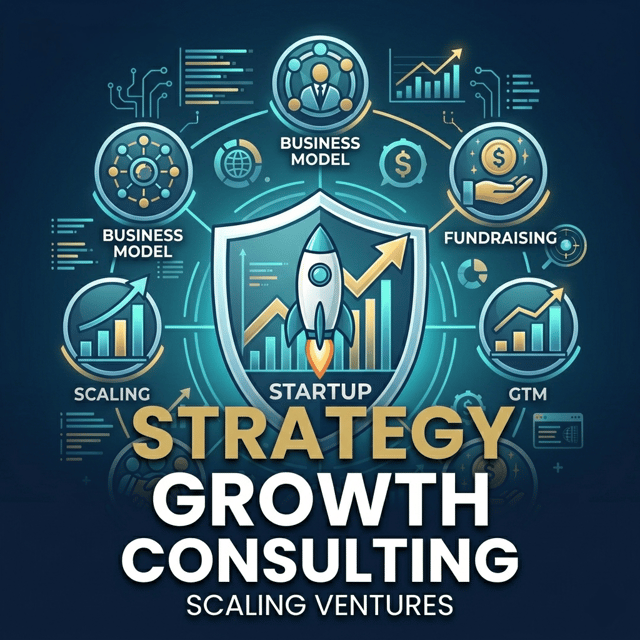
Startup Strategy & Growth Consulting
Priority DM

"Building a Sustainable Startup: 1 to 10"
About me
Frequently asked questions
What is idea validation and why does it matter for a new startup?
Idea validation is the process of testing whether real customers actually want your product before you spend time and money building it. Instead of assuming demand, you check it through customer interviews, surveys, landing page tests, and small pilots. It matters because a large share of startups fail from building something nobody needs — validation confirms the problem is real, the audience is reachable, and people are willing to pay before you commit your savings.
How to validate a startup idea before spending money on it?
Start by writing down the exact problem and who faces it. Then talk to 15–20 potential customers, run a simple landing page or WhatsApp waitlist to measure genuine interest, test demand with a small pilot or pre-orders, and check whether people already pay for similar solutions. If the signals are consistent, move to building; if not, refine or drop the idea. A structured idea validation session with an experienced mentor can also expose blind spots before money is spent.
Which startup idea validation framework works best for first-time founders?
Most first-time founders do well with a lean validation approach: define the problem, identify the riskiest assumption, and test it using methods like the Mom Test for customer interviews, a lean canvas to map the business, and a smoke-test landing page. Whichever startup idea validation framework you pick, the real proof is behaviour — pre-orders, repeat conversations, and sign-ups — not compliments from friends and family.
Can I do startup idea validation using AI instead of talking to real customers?
AI is a useful assistant for early research — it can generate survey questions, build customer personas, summarize competitor information, and pressure-test your pitch. But startup idea validation using AI alone is risky, because AI cannot observe real buying behaviour in your market. The safest path is to use AI to prepare sharper questions and analysis, then confirm the findings through real customer conversations, a small pilot, or an experienced mentor's review.
What is a startup mentor and when should a founder approach one?
A startup mentor is an experienced entrepreneur or industry professional who guides founders through early decisions — validating ideas, structuring the business, preparing for funding, and avoiding costly mistakes — without taking ownership of the company. A founder should approach one when stuck at the idea stage, unsure whether the plan is investment-ready, facing growth decisions alone, or repeating the same mistakes despite genuine effort.
How to find a startup mentor in India?
Founders usually find mentors through startup incubators and accelerators, online mentoring platforms that allow direct session bookings, startup events and founder communities, and government initiatives such as Startup India. Filter by real operating experience in your industry, read reviews from other founders, and start with a short intro call before committing to long-term guidance — honesty and fit matter as much as credentials.
What should I expect from a startup mentoring program?
A good program offers structured sessions with clear goals, honest and specific feedback on your idea or strategy, accountability between meetings, and guidance on concrete issues such as pricing, market entry, team structure, or funding readiness. Expect homework too — the founder's preparation between sessions usually decides how much value the startup mentoring program actually delivers.
How much do startup coaching and mentoring sessions cost in India?
It varies widely. Independent mentors and coaches may charge anywhere from a few hundred to several thousand rupees per session depending on their experience, industry, and session length. Many offer a lower-priced short intro call, while packages or monthly plans reduce the per-session cost. Weigh the fee against outcomes — saved mistakes, faster decisions, clearer strategy — rather than the price alone.
How does startup funding work for early-stage founders?
In simple terms, investors provide capital in exchange for equity, and expectations rise with each round. Most founders begin with bootstrapping and support from friends and family, move to angel investors, and approach venture capital once traction is visible. Startup funding in India also includes non-dilutive options such as government grants and seed support for DPIIT-recognised startups, which are worth exploring before giving up ownership.
What are the different startup funding stages?
The main startup funding stages are pre-seed (idea or prototype, funded through savings, grants, or angels), seed (product live with early users, funded by angels and seed funds), Series A (proven business model, raised to scale), and Series B, C, and beyond (expansion into new markets or product lines). Each stage funds a different goal, and raising too early — before validation and traction — usually leads to rejection or unfavourable terms.
What is startup seed funding and how much equity do investors expect?
Seed funding is the first meaningful external round of capital, typically raised after bootstrapping to take a validated product to market and build early traction. In India, seed rounds can range from a few lakhs to several crores depending on the sector, team, and momentum. There is no fixed equity number — it depends on valuation and negotiation — but experienced founders try to keep early dilution low so enough ownership remains for later rounds.
Which startup funding schemes in India should early-stage founders know about?
Founders can explore the Startup India Seed Fund Scheme, which supports prototyping, market entry, and commercialisation through approved incubators; state startup policies offering grants, subsidies, and incubation; and SIDBI-linked funds for innovative ventures. DPIIT recognition is usually the first eligibility step. Since most startup funding schemes in India are competitive and milestone-based, a validated idea and a sharp pitch significantly improve selection chances.
How to get startup funding for a small business in India without giving up equity?
Small businesses — local services, tourism, food, retail, small manufacturing — are usually better served by equity-free routes: MSME and Mudra loans, bank credit lines, government subsidies and grants for small units, and revenue-based financing. Investors mostly seek hyper-growth, so if the goal is steady profitability rather than rapid scaling, debt and subsidy options make more sense. Clean basic financials, a clear business plan, and some early revenue greatly improve approval odds.
What is a startup grant and how is it different from a loan?
A startup grant is funding given by a government body, incubator, foundation, or corporation that normally does not need to be repaid and does not take equity. Unlike a loan, there is no interest or EMI, but grants are competitive, tied to milestones or specific purposes, and often reserved for categories such as women-led, rural, student, or deep-tech ventures. For founders who want capital without debt or dilution, grants are well worth the application effort.
How to get startup funding as a first-time founder with no traction yet?
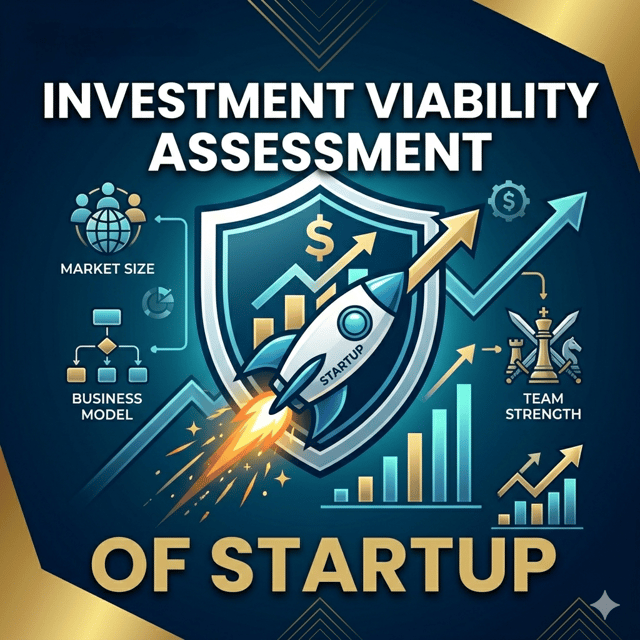
Without revenue or users, lead with evidence instead of traction: customer interview findings, waitlist sign-ups, a working prototype, or pre-orders. Friends and family, angels who back early ideas, incubators, and government seed grants are the realistic entry points at this stage. Many founders also get an outside investment viability assessment first, so they know exactly which questions investors will raise and can fix the weak spots before pitching.