Testimonials
Services
4 Therapy Sessions package
30-Minute Discovery Call
About me
Frequently asked questions
What is couple counselling?
Couple counselling is a structured, guided process where both partners work with a trained counsellor to address conflict, communication gaps, trust issues, and emotional distance. The counsellor does not take sides or decide who is "right" — the goal is to help both partners feel heard, understand the pattern between them, and rebuild connection. Many couples seek counselling only after years of tension, but it works best at the first signs of repeated fights or emotional withdrawal.
How does marriage counselling work if only one partner is willing to attend?
Marriage counselling can still create real change even when only one partner is ready to start. When one person understands their own triggers, reactions, and communication patterns, the dynamic between the two naturally begins to shift, and the other partner often becomes open to joining later. Many counsellors begin with individual sessions and move to joint sessions once both partners feel safe, so no one feels ambushed or blamed.
Is online marriage counselling in India as effective as in-person sessions?
Online marriage counselling in India is just as effective as in-person sessions for most relationship concerns. Video sessions suit couples living in different cities, people who want complete privacy, and those who open up more honestly from the comfort of home. What matters most is not the mode of the session but the counsellor's qualifications and whether both partners feel safe and unjudged while talking.
How to find a marriage counselor who is right for you and your partner?
Start by looking for a qualified psychologist or marriage counselor with specific experience in couples work, not only individual therapy. Check whether they handle sensitive topics like intimacy, in-law stress, and financial conflict with a neutral, non-judgmental approach. Many professionals offer a short discovery call — use it to see if both of you feel comfortable, because the fit between the counsellor and the couple matters more than any single technique.
What is couples therapy like in an actual session?
Couples therapy feels like a structured, safe conversation where the therapist helps each partner speak honestly without interruptions or blame. You might revisit a recent fight to uncover the pattern underneath it, which is often shaped by childhood experiences, family expectations, or unspoken needs. Nobody is declared the winner; the aim is to make difficult conversations possible and give you practical tools to use between sessions.
What is anxious attachment style?
An anxious attachment style is a pattern where you deeply crave closeness but constantly fear rejection or abandonment. It usually forms in childhood when love or attention felt unpredictable, so as an adult you keep seeking "proof" that the relationship is safe. Signs of an anxious attachment style in relationships include overthinking delayed replies, needing constant reassurance, feeling jealous easily, and reacting strongly to small signs of distance.
What is anxious attachment and how to fix it?
Anxious attachment is not a personality flaw — it is a learned way of protecting yourself from abandonment, and it can change. "Fixing" it starts with noticing your triggers, self-soothing instead of protest behaviour like excessive texting or silent treatment, and asking directly for what you need instead of testing your partner. Working with a psychologist or using structured attachment-focused worksheets helps rewire these patterns far faster than willpower alone.
Anxious attachment vs avoidant attachment: what is the difference?
Anxious attachment copes with the fear of abandonment by pursuing — seeking reassurance, texting more, and escalating emotionally when feeling ignored. Avoidant attachment copes with the fear of being controlled by withdrawing — going silent, needing space, and shutting down during conflict. When the two are paired, which is very common in marriages, it creates a painful pursue-withdraw cycle where one partner chases closeness while the other retreats, leaving both feeling unloved. Both patterns are learned, and both can move toward security.
Is anxious attachment disorder a mental illness?
No. Although it is often described as anxious attachment disorder, anxious attachment is not a clinical diagnosis or a mental illness — it is a learned relational pattern. That said, the constant worry, overthinking, and emotional ups and downs can feel exhausting and may overlap with anxiety, so speaking with a psychologist can help you understand what you are experiencing and how to heal it.
How to go from anxious to secure attachment?
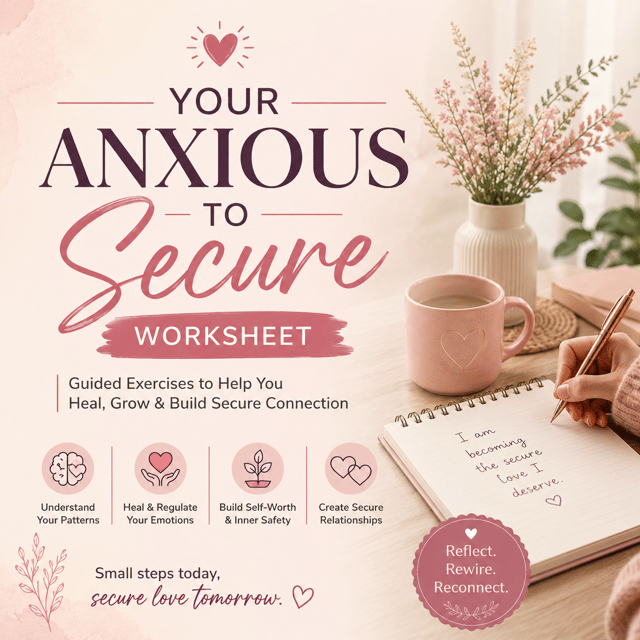
Moving from anxious to secure attachment happens through repeated experiences of safety, not an overnight personality change. Start by identifying your triggers, calming your body before reacting, and replacing protest behaviours with direct, honest requests. Practising these new responses consistently — ideally with support from a therapist or a structured anxious-to-secure worksheet — gradually teaches your mind that closeness does not have to be feared or chased.
How to deal with a mama's boy husband without constant fights?
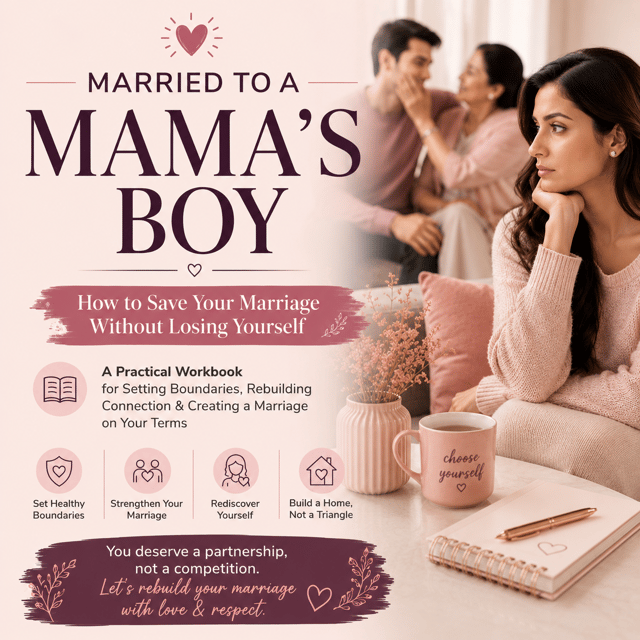
The hurt is usually not that he loves his mother — it is that he goes silent or avoids taking your side to keep the peace. Instead of forcing him to choose between you and his family, name the specific behaviour that hurts you, use calm scripts instead of accusations, and ask him to stand as a team with you rather than against his family. Agreeing on boundaries as a couple helps, and focused resources such as counselling or a guide like Married to a Mama's Boy give you ready-made words for these conversations instead of repeating the same fights.
What is intimacy coaching?
Intimacy coaching helps individuals and couples rebuild emotional and physical connection, especially when there is desire mismatch, emotional distance, or difficulty talking about sexual needs without shame. Intimacy is not only about sex — it is about feeling seen, heard, and accepted by your partner. Sessions are practical and non-judgmental, focused on helping you communicate your needs and reconnect without pressure, guilt, or fear.
How to fix emotional distance in marriage?
Emotional distance in marriage usually builds quietly — through unaddressed hurt, conflicts swept under the rug, or routines that leave no room for real conversation. Start by naming the distance without blame, creating small daily moments of genuine connection, and having one honest conversation about what each of you is missing. If the gap persists, marriage counselling helps both partners understand the wounds beneath the silence and rebuild the feeling of being a team.