Testimonials
Services
Programming Best Books Collection
DSA Best Resources
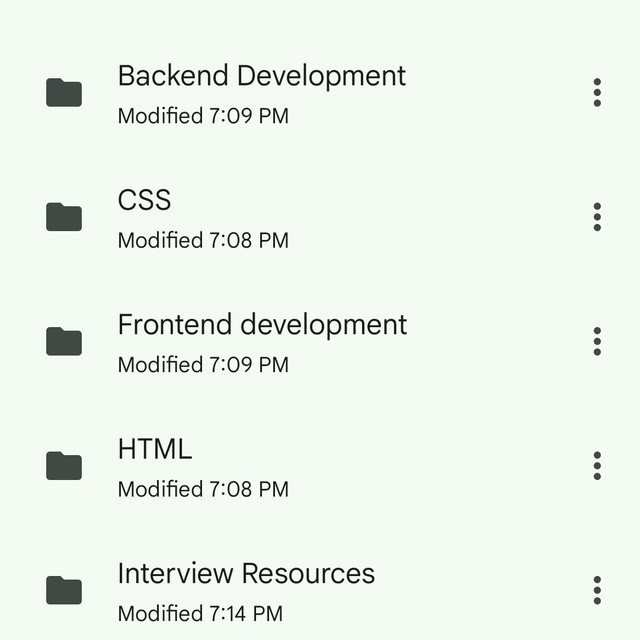
Web Development Best Resources
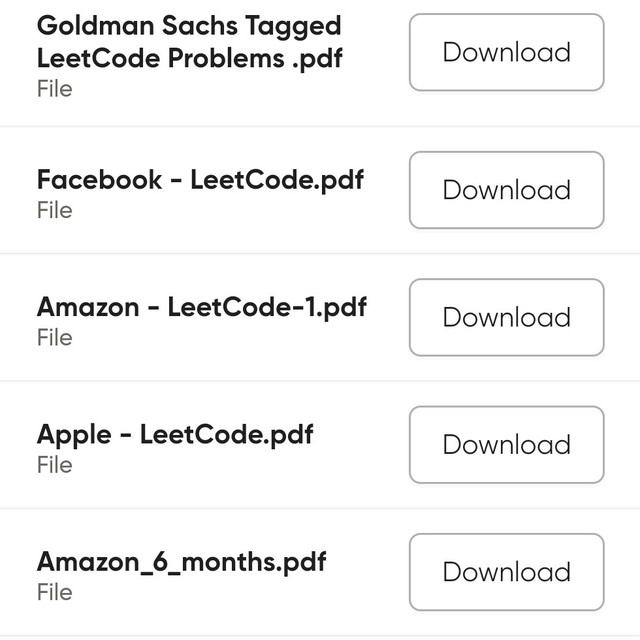
Best Data Science & Machine Learning Resources
Python Interview Q&A
Data Science Resume Guide Template
About me
- Expert Coding shared lauded resources in data science, machine learning, python, and programming. Useful for interview preparations and beginners, these materials are an internet favorite.
 AI-generated based on testimonials
Frequently asked questions
How to learn data structures and algorithms from scratch?
Pick one language (Python or C++), follow a fixed topic order — arrays, strings, linked lists, stacks, queues, recursion, trees, graphs, hashing, and dynamic programming — and solve 2–3 problems every day on LeetCode or GeeksforGeeks. If you are confused about how to learn data structures and algorithms without jumping between random tutorials, start with one curated resource list and stick to it for at least 8–10 weeks while building a daily practice habit.
How to master data structures and algorithms for product-based company interviews?
Move beyond watching videos: after every topic, solve pattern-based problems (two pointers, sliding window, backtracking, dynamic programming), maintain an error notebook, and revise weak patterns weekly. Mock interviews and timed contests build the speed that separates people who know the theory from those who can actually perform. Consistency over 4–6 months, not shortcuts, is how to master data structures and algorithms.
What are data structures and algorithms in programming?
Data structures are ways of organising data in memory — arrays, linked lists, stacks, queues, trees, and graphs — while algorithms are step-by-step methods to solve problems efficiently on that data. Understanding data structures and algorithms in programming is essential because every coding interview, from service companies to FAANG, tests how fast and how memory-efficient your solution is, not just whether it works.
How do I practise data structures and algorithms in Python as a beginner?
Python is one of the easiest languages for this because its clean syntax lets you focus on logic instead of boilerplate. Use lists, dictionaries, sets, and the collections module to implement core structures, then solve easy-to-medium problems before moving to topic-wise sheets. Once you are comfortable with data structures and algorithms in Python, shift to a dedicated Python interview Q&A bank so you can also handle theory questions on decorators, generators, and memory management.
Which data structures and algorithms interview questions are asked in product-based companies?
Most data structures and algorithms interview questions at product-based companies come from arrays, strings, two pointers, sliding window, hashmaps, linked lists, trees, graphs, and dynamic programming, usually at a medium difficulty level. Since these companies repeat patterns from previous drives, many aspirants prepare from compiled question lists covering the top 100 product based companies instead of solving randomly — it significantly improves their hit rate in interviews.
Which data structures and algorithms book should I start with?
The right data structures and algorithms book depends on your stage: start with a beginner-friendly text that explains concepts with visuals, then move to a practice-heavy book with solved examples for placement-style problems, and use a heavyweight reference only if you want deep theory. Whatever you pick, read one chapter and immediately solve matching problems — reading multiple books in parallel is the most common mistake beginners make.
Is Data Structures and Algorithms Made Easy by Narasimha Karumanchi good for placements?
Yes — Data Structures and Algorithms Made Easy by Narasimha Karumanchi is one of the most popular books among Indian students because it covers everything from arrays to graphs with plenty of solved problems in an interview-friendly format. It works best as a practice companion after you understand the basics, and it pairs well with company-specific previous questions if you are targeting campus placements or product companies.
What is the best web development roadmap for beginners?
A practical web development roadmap for beginners looks like this: HTML → CSS → JavaScript → Git/GitHub → one frontend framework like React → backend with Node.js and Express → databases (SQL or MongoDB) → deployment, while building 3–4 portfolio projects along the way. Follow one structured path instead of mixing five tutorials, and use curated web development best-resources collections so every stage has vetted documentation, courses, and project ideas.
Is there a complete web development roadmap pdf I can follow offline?
Yes, many educators and communities share a web development roadmap pdf that lists skills, tools, and projects stage by stage. Before following one, check that it is recently updated — it should include modern JavaScript, a component-based framework, and deployment workflows — and that it ends with project-building rather than just theory. A roadmap pdf is only a checklist, so your progress ultimately depends on consistent execution.
What is the ideal data science roadmap for beginners?
A solid data science roadmap for beginners runs: Python fundamentals → statistics and probability → SQL → NumPy, Pandas, and visualisation → machine learning algorithms → hands-on projects → Kaggle practice and a portfolio on GitHub. Spend roughly equal time on theory and implementation, because recruiters in India shortlist candidates based on projects and problem-solving, not certificates alone.
Where can I get a data science roadmap pdf for free?
Free data science roadmap pdf files are shared widely by mentors, edtech communities, and coding educators, and they are a decent starting point to see the entire skill map on one page. The catch is quality and freshness — many are outdated or too shallow — so verify that the pdf covers statistics, SQL, and ML projects, not just tool names. Pair any free roadmap with a well-vetted data science and ML resource list so you learn from the best material at every stage.
How to become a data scientist without a computer science degree?
If you are wondering how to become a data scientist without a CS degree, the answer is skills-first: master Python, statistics, and SQL, build 3–5 end-to-end projects on real datasets, publish them on GitHub with clean write-ups, and prepare a project-heavy resume using a data-science-specific resume template. Many working data scientists in India come from mechanical, civil, commerce, or other non-CS backgrounds — demonstrable skills and interview-ready fundamentals matter far more than the degree line.
How to get your first freelancing client as a student in India?
Start narrow: pick one service (website building, Python scripting, data cleaning), create 2–3 sample projects as proof, and pitch small businesses, coaches, or local shops that need exactly that. The fastest way to learn how to get your first freelancing client is usually your own network — college fests, local businesses, LinkedIn outreach — before marketplaces like Upwork and Fiverr, where competition is higher. Price affordably at the start for reviews, deliver fast, and ask every happy client for a referral.
Where can I find Infosys reasoning questions with answers for the online test?
Infosys's hiring test includes a reasoning and puzzle-heavy section, so aspirants typically practise from compiled Infosys reasoning questions with answers based on previous drives — number series, syllogisms, blood relations, seating arrangements, and data sufficiency. Solve them with a timer because the real challenge is speed under pressure, and combine this with a general aptitude practice guide to cover the quantitative and verbal sections as well.