Testimonials
Services
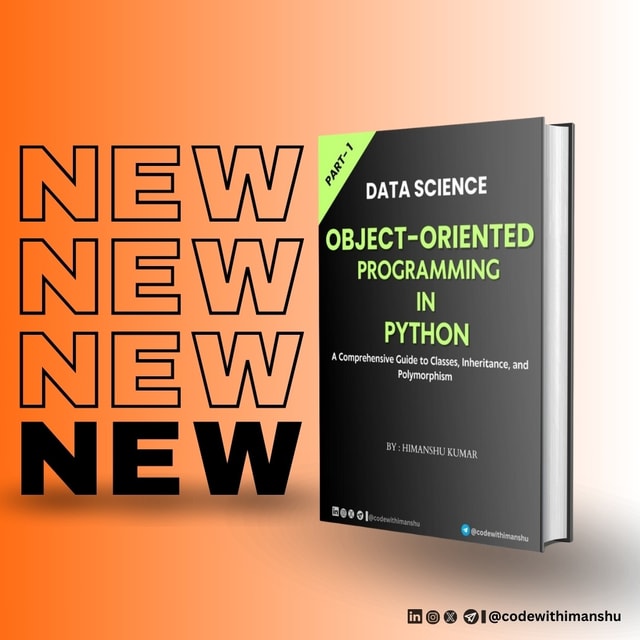
OOPs In Python | Data science Notes Part- 1
Let's connect and talk👋🏼

Frequently asked questions
How to prepare for a DSA interview?
Start by locking down the core topics — arrays, strings, linked lists, stacks, queues, trees, graphs, recursion, and dynamic programming — and solve a fixed number of problems daily for each topic. Follow the pattern of learn, solve easy problems, solve medium problems, and revise, and in the final two weeks do timed practice and mock interviews. Preparation for a DSA interview is less about watching tutorials and more about writing code yourself and analysing time and space complexity for every problem you solve.
How to answer DSA interview questions?
Never jump straight into coding. Clarify the question and constraints first, explain a brute-force approach with its complexity, and then optimise it using a better data structure or algorithm while thinking out loud. Interviewers judge your problem-solving process more than the final code, so justify every decision, handle edge cases, and ask for hints politely instead of going silent when stuck.
What are the most common DSA interview questions and answers for freshers?
Most DSA interview questions and answers for freshers revolve around arrays (reversal, rotation, two-pointer technique), strings (palindrome, anagram), linked lists (cycle detection, reversal), stacks and queues, searching and sorting, recursion, and basic tree and graph traversals. Interviewers in India usually start with one easy problem to test fundamentals and then raise the difficulty based on how well you explain your approach. Practise writing clean, bug-free code and stating time and space complexity for every solution.
Where can I find a good DSA interview questions PDF with solutions?
You can find a DSA interview questions PDF on placement-preparation websites, in curated notes shared by seniors on coding communities, and through mentors who compile topic-wise question banks for their students. Pick one good PDF and complete it end to end instead of hoarding multiple files. Make sure the PDF includes solutions and complexity analysis, not just questions.
Are DSA interview questions in Java different from Python or C++?
The logic behind DSA interview questions in Java is exactly the same as in Python or C++ — concepts, patterns, and complexity do not change with the language. What changes is syntax, built-in libraries, and your coding speed. Prepare in the language you are strongest in, but if the job description mentions Java specifically, practise implementing classic problems in Java using collections like HashMap, ArrayList, and PriorityQueue.
What are the main Python OOPs concepts with examples?
The key Python OOPs concepts with examples are: classes and objects (a Car class with objects like Swift or i20), inheritance (an ElectricCar class inheriting from Car), encapsulation (making attributes private inside a class), polymorphism (the same method name behaving differently in different classes), and abstraction (hiding implementation details behind a simple interface). Prepare one small code snippet for each concept, because interviewers frequently ask you to explain them with real-life examples.
Does Python have OOPs concepts?
Yes, Python does have OOPs concepts. In fact, everything in Python is an object, including strings, lists, and even functions. Python supports classes, inheritance, polymorphism, encapsulation, and abstraction, but unlike Java it does not force you to write all your code inside a class, which is exactly why interviewers test whether you truly understand OOPs or have only memorised the definitions.
What are the most frequently asked Python OOPs concepts interview questions?
The most common Python OOPs concepts interview questions are: difference between a class and an object, what __init__ and self do, method overriding vs method overloading, types of inheritance, how super() works, what dunder (magic) methods are, and how abstraction is achieved in Python. Freshers are often also asked to write a small class hierarchy live, such as a bank account or library system, so practise coding these instead of only reading them.
Where can I find a Python OOPs concepts PDF for quick revision?
A good Python OOPs concepts PDF for revision should contain definitions, syntax, solved examples, and a set of interview questions, not just theory. You can find such notes on Python and data-science learning resources, or use structured digital notes prepared by mentors, which save you from switching between ten different tutorials. Revise from the same PDF consistently so the concepts stay fresh before placements or interviews.
How to review a resume before applying for jobs?
Knowing how to review a resume comes down to five checks: relevance to the job description, quantified achievements instead of routine duties, clean and consistent formatting, zero spelling or grammar errors, and ATS-friendliness (simple headings, no tables or graphics). Read it aloud once to catch awkward lines, then get a second opinion from a mentor or senior, because freshers usually cannot spot the gaps in their own resumes.
How to review a resume with ChatGPT?
Paste the job description and your resume text into ChatGPT and use a specific resume review prompt such as: "Act as an experienced technical recruiter. Review this resume against this job description and list missing keywords, weak bullet points, formatting issues, and section-wise improvements." Reviewing a resume with ChatGPT works best when you go section by section and apply the suggestions yourself, so the final version still sounds like you and not like AI.
What is resume review on LinkedIn?
Resume review on LinkedIn means getting your resume evaluated by a mentor, recruiter, or career coach who offers this service through the Services section on LinkedIn, or by requesting feedback directly from professionals in your network. Job seekers prefer LinkedIn for this because they can verify the reviewer's background and read feedback from earlier candidates before spending money, unlike anonymous services elsewhere.
What is blind resume review?
In a blind resume review, the reviewer does not know your name, gender, college, or background — they judge only the content: skills, projects, and achievements. This concept comes from blind hiring practices that reduce bias, and it is genuinely useful for candidates who want to know whether their resume would pass the first screening round purely on merit.
Where can I get a free resume review?
You can get a free resume review from your college placement cell, seniors and mentors in your network, LinkedIn connections who volunteer feedback, and free AI tools for a first-level check. Free reviews are good for catching obvious errors, but for a role you really want, a detailed review by an industry mentor goes deeper — fixing weak project descriptions, unclear summaries, and headlines that fail to grab recruiters.
Is an AI resume review as good as a professional resume review service?
An AI resume review is fast and free, and it is good at spotting formatting issues, missing keywords, and grammar mistakes — but it cannot judge context. A professional resume review service gives you role-specific feedback: whether your projects sound impactful, whether your skills match what recruiters in India actually shortlist for, and how a hiring manager reads your resume in the first six seconds. The smartest approach is to use AI for the first pass and a human expert for the final version.