Testimonials
Services
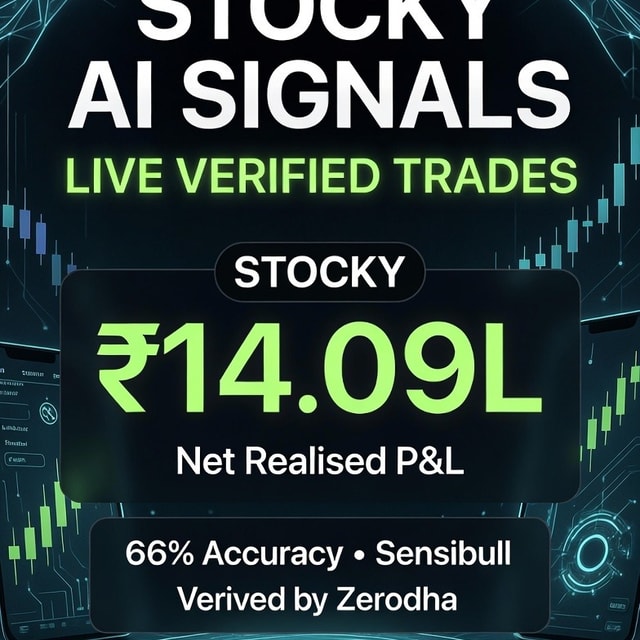
Stocky AI Signals V2
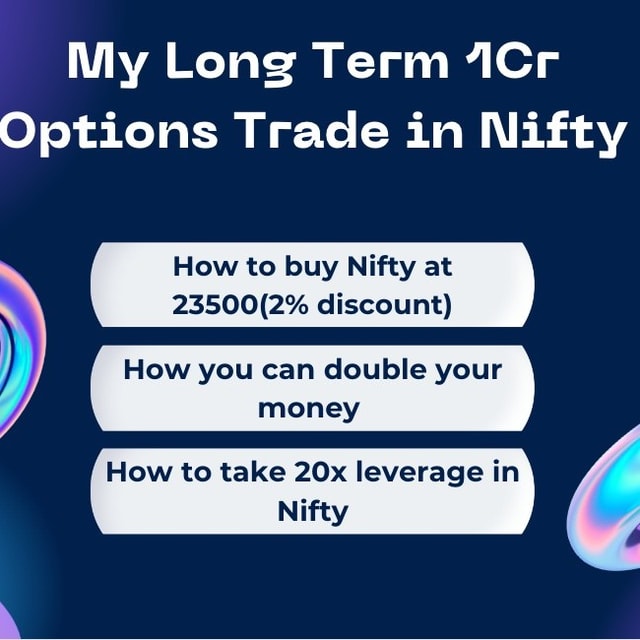
Long Term Nifty Options Strategy 2:1 R:R

How I made 72% return by investing in Mutual Funds

About me
- Charandeep Kapoor is praised for his expertise, insightful guidance, and friendly demeanor, making complex finance topics understandable and productive sessions valuable.
 AI-generated based on testimonials
Frequently asked questions
How to learn stock market trading as a beginner in India?
The practical path for learning stock market trading is: first understand how exchanges (NSE/BSE), order types, and price movements work using free SEBI and NSE investor-education material; then paper trade for a few weeks to test ideas without risking capital; then start small in the cash segment with strict stop-losses and a trading journal. Avoid starting with F&O — SEBI's studies show most retail derivative traders lose money. Learning directly from someone who has traded professionally, such as an ex-hedge fund trader or NISM-certified analyst, helps you get feedback on your actual trades instead of repeating common beginner mistakes.
How to start stock market trading with very little money in India?
Open a demat and trading account with a SEBI-registered discount broker, complete your KYC, and start with an amount you can afford to lose — even ₹5,000–₹10,000 is enough to begin in the cash market. Begin with delivery-based equity trades or index ETFs rather than derivatives, since option selling requires significant margin. Risk only 1–2% of your capital per trade, avoid intraday leverage initially, and track every trade in a journal so you can review what is actually working.
Are paid stock market trading courses worth it in India?
A good course can save you months of trial and error, but many are not worth the fee. Before paying for stock market trading courses, check the trainer's credentials (NISM certification, verifiable track record), whether they teach risk management and position sizing or only "sure-shot" setups, whether you get doubt-solving or mentor access, and whether claimed results can be verified. Be wary of anyone promising guaranteed returns or showing only profit screenshots. If you are self-disciplined, free resources plus paper trading may be enough; structured mentorship is worth it when you want accountability and personal feedback.
Which stock market trading book should I read first?
Start with trading psychology and basics before advanced strategy books. Widely recommended first picks are "Trading in the Zone" by Mark Douglas for mindset, the "Market Wizards" series for how professional traders think, and John Hull's "Options, Futures and Other Derivatives" once you move to options. Since most classics are US-focused, supplement them with NSE/BSE-specific material so you understand Indian market hours, lot sizes, and taxation. One book at a time, applied with paper trading, beats collecting ten PDFs you never finish.
What is crypto arbitrage trading and how does it work?
Crypto arbitrage trading means buying a coin on one exchange where the price is lower and selling it on another where it is higher, keeping the difference as profit — for example, Bitcoin trading slightly cheaper on one platform than another at the same moment. Your real profit is the spread minus trading fees, withdrawal fees, transfer time, and slippage. Common variants are cross-exchange arbitrage, triangular arbitrage within one exchange, and funding-rate or delta-neutral arbitrage between spot and derivatives platforms. It is not risk-free — prices can move while funds are in transit, and exchanges can have withdrawal limits or downtime.
How to do crypto arbitrage trading legally in India?
Crypto trading itself is legal in India, though the sector is taxed heavily: gains from Virtual Digital Assets are taxed at a flat 30%, and a 1% TDS applies on transfers. To do crypto arbitrage trading legally, use FIU-registered exchanges, complete full KYC, keep records of every buy and sell for tax filing, and factor the 30% tax and 1% TDS into your spread calculations — many "profitable" spreads turn negative after tax. Arbitrage across exchanges is simply buying and selling, so it is legal; the compliance part is tax reporting and using compliant platforms.
How to find crypto arbitrage opportunities as an Indian trader?
Start by comparing the same asset's price across multiple exchanges — especially INR pairs on Indian exchanges versus USDT pairs on global platforms — because local demand and supply create persistent premiums. Spreads also widen around high volatility, new listings, and funding-rate gaps between spot and perpetuals. You can track prices manually, use exchange APIs with a simple script, or use scanner tools, but always calculate the net spread after trading fees, withdrawal charges, transfer time, and TDS before executing, because most headline spreads are smaller than they look.
Which crypto arbitrage platform should Indian traders use?
You need accounts on at least two liquid exchanges with fast deposits and withdrawals. A typical setup for Indian traders pairs an FIU-registered Indian exchange for INR in/out with a global derivatives exchange for wider spreads. Judge each crypto arbitrage platform on liquidity and order depth, trading and withdrawal fees, INR deposit/withdrawal speed, API access if you want to automate, and withdrawal reliability. Professional delta-neutral strategies are often built across global platforms such as Deribit and Delta Exchange, but whatever you choose, test with small amounts first before moving serious capital.
Do I need a crypto arbitrage scanner to find profitable spreads?
Not strictly, but a crypto arbitrage scanner saves enormous manual effort. Spreads can close within seconds, so checking a few exchanges by hand usually means arriving too late. A scanner watches many pairs and platforms simultaneously and alerts you when the net spread (after fees) crosses your threshold. Without one you can still use exchange APIs, watch high-volatility windows, or run a simple script, but if you plan to do this regularly, a scanner or custom bot plus manual confirmation of fees and limits is the practical way to operate.
What is the best options trading strategy for beginners?
There is no universally best strategy — the right options trading strategy for beginners is one with strictly defined risk. For Nifty and Bank Nifty, that usually means defined-risk structures such as debit spreads (buying one option and selling a further one to reduce cost) instead of naked selling, risking 1–2% of capital per trade, and targeting at least 1:2 risk-reward. Avoid weekly-expiry gambling, overselling unhedged options around events, and copying setups from Telegram channels without backtesting. Simple, repeatable, risk-first trades outperform complex strategies you cannot manage.
How to develop an options trading strategy from scratch?
Build it in stages: (1) choose your edge or view — directional, volatility-based, or income; (2) define exact entry rules; (3) define exits, including stop-loss and profit-taking; (4) fix position size so one trade risks only 1–2% of capital; (5) choose the option structure (spread, straddle, calendar) that matches the view; (6) backtest on historical data; (7) paper trade for a few weeks; (8) go live with small size and journal every trade. A strategy is not just an entry signal — the exits, sizing, and risk rules are what make it repeatable.
How to backtest an options trading strategy before risking real money?
Get historical options data for Nifty/Bank Nifty (NSE data or a data vendor) and test your rules across at least 3–5 years covering different regimes — crashes, bull runs, and sideways markets. Include realistic costs: brokerage, STT, slippage, and margin. You can use Python with pandas and backtesting libraries, TradingView for spot-level logic, or dedicated options backtesting platforms. Watch out for overfitting — if a strategy only works with very specific parameters, it will fail live. After backtesting, paper trade for 1–3 months before committing real capital.
Why do most options traders in India lose money?
SEBI's own studies show roughly 9 out of 10 individual F&O traders lose money. The usual reasons are oversized positions, naked option selling without hedges, trading every expiry without a real edge, ignoring theta, costs, and slippage, and holding no stop-loss discipline. A proper options trading strategy and risk management framework fixes this by capping loss per trade at 1–2% of capital, using defined-risk structures, reducing exposure around events, and maintaining a journal. The strategy gets all the attention, but risk management decides whether you survive long enough to compound.
Where can I find a good options trading strategy guide for Indian markets?
Look for guides built on NSE-specific realities — Nifty/Bank Nifty lot sizes, expiry cycles, Indian market hours, STT, and tax treatment — because US-focused guides rarely translate directly. Good sources include NSE Academy material, educational content from SEBI-registered analysts, and structured mentorships where backtested results are shown and you can ask questions. Be sceptical of free PDFs promising sure-shot returns, and verify any claimed track record. If you want a guide adapted to your capital and risk appetite, a 1:1 session with an experienced NISM-certified trader is the fastest way to sanity-check your plan.
Which are the best mutual funds for high returns in India?
The best mutual funds for high returns are typically small-cap and mid-cap equity funds, but they also fall the hardest in corrections, so they only suit money you can leave invested for 5+ years. Judge funds on long-term CAGR across market cycles rather than a single bumper year, along with expense ratio, consistency against the benchmark, and the fund manager's track record. Disciplined SIP investing in diversified equity funds has historically delivered roughly 12–15% CAGR over long periods; returns of 70%+ happen only in exceptional bull years and should never be your annual expectation. Match the category to your time horizon instead of chasing last year's topper.