Testimonials
Services
35 SQL question to clear 95% interview
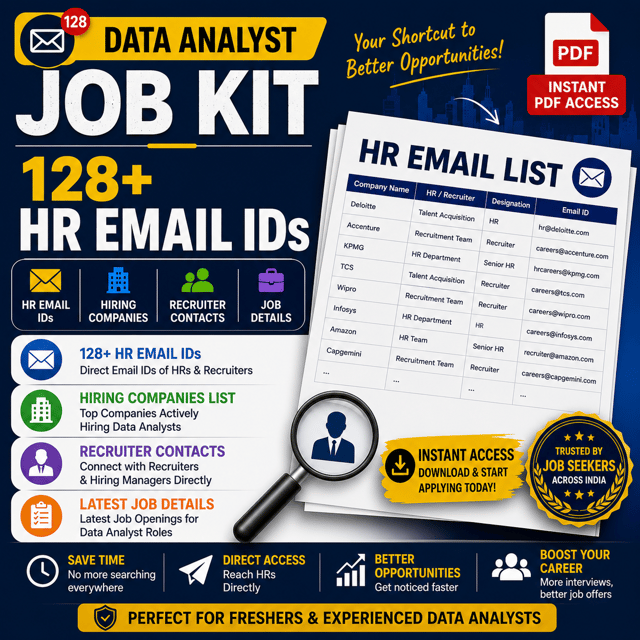
100+ Companies hiring list September 2026
Fresher (1:1 Guidance) ⭐

My Resume
Non-Tech to Data Analyst Master Roadmap
Casual Call (Life, Career & Personal Growth etc)
About me
Frequently asked questions
What is a data analytics roadmap?
A data analytics roadmap is a step-by-step learning plan that takes you from zero to job-ready analyst. It typically moves from Excel and basic statistics to SQL, then a visualisation tool like Power BI, then Python basics, and finishes with portfolio projects, resume building, and interview preparation. It exists because analytics has too many tools — without an order, beginners spend months jumping between tutorials without becoming employable.
What is a practical data analyst roadmap for freshers in 2026?
A realistic data analyst roadmap for freshers looks like this: 3–4 weeks of Excel and basic statistics, 6–8 weeks of SQL (joins, GROUP BY, subqueries, window functions), around 4 weeks of Power BI, then Python with pandas, and finally 2–3 portfolio projects on real datasets. Close it with a one-page resume and interview practice. Done consistently, this fits inside 6–9 months, which is the timeline most freshers in India actually need.
Where can I get a data analyst roadmap pdf that is actually useful?
Free data analyst roadmap pdf files are everywhere online, but most are just lists of tools. A useful one gives you a timeline, project ideas, and a checkpoint after every stage — if it stops at "learn SQL, learn Python," you will still feel lost at the job-hunt stage. Roadmaps shared by working analysts as structured digital products are worth considering when they include real projects and interview prep, not just tool names.
How long does it take to become a data analyst?
For most beginners in India, 6–9 months is realistic — roughly 2 months for Excel and statistics, 2–3 months for SQL, 1–2 months for Power BI or Tableau, and the remaining time for Python, projects, resume, and interview prep. Working professionals switching from non-tech roles usually need the upper end of that range since they study part-time. Consistency and finished projects matter far more than speed.
Can I become a data analyst from a non-tech background?
Yes. People from commerce, finance, operations, marketing, and even mechanical or civil engineering backgrounds switch into data analytics regularly, and their domain knowledge is a genuine advantage because they understand business context. What you need is a structured transition plan — Excel, SQL, one BI tool, Python basics, and 2–3 projects mapped to your current industry — instead of random tutorials. A proper non-tech to data analyst roadmap or a mentor can save you months of trial and error.
Can a fresher get a data analyst job in India?
Yes, freshers are hired as data analysts every year, but recruiters now expect proof of skill beyond a degree: solid SQL, confident Excel, one visualisation tool, and 2–3 portfolio projects that answer real business questions. Since job portals are crowded, referrals, LinkedIn outreach, internships, and adjacent roles like MIS or reporting analyst are the most common entry doors. Getting your resume and interview answers reviewed before you start applying noticeably improves your response rate.
How to prepare for SQL interview questions?
Most candidates overthink how to prepare for SQL interview questions — the tested areas are consistent: SELECT, WHERE, GROUP BY and HAVING, all JOIN types, subqueries, CTEs, and window functions. A simple 3-week structure works: week one for fundamentals, week two for joins and aggregation problems on real datasets, week three for timed, interview-style queries. Since SQL is the first elimination round for most analyst roles in India, it deserves the largest share of your preparation time.
How to practice SQL interview questions?
The biggest mistake in how to practice SQL interview questions is reading solutions instead of writing them. Pick a dataset, attempt the query yourself, compare the output, and only then study the given answer. Time every problem to 20–30 minutes, rotate topics daily — joins one day, window functions the next — and explain your logic out loud while solving, since that is exactly what live rounds and mock interviews test. Forty-five focused minutes a day beats a long weekend session.
What are the most common SQL interview questions and answers for freshers?
The SQL interview questions and answers for freshers usually follow a fixed pattern: theory first — WHERE vs HAVING, DELETE vs TRUNCATE, primary key vs unique key, types of JOINs — followed by one or two live queries using GROUP BY, joins, and occasionally a window function. The written answer matters less than your approach, so explain your logic before writing the query. A focused set of around 30–35 questions covers most fresher screening rounds.
What SQL interview questions are asked for 5 years of experience?
At that level, SQL interview questions for 5 years of experience move from syntax to depth: query optimisation and execution plans, handling very large datasets, complex window-function scenarios, data quality issues, and design questions like how you would build reporting for a new business line. You will also be asked to walk through past projects with their business impact. Practising scenario-based problems instead of definitions is what separates candidates at this stage.
What questions are asked in a data analyst interview besides SQL?
Expect four more areas: Excel (XLOOKUP, pivot tables, data cleaning), a BI tool like Power BI (DAX basics and dashboard thinking), basic Python or statistics for some roles, and scenario or guesstimate questions such as estimating daily orders for a food-delivery app in one city. Interviewers also dig into your projects — why you chose a metric, how you handled dirty data. Prepare a short, structured story for each project, because that conversation often decides the round.
How to make a data analyst resume with no experience?
If you are working out how to make a data analyst resume with no experience, lead with skills and projects instead of work history. Put SQL, Excel, Power BI, and Python up top, then present 2–3 projects with the problem, tools used, and a measurable result. Add any data-adjacent work you have already done — reports, MIS files, college or internship dashboards. Keep it to one page and mirror keywords from each job description so it clears ATS filters.
What should a data analyst resume look like?
A clean data analyst resume is one page and skills-first: contact details with LinkedIn and portfolio links, a 2–3 line summary, a skills block (SQL, Excel, Power BI/Tableau, Python), projects with quantified outcomes, then experience and education. Avoid photos, skill bars, and multi-column designs that ATS parsers break on. Recruiters spend under a minute on the first scan, so the top third of what a data analyst resume looks like should already show tools, projects, and numbers.
Should I use a data analyst resume template?
Yes for structure, no for content. A data analyst resume template protects you from layout mistakes and missing sections, but recruiters see the same templates daily, so generic filler gets ignored. Pick a simple single-column template, then customise every application with specific projects, tools, and keywords from the job description. If you are not getting calls despite a clean layout, the problem is usually content and positioning — which is exactly what a proper resume review catches.
What should a data analyst resume for 3 years of experience highlight?
A data analyst resume for 3 years of experience should lead with impact, not tools. Under each role, show metrics — dashboards delivered, reports automated, hours saved, decisions influenced, stakeholders supported. Highlight advanced work such as SQL optimisation, Python automation, or migrating reporting to Power BI, and keep only your one or two strongest projects. The resume should read like three years of business outcomes, not a training log.