Testimonials
Services



1:1 CLARITY CALL- Get Clear. Take Action. Growww
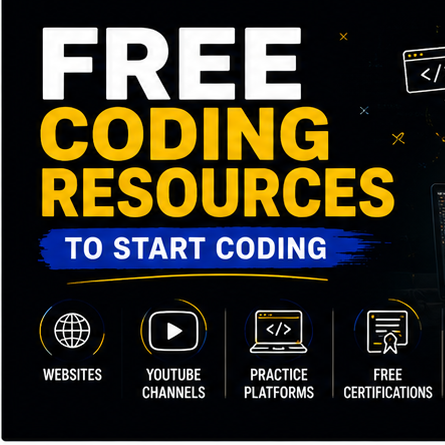
FREE RESOURCES TO START CODING


TOP 10 HACKATHON & OPPORTUNITY PLATFORMS
About me
Frequently asked questions
What is the share market for beginners?
The share market is a platform where shares (small ownership units) of listed companies are bought and sold — in India, primarily on the NSE and BSE. When you buy a share, you own a tiny piece of that company, and its value can rise or fall with the company's performance and overall market conditions. For beginners, the first step is understanding basic terms such as shares, indices like Nifty 50 and Sensex, demat accounts, and brokers. You don't need a commerce or finance background to begin — just a demat account, basic knowledge, and a long-term mindset.
How to learn the stock market for beginners?
Start with free, structured basics such as exchange investor-education content, beginner-friendly YouTube channels, and one or two well-rated books on investing. Then open a demat account and simply observe the market daily without rushing to place trades. Practice with small amounts or paper trading before committing real capital, and gradually learn fundamental analysis (studying companies) and technical analysis (reading charts). Consistent learning over a few months teaches you more than any shortcut, so stay away from anyone promising guaranteed returns.
How to start stock trading for beginners?
Open a demat and trading account with a SEBI-registered broker, complete your KYC, and fund it with a small amount you can afford to lose. Begin with well-known, fundamentally strong companies or index funds rather than risky small-caps or intraday trades. Learn order types, set stop-losses, and keep your position sizes small while you are still learning. Most importantly, never trade with borrowed money or act on random tips from Telegram and WhatsApp groups.
How much to invest in stocks as a beginner?
There is no fixed amount — you can begin with as little as a few hundred rupees through index funds or SIPs, or by buying a single share of a good company. A sensible approach is to first build a small emergency fund and then invest only money you will not need for the next few years. Many beginners start by investing around 10–20% of their monthly income and increase it gradually as their income and knowledge grow. The amount matters far less than consistency and staying invested for the long term.
Where can I find good resources on the stock market for beginners in India?
Free options include the investor-education sections of NSE, BSE, and SEBI, finance YouTube channels, and beginner books focused on Indian markets. If you prefer structured learning, beginner courses, step-by-step roadmaps, or a 1:1 session with a mentor can give you a clear order of topics instead of random browsing. Be cautious with paid programs that guarantee profits or push specific stocks — genuine education teaches concepts, not tips.
What is cryptocurrency for beginners?
Cryptocurrency is a digital currency that exists only online and runs on blockchain technology instead of being issued or controlled by any bank or government. Bitcoin and Ethereum are the most well-known examples. You can buy crypto in India through registered exchanges using INR, but its value is highly volatile and gains are subject to taxation. Beginners should treat it as a high-risk asset and invest only money they can afford to lose.
What is blockchain for beginners?
Blockchain is a digital record-keeping system where transactions are stored in "blocks" linked together in a chain and copied across thousands of computers. Since every participant holds the same record and entries cannot be secretly altered, it is extremely difficult to tamper with. This technology powers cryptocurrencies like Bitcoin, but it is also being used for things like supply-chain tracking and digital records. Think of it as a shared, tamper-proof ledger that no single person controls.
How to buy crypto for beginners?
Start by choosing a crypto exchange registered with India's FIU, then complete KYC using your PAN and Aadhaar. Add a small amount in INR — even ₹100–500 is enough to learn how buying works — and consider starting with established coins like Bitcoin or Ethereum instead of unknown tokens. Enable two-factor authentication, double-check wallet addresses, and stay alert to scams and fake "investment groups." Once you buy, track your holdings and remember that crypto gains are taxable in India.
How to trade crypto for beginners?
Trading means actively buying and selling to profit from price movements, which is very different from simply holding crypto for the long term. Beginners should first learn chart basics, order types like market and limit orders, and strict risk management so that no single trade can wipe out their capital. Stick to spot trading in the beginning and avoid futures or leverage, which amplify losses for new traders. Because crypto prices move 24/7 and are far more volatile than stocks, starting with very small amounts is the safest way to learn.
What is personal finance and why is it important?
Personal finance is the way you manage your own money — earning, budgeting, saving, investing, handling debt, and protecting yourself with insurance. It is important because every money decision, from daily spending to long-term investing, compounds over time. For students, simple habits like tracking expenses, saving a fixed portion of pocket money or stipends, building a small emergency fund, and starting small investments early create a massive advantage later in life. Learning personal finance early also protects you from debt traps and impulsive spending once you start earning.