Testimonials
Services
Embedded Resume Audit
Bytes To Sockets

Hash maps In Embedded Systems

Embedded Interview Gap Analyser

AI + Embedded Workflow For Huge Codebases





10 ChatGPT-5 Prompts For Embedded Career
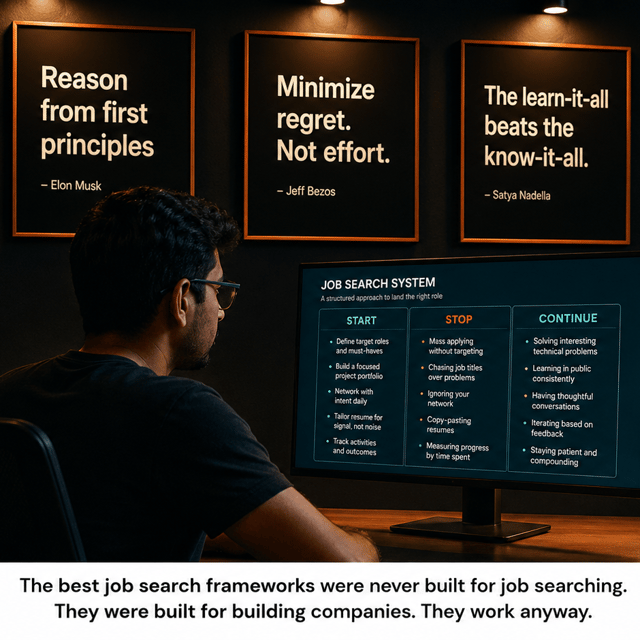
How To Win Every Embedded Job Interview



Embedded Engineer LinkedIN Profile Revamp

Embedded Engineer LinkedIN Audit

Arrays In Embedded Systems
Product Company Level Embedded Interviewer Prompt

Follow Up Emails After Interview




Embedded Career Fitment Scorecard

Embedded Career Job Readiness Checklist

Embedded Books For Year 2026



Embedded Career : 30 Day,7 Daily Habits Tracker
60 mins video call
Embedded Resume Strategy Session
About me
- Balemarthy Vamsi is praised for his insightful, personalized guidance, boosting confidence and providing clarity in career planning.
 AI-generated based on testimonials
Frequently asked questions
Is embedded systems a good career in India?
Yes, especially if you enjoy working close to hardware. India's automotive and EV push, IoT devices, consumer electronics, aerospace and defence, and semiconductor expansion have created steady demand for engineers who can write reliable C code for real devices. Entry-level openings are fewer than in web development and starting salaries are moderate, but the growth compounds — embedded skills take years to build, so engineers with strong hardware-plus-software fundamentals become very hard to replace at mid and senior levels.
How to start a career in embedded systems?
Follow a practical embedded systems career roadmap: first master C (pointers, memory, bit operations), then learn microcontroller basics on an ARM Cortex-M, AVR or 8051 board along with peripherals like UART, SPI, I2C, GPIO, ADC, timers and interrupts. Build two or three real projects on actual hardware, learn to debug using a debugger and datasheets, and only then pick a specialisation such as firmware, RTOS, automotive or IoT. Apply for jobs once you have proof of work, not just certificates.
What are the career opportunities in embedded systems?
Career opportunities in embedded systems include embedded software engineer, firmware developer, embedded C developer, embedded testing and validation engineer, IoT developer, automotive embedded (AUTOSAR) developer, board support package and device driver developer, and RTOS-based application developer. Hiring industries span automotive, EVs, consumer electronics, medical devices, industrial automation, aerospace and defence, telecom, semiconductor MNCs and hardware startups, with major job clusters in Bengaluru, Hyderabad, Pune, Chennai and the NCR region.
How to get an embedded systems job as a fresher?
Most freshers fail not on knowledge but on proof of work. To get an embedded systems job, build two or three hands-on projects on real hardware, put them on your resume with specifics (which MCU, which peripherals, what you measured), align your LinkedIn profile with embedded keywords, and apply to both high-volume service companies and product startups in parallel. Referrals from embedded communities and alumni usually beat cold applications, so reach out to working embedded engineers with a specific, short ask.
How to learn embedded C programming?
To learn embedded C programming, start with strong core C — pointers, arrays, structs, memory segments and bitwise operations. Then learn the embedded-specific layer: memory-mapped registers, the volatile keyword, interrupts, cross-compilation and working with limited RAM and flash. Practise on a low-cost board like an ESP32, STM32 or Arduino by moving from blinking LEDs to reading sensors to writing small drivers, and always read the datasheet instead of blindly copying library code.
How to practice embedded C programming?
You can practice embedded C programming without expensive hardware. Get a dev board under ₹1,000 or start with simulators and online tools for logic practice, then work deliberately: bit manipulation exercises, writing a UART or I2C driver from the datasheet, implementing state machines and ring buffers, and writing memory-efficient code. Recreate one small complete project every weekend and maintain everything on GitHub — it becomes the portfolio you show in interviews.
What is embedded C language?
Embedded C is a set of C language extensions used to program hardware directly. It supports bit-level access, direct register manipulation, interrupts and I/O mapped to fixed memory addresses. The syntax is C, but the mindset is different — you are writing for a microcontroller with kilobytes of RAM, no operating system and strict timing, so you manage memory, speed and power manually, and the code is compiled with a cross-compiler for the target chip.
What is the difference between embedded C and C++?
The main difference between embedded C and C++ is overhead versus abstraction. Embedded C is lightweight, predictable and close to the hardware, making it ideal for small microcontrollers and timing-critical firmware. C++ adds classes, templates, inheritance and the STL, which help manage complexity on larger 32-bit applications but cost flash, RAM and determinism through features like dynamic allocation and exceptions. As a rule of thumb, bare-metal and RTOS firmware leans on embedded C, while complex application layers on capable MCUs use C++.
What is bare metal embedded C programming?
Bare metal embedded C programming means your C code runs directly on the microcontroller with no operating system or RTOS underneath. You handle the startup code, vector table, clock and peripheral configuration, interrupts and the main superloop yourself. It offers maximum control, minimum overhead and deterministic timing, which is why latency- and safety-critical firmware is often bare metal — the trade-off is that nothing is provided for you, so you must build the scheduling and driver logic yourself.
What are the common embedded interview questions for freshers?
Common embedded interview questions for freshers start with core C: pointers, volatile, static, const, stack vs heap vs data segments, bitwise tricks, and macro vs function trade-offs. Then expect microcontroller fundamentals — what happens on reset, interrupts vs polling, differences between UART, SPI and I2C, timers and ADC — plus small firmware code-writing or code-reading exercises. Interviewers care more about whether you have actually worked on a board than about theory vocabulary, so bring real project stories.
What are embedded interview questions for experienced professionals?
Embedded interview questions for experienced professionals go into depth: RTOS internals such as scheduling, priority inversion, mutexes vs semaphores, queues and ISR safety; debugging hard problems like race conditions, memory corruption and hard faults; communication protocol internals and timing; low-power design; linker scripts and memory optimisation; and scenario questions like how you would debug a board that intermittently hangs. Your own projects will be dissected line by line, so know every decision you made in them.
What are embedded testing interview questions?
Embedded testing interview questions usually cover verification vs validation, unit, integration and system testing for firmware, writing test cases for a driver or communication protocol, boundary conditions for registers and timing, and the use of tools like logic analysers, oscilloscopes, JTAG debuggers and static analysis. For validation and verification roles you may also get hardware-in-the-loop basics, test automation and bug-lifecycle questions, and in automotive testing, protocol-specific questions on CAN and LIN.
What is FreeRTOS and why is it important for embedded systems careers?
FreeRTOS is a free, open-source real-time operating system kernel that brings a scheduler, tasks, queues, semaphores and software timers to small microcontrollers. It is the most widely used RTOS in industry, which is why it appears in a large share of embedded job descriptions. Going beyond the APIs — understanding how the scheduler, lists and queues actually work internally — is what separates strong candidates in interviews and makes real firmware debugging far easier.
How can a fresher reach 10 LPA in embedded systems?
Be direct about it: mass hiring by service companies rarely starts at 10 LPA, so a fresher aiming for 10 LPA in embedded systems must compete for product companies, semiconductor MNCs, automotive and EV firms and well-funded startups. That requires exceptional C, real RTOS-based projects, protocol depth in areas like CAN, I2C and SPI, genuine debugging ability, and a resume and LinkedIn profile that prove all of this. Building niche depth — such as FreeRTOS internals or driver development — works because very few freshers have it, which is exactly why it commands a premium.
How do I write an embedded engineer resume as a fresher?
A strong embedded engineer resume leads with proof, not adjectives. Use a sharp headline, a skills section covering C, MCUs, protocols and tools, and two or three project bullets in the format "built X on Y using Z, achieving W" — for example, data transmitted, latency reduced or memory saved. Mention the actual hardware you used, the datasheets you read and the debuggers you worked with, keep it to one page, and mirror keywords from the job posting such as embedded C, RTOS, UART, SPI and I2C so it clears ATS filters.