Testimonials
Services
Product Manager MBA: Foundations Launchpad 2026
Resume Review
Ultimate Product Manager Resume Template
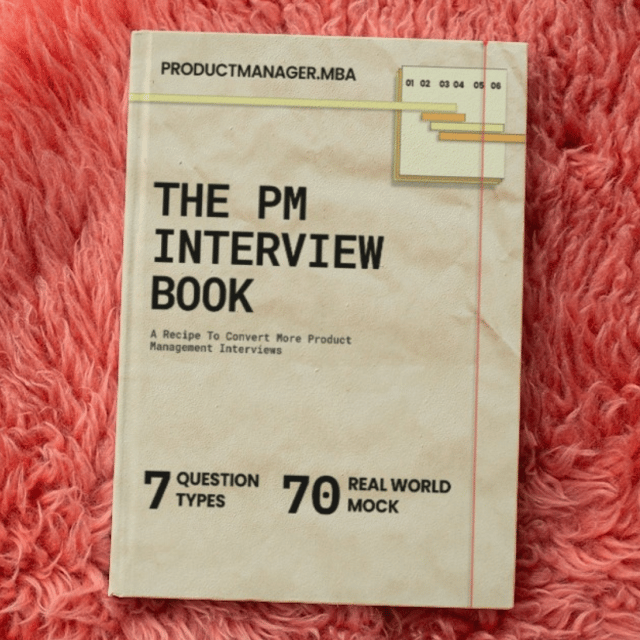
📗 PM Interview Book + PM MBA Course & University
🎓 PM University (Access 50+ Courses, 100+ Hours)
😎 Breaking into PM - Prep, Interview, Role
About me
- Pathange Balaji excels in providing clear, insightful, and personalized guidance in product management, greatly valued for his helpfulness and expertise.
 AI-generated based on testimonials
Frequently asked questions
What is product management in simple words?
In simple words, product management is the job of deciding what to build, for whom, and why it matters to the business — and then working with design, engineering, and marketing to ship it and keep improving it. The product manager owns the problem, the priorities, and the outcome, while the team owns how the solution gets built. If a product succeeds or fails in the market, the PM is accountable.
What is a product management role, and what does a PM do day to day?
A product management role covers discovering user problems, deciding what to build, prioritising the roadmap, working with engineers and designers, tracking metrics after launch, and keeping stakeholders aligned. Day to day, that means a mix of user conversations, data analysis, writing specs or PRDs, unblocking the team, and reporting progress. In Indian startups, PMs often also handle growth and go-to-market, while in larger companies the role is more specialised.
How to learn product management from scratch?
Start with the fundamentals — product discovery, prioritisation frameworks, roadmapping, metrics, and basic business models — using free content, YouTube, and one structured course. Once the concepts are clear, the real shift is learning how to practice product management: do product teardowns of apps you use daily, solve case studies, and take one small side project from idea to launch. Three to six months of consistent, hands-on practice beats passive consumption every time.
What is a product management course, and do you need one to become a PM?
A product management course is a structured program that teaches PM fundamentals, frameworks, and case practice, and usually includes projects, mentorship, and peer learning. You don't strictly need one to break into product, but the right course compresses your learning and gives you a portfolio and network. When comparing product management courses in India, look for live case practice, real projects, and mentors who currently work as PMs — not just pre-recorded videos.
Is a product management certification worth it in India?
A product management certification is worth it mainly if you're switching careers and need structure, accountability, and a credential that signals intent. What it won't do is replace proof of skill — hiring managers in India weigh your case thinking, projects, and communication far more than a certificate. If your budget is limited, spend first on hands-on practice and mock interviews, and treat certification as a supporting signal rather than a job ticket.
How do I get a product management internship with no experience?
To get a product management internship without prior experience, create visible proof of product thinking first: two or three detailed teardowns of Indian apps, written case studies, and any college or startup project where you owned a feature end to end. Publish this work on LinkedIn, apply to startups (they hire on potential more than pedigree), and send short, specific outreach messages to founders and PMs instead of only applying through portals. A referral plus a public portfolio gets more interviews than a resume alone.
Can freshers get product management jobs in India?
Yes, freshers can get product management jobs in India — the most common routes are APM (Associate Product Manager) programs at large product companies and PM roles at early-stage startups that hire on potential. Outside these routes, freshers typically enter through adjacent roles like business analyst, product marketing, or engineering, and move into product internally within one to two years. What tips the scale is demonstrable product work: teardowns, side projects, and strong performance in case interviews.
What is the product management salary in India for freshers and experienced PMs?
Product management salary in India varies widely by company stage, funding, and city. Freshers and APMs at product companies typically earn around ₹8–20 LPA, PMs with three to six years of experience roughly ₹20–45 LPA, and senior or group PMs at top product companies can go well beyond ₹50 LPA with stock included. Early-stage startups may pay lower cash but offer faster scope and ownership.
How to crack a product manager interview?
To crack a product manager interview, build skill in four areas: product sense (how you'd improve a product), execution (metrics, trade-offs, root-cause analysis), strategy (prioritisation, market entry), and behavioral stories told with measurable impact. Treat your product manager interview preparation like a project — a six to eight week plan, weekly mock interviews with feedback, and a teardown of the target company's product before every round. Clear, top-down communication is usually what separates the selected candidate from equally knowledgeable ones.
What are the most common product manager interview questions?
The most common product manager interview questions fall into five buckets: product design ("How would you improve PhonePe?"), metrics ("Transactions dropped 10% — diagnose why"), strategy ("Should Swiggy enter a new category?"), prioritisation ("Three features, one release — what do you build?"), and behavioral ("Tell me about a conflict with an engineer"). If you're unsure how to answer product manager interview questions, follow a simple pattern: clarify the goal, state your assumptions aloud, structure your answer top-down, and quantify wherever possible.
What is a product manager interview like, and how many rounds are there?
Expect four to six rounds. The typical product manager interview process at Indian companies includes a recruiter screen, a product sense or case round, an execution or analytics round, a hiring manager round, and sometimes a founder or bar-raiser round. The tone is conversational but probing — interviewers keep asking "why" to test depth of reasoning, so thinking aloud in a structured way matters more than landing on a perfect answer.
Which product manager interview books are worth reading?
The most widely used product manager interview books are "Cracking the PM Interview" for fundamentals and interview formats and "Decode and Conquer" for framework-driven answers to case questions. Pair one playbook-style book with one product-judgment book like "Inspired," and then convert everything into mock interview practice. Reading alone rarely gets offers — structured practice does.
How to write a product manager resume for freshers?
A product manager resume for freshers works when it leads with product evidence instead of job titles: teardowns, case competition wins, side projects, and internships where you owned an outcome with a number attached. Use the same skeleton as experienced PMs — impact-first bullets in an "action + metric + result" format — and delete anything that doesn't show product thinking. One focused page beats a crowded two pages, especially since recruiters spend under a minute on the first scan.
What does a product manager resume look like?
A strong product manager resume is one page (two only beyond eight years of experience), ordered as: header with LinkedIn, a two-line summary, experience with impact bullets, projects, education, and skills or tools. The most recruiter-friendly product manager resume format is reverse-chronological, because both hiring managers and ATS software scan it fastest. Every bullet should read as "did X, resulting in Y%" — bullets without numbers read as filler.
Are product manager resume templates a good idea?
Yes — good product manager resume templates fix the three things fresher resumes get wrong: structure, scannability, and ATS compatibility. But a template only works if you fill it with your own quantified, product-focused content; copying sample bullet points word for word is exactly what gets resumes rejected. Pick a clean, single-column design, rewrite every line around your own projects, and mirror keywords from each specific PM job description you apply to.