Testimonials
Services
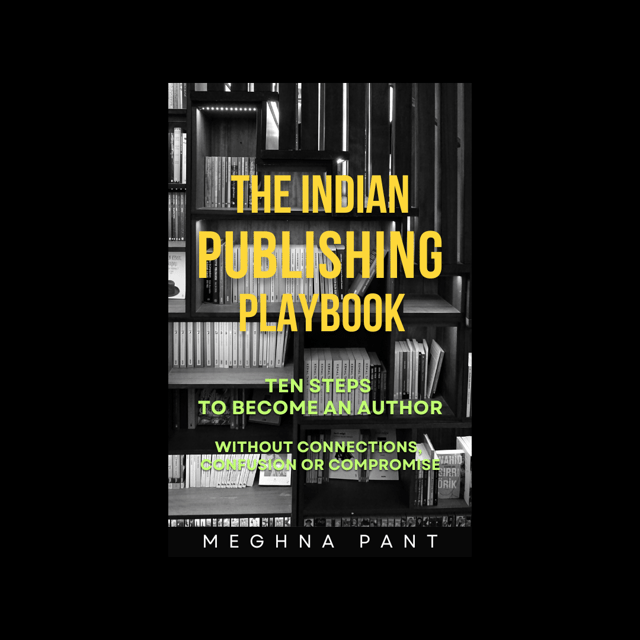
Indian Publishing Playbook: Your Ultimate Guide
Book Consulting Session
About me
Frequently asked questions
How to publish a book in India?
If you are wondering how to publish a book in India, the journey starts with a completed, tightly edited manuscript. From there you choose between traditional publishing, where you send a synopsis, author bio, and sample chapters to publishers that accept your genre, and self publishing, where you manage editing, cover design, ISBN, printing, and distribution through publishing platforms yourself. Traditional publishing offers credibility and bookstore reach but is selective and slow, while self publishing is faster and gives you full control. If you are unsure which route suits your manuscript, a 1:1 book consulting session with an experienced author like Meghna Pant can help you decide before you submit anywhere.
How to get published in India as a first-time author?
The first thing to know about how to get published in India is that you do not need a literary agent — most publishers accept direct submissions from writers. Prepare a polished manuscript, a one-page synopsis, and a crisp query email, then follow each publisher's submission guidelines exactly, since genre fit and formatting matter a lot. Rejections are normal even for bestselling authors, so keep refining and keep submitting. Having your synopsis and sample chapters reviewed by a seasoned author before you send them out helps you submit a stronger proposal, which is what a book consulting session with Meghna Pant is designed for.
How to publish a book in India for free?
If you want to know how to publish a book in India for free, there are two realistic routes. Traditional publishing is completely free because the publisher bears the cost of editing, design, printing, and distribution in exchange for a share of royalties — genuine publishers pay you, never the reverse. In self publishing, eBook platforms let you upload and sell at no upfront cost, and print-on-demand means you pay per copy only when a reader actually buys. Be cautious of agencies demanding large "publication fees" while promising bestseller status. Meghna Pant's digital guide, the Indian Publishing Playbook, maps out these routes step by step for Indian authors.
How to self publish a book in India?
If you are exploring how to self publish a book in India, the standard sequence is: professionally edit and proofread the manuscript, commission a cover, apply for an ISBN (free for Indian authors through the government's ISBN agency), choose a self publishing platform or print partner, format your eBook and print files, set your pricing and royalty structure, and then plan your launch marketing. Print-on-demand keeps upfront investment low, while offset printing lowers the per-copy cost for bigger print runs. Meghna Pant's Indian Publishing Playbook walks authors through every one of these stages.
Self publishing in India vs traditional publishing: which is better for first-time authors?
Self publishing in India gives you full control over cover, pricing, and timeline, pays noticeably higher royalties per copy, and can put your book on sale within weeks — but you fund the editing, design, and marketing yourself. Traditional publishing costs nothing upfront and brings professional editing, bookstore distribution, and industry credibility, but acceptance is competitive, timelines stretch over a year or more, and per-copy royalties are lower. A simple way to decide: choose self publishing if speed and control matter most, and aim for traditional publishers if you want shelf presence and can handle a slower, rejection-heavy process. Many Indian authors eventually do both.
How much does book printing in India cost?
Book printing in India depends mainly on page count, trim size, paper quality, binding type, colour content, and the number of copies. Print-on-demand (digital) printing suits small batches with no inventory risk but costs more per copy, while offset printing becomes far cheaper per book once you print a few hundred copies or more. Always ask two or three printers for itemised quotes and physically check sample copies for binding and paper quality before committing. If you self publish, print-on-demand platforms remove the need to store and ship stock yourself.
How to get published in India, Meghna Pant?
Meghna Pant is a multiple award-winning, bestselling author of ten books, a former news anchor, and an independent journalist, and she channels that experience into two offerings for aspiring authors: the Indian Publishing Playbook, a digital guide that takes you from finished manuscript to publication step by step, and a 1:1 book consulting session, where she analyses your work, gives proactive practical tips, and helps you plan your path forward. If you have been searching for how to get published in India, Meghna Pant's playbook is built exactly for first-time and early-stage authors navigating the Indian publishing landscape.
How to improve book writing skills?
If you want to know how to improve book writing skills, build a deliberate cycle: read widely in your genre, write on a fixed schedule, and finish complete drafts before editing anything. Study craft consciously — openings, pacing, dialogue, chapter endings — and rewrite weak scenes instead of abandoning the manuscript. Feedback accelerates growth faster than solo practice, so share chapters with honest readers or a mentor. In her book consulting sessions, Meghna Pant helps writers identify what is slowing their process — from early-draft perfectionism to weak planning — and gives practical pointers to strengthen the work.
What are the best book writing tips for beginners?
The book writing tips for beginners that make the biggest difference: set a small, consistent word target and protect that writing time; sketch a loose outline so you never open the file without direction; finish the entire first draft before rewriting anything; and keep a simple tracker for characters, timeline, and plot points to avoid contradictions. Read craft books alongside novels in your genre, and accept that a first draft is allowed to be imperfect — momentum beats perfection at the beginner stage.
What story writing tips for beginners should I follow?
Story writing tips for beginners come down to a few fundamentals: start your story as close to the action as possible, give your protagonist a clear goal with a real obstacle in the way, show emotion through action and dialogue rather than explanation, and end every chapter with a reason to keep reading. If outlining feels restrictive, plot as you go but maintain a running note of key events so the middle does not sag. Reading your draft aloud is the fastest way to catch flat dialogue and uneven rhythm.