Testimonials
Services
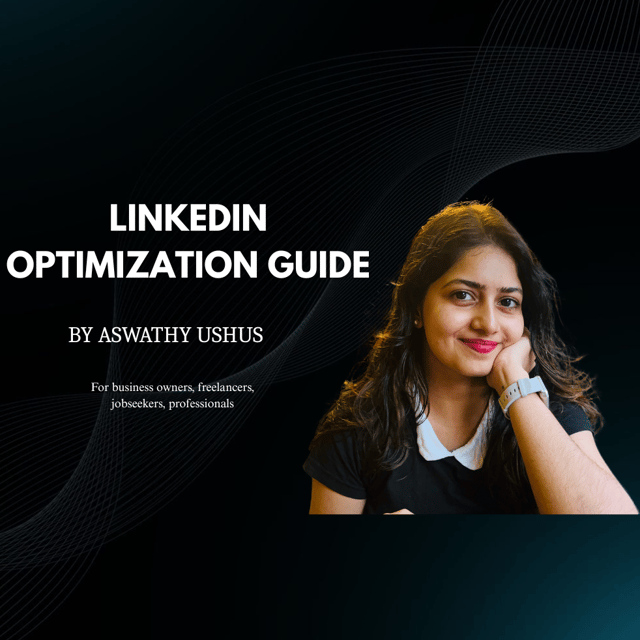
Build your Personal Brand on LinkedIn from scratch
Content Creation guidance (only for IG/YT)
LinkedIn Content & Lead Gen Strategy for founders
About me
- Aswathy is revered for her expertise in LinkedIn and personal branding, and her patient, generous mentorship. She provides profound, actionable insights that instill confidence and clarity.
 AI-generated based on testimonials
 - Commiting 10% of my income for underprivileged kids’ education.

Frequently asked questions
What is personal branding, and why does it matter on LinkedIn?
Personal branding is the practice of shaping how you are perceived professionally — your skills, opinions, experience, and personality — so people trust you before they ever work with you. On LinkedIn it matters because clients, recruiters, and investors actively check profiles before every serious conversation. A strong personal brand brings inbound opportunities like consulting leads, speaking invites, and partnership queries instead of you chasing them. For founders and professionals in India, where LinkedIn usage is growing fast, it is often the difference between being invisible and being the obvious choice in your niche.
How to use LinkedIn for personal branding?
Start with clear positioning: one line that says who you help and how. Optimize your headline, about section, banner, and featured section around that positioning. Post consistently on topics your audience cares about, share personal lessons instead of generic motivational quotes, and spend 15–30 minutes a day commenting meaningfully on posts in your industry. Over time, this mix of profile optimization, content, and engagement is what turns a dormant account into a personal brand that attracts clients and opportunities.
How to create a LinkedIn content strategy for personal branding?
Define the audience you want to attract — clients, employers, or partners — and list their problems. Pick 3–4 content pillars such as your core expertise, personal stories, client lessons, and opinions on industry trends. Fix a realistic posting frequency, mix formats like text posts, carousels, and videos, and measure outcomes that matter: profile views, DMs, and leads rather than likes. Review analytics monthly and double down on what generates conversations. That is how to create a LinkedIn content strategy that supports personal branding instead of random posting.
What is the role of content strategy in LinkedIn marketing?
Content strategy is what separates random posting from LinkedIn marketing that produces business results. It decides who you are talking to, which problems you address, what formats you use, and what action the reader should take — follow, DM, or book a call. Without it, even well-written posts get views but no leads. With a clear content strategy, every post moves your audience closer to trusting you, so your LinkedIn marketing builds real pipeline — clients, candidates, or partnerships — instead of just engagement.
Should you use a LinkedIn content strategy template or create one from scratch?
A LinkedIn content strategy template is a useful starting point because it gives you content pillars, post formats, a weekly calendar, and engagement goals in one place, saving beginners a lot of guesswork. The mistake is filling a template blindly without adapting it to your audience, offers, and voice. Use the template for structure, then rewrite the pillars and examples around your own business and experiences. If your goal is lead generation rather than just consistency, getting the strategy reviewed by someone who does this professionally is usually faster than iterating on templates alone.
How do I build a LinkedIn content strategy in the age of AI?
Use AI for speed, not for personality. Let it handle research, outlines, and repurposing one long post into a carousel or video script, but write the stories, opinions, and lessons yourself. LinkedIn feeds are already crowded with generic machine-written posts, and audiences scroll past anything without a human fingerprint. A simple system: draft with AI, then edit heavily to add your voice, real examples, and numbers from your own work. If your LinkedIn content strategy in the age of AI is built this way, you get the scale of automation while still sounding like yourself.
What makes an effective LinkedIn content strategy for CEOs?
For CEOs the goal is not virality — it is credibility at scale. An effective LinkedIn content strategy for CEOs focuses on a few themes where the CEO has genuine authority: industry outlooks, lessons from building the company, hiring and culture, and customer stories. Posting two to four times a week in a first-person voice, and occasionally showing the person behind the title, builds far more trust than corporate announcements. Because CEOs rarely have time to write, many delegate drafting to a ghostwriter or strategist while keeping the opinions and final approval their own.
What is the meaning of LinkedIn ghostwriting, and how does ghostwriting work in practice?
The meaning of LinkedIn ghostwriting is simple: a writer creates your posts, articles, and profile content, but everything is published under your name — the audience never knows a ghostwriter exists. In practice, you start with a discovery call where the writer studies your goals, voice, and past content; they then prepare a content plan and drafts, you review and edit, and they publish and often manage engagement. Good ghostwriters interview you regularly so the ideas and stories remain genuinely yours — you stay the author in every sense that matters.
How to become a LinkedIn ghostwriter in India?
Start by building your own LinkedIn presence, because your profile doubles as your portfolio. Learn the craft — hooks, storytelling, formatting, and writing in someone else's voice — and practice by studying high-performing posts in your niche. Offer free or discounted ghostwriting to two or three founders or coaches, collect results and testimonials, then move to paid retainers. LinkedIn ghostwriting jobs and freelance projects in India have grown sharply as founders, coaches, and executives outsource content, and writers who can also advise on strategy earn the most. Many beginners speed this up with a mentor who already works with clients.
How much does ghostwriting pay in India?
It depends on experience and scope. Beginners often start at a few thousand rupees per post, while experienced LinkedIn ghostwriters usually move to monthly retainers that cover strategy, writing, and engagement — retainers for founders and CEOs can run into tens of thousands of rupees per month. Writers who bundle ghostwriting with content strategy or profile optimization charge more than those who only deliver posts. It pays well long term because clients need content every single month, which makes ghostwriting recurring income rather than one-off projects.
How is LinkedIn ghostwriting pricing decided when you hire a ghostwriter?
LinkedIn ghostwriting pricing usually depends on four things: the number of posts per week, whether strategy and profile optimization are included, how much research and interviewing the writer must do, and the writer's track record. Most serious ghostwriters offer monthly packages rather than per-post rates, because consistency over three to six months is what produces results. Be cautious of quotes that look too cheap — at very low rates the writer is usually pushing generic AI text for many clients at once, which can damage your brand more than posting nothing.
Is LinkedIn ghostwriting for founders worth it?
It is worth it when the founder has real ideas and opinions but no time to write — which describes most founders. LinkedIn ghostwriting for founders works because the ghostwriter converts the founder's voice, stories, and expertise into consistent posts while the founder keeps final approval. It fails when the founder has nothing to say or refuses to share input, because the posts turn generic. A good test: after two weeks, read the drafts and ask whether you would genuinely say those things in a meeting. If yes, ghostwriting will scale your presence without faking your voice.
What should you check in a LinkedIn ghostwriting portfolio before hiring?
Look for range of voice, not just attractive posts. A strong LinkedIn ghostwriting portfolio shows samples written for different people in different styles, posts with genuine engagement in the comments, and ideally client outcomes such as inbound leads or profile growth. Ask how the writer captures a client's voice, and request a short paid trial before committing to a retainer. Also notice whether the writer asks deep questions about you — portfolios can be polished, but a strong discovery process cannot be faked.
What does a LinkedIn personal branding strategist do?
A LinkedIn personal branding strategist works on the positioning behind your content, not just the posts. They define what you should be known for, rewrite your headline, about, and featured sections around that positioning, build your content pillars and posting plan, and often manage ghostwriting and engagement. The difference between a strategist and a plain content writer is the business angle: a good strategist ties everything to leads, opportunities, and authority in your niche, then tracks those outcomes month over month instead of chasing likes.
How to write LinkedIn posts that actually get seen?
Nail the first two lines, because LinkedIn truncates posts and the hook has to earn the "see more" click. Then stick to one idea per post, use short paragraphs and white space, and ground the takeaway in a story or specific example instead of a generic insight. End with a question that invites comments, and reply to every comment in the first hour since early engagement pushes the post into more feeds. Mastering how to write LinkedIn posts this way takes repetition, which is why studying high-performing posts in your niche and modeling their structure — not their content — works so well.