Testimonials
Services
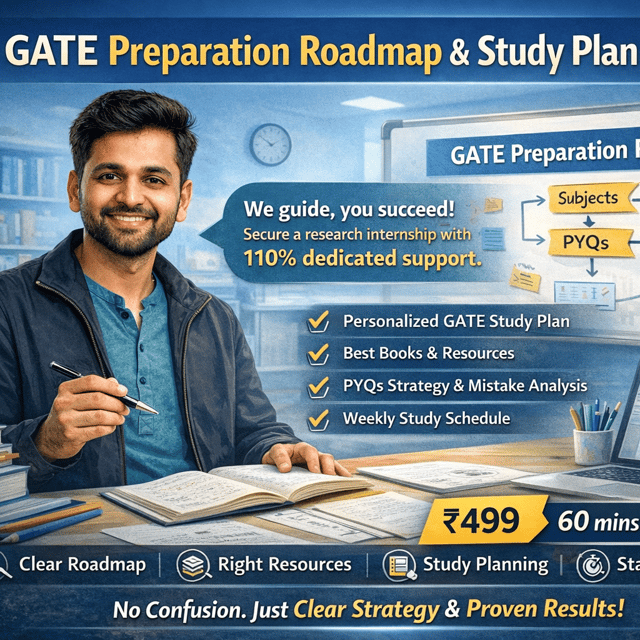
GATE Preparation Roadmap & Study Plan Session
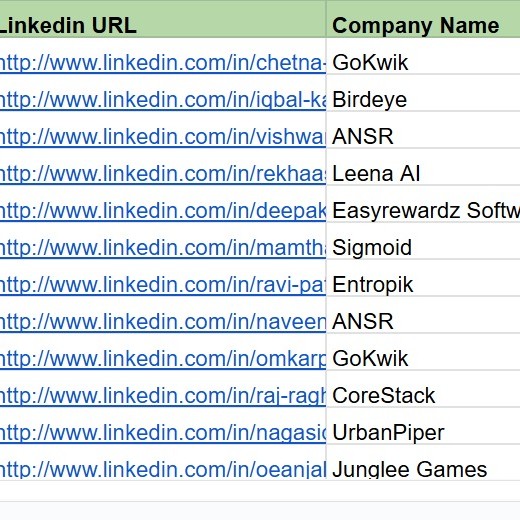
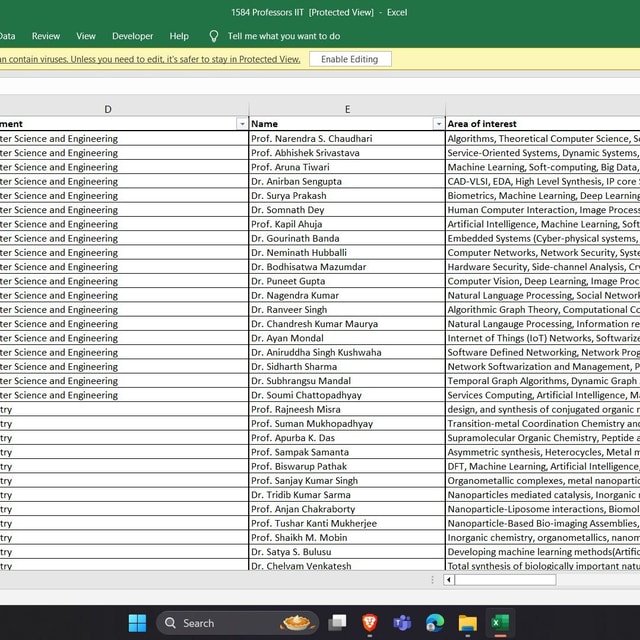
IIT Professors’ Internship Database
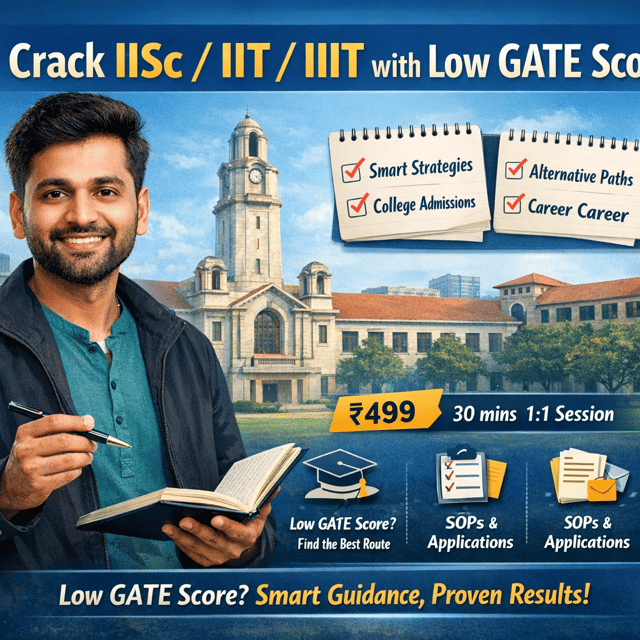
Crack IISc / IIT / IIIT with Low GATE Score

Futurescape 365: 1st-Year Mentorship Adventure
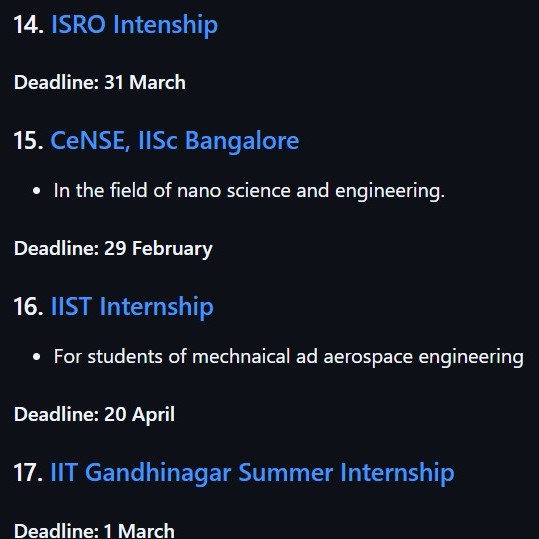
Paid Research Internship Sheet (India + Abroad)
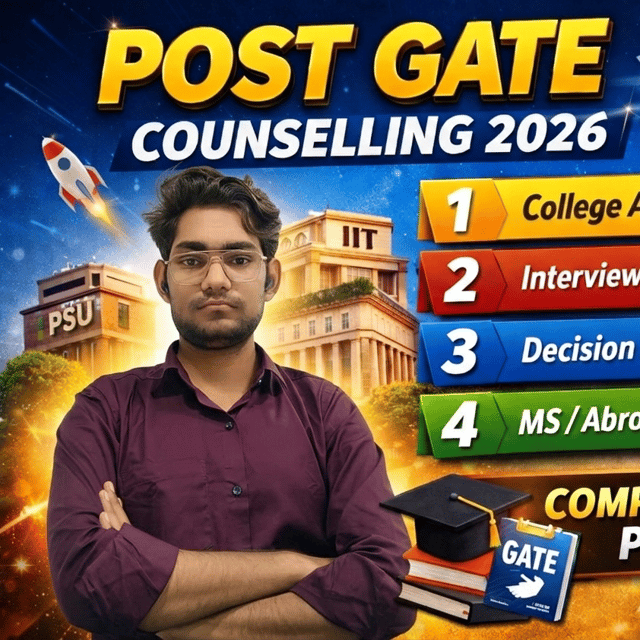
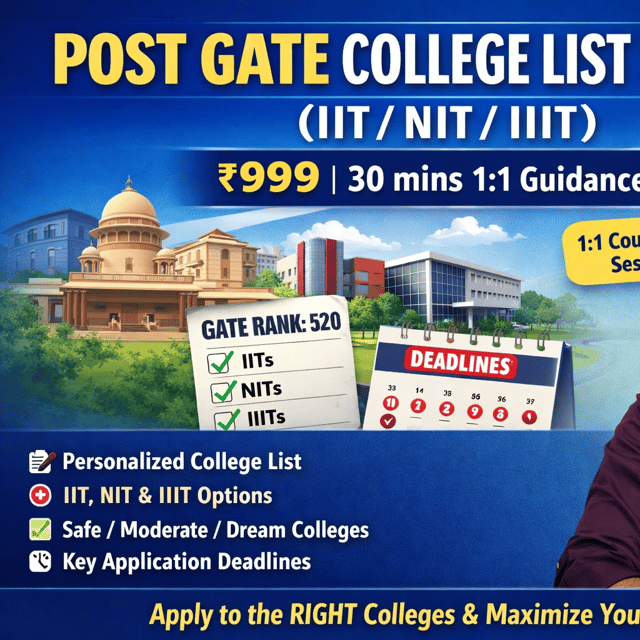
POST GATE COUNSELLING & GUIDANCE (IIT / NIT / PSU)

Not Getting Job? Let’s Fix Your Career Path
1.5 Lakh+ HR Details

Research Internship SOP Playbook
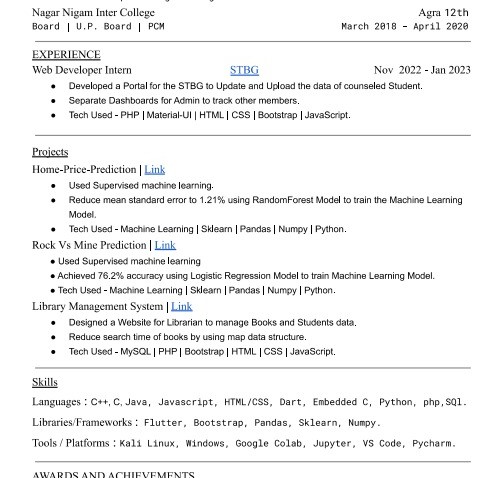
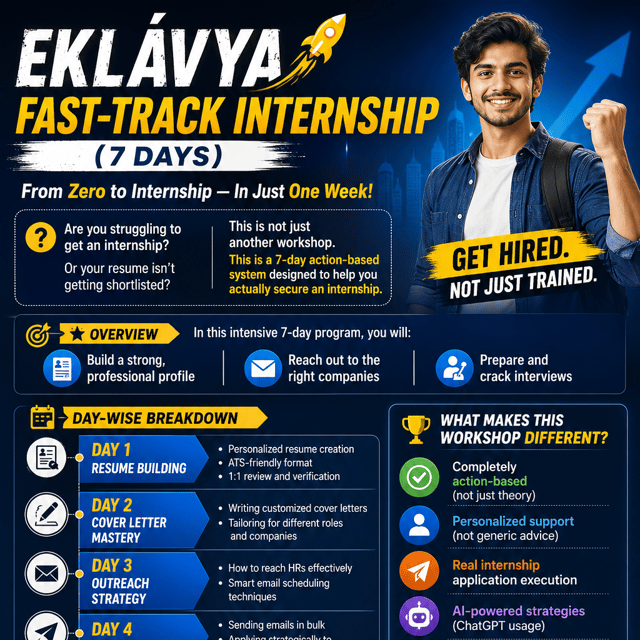
Internship Superpack: Emails + CV + Cover Letters
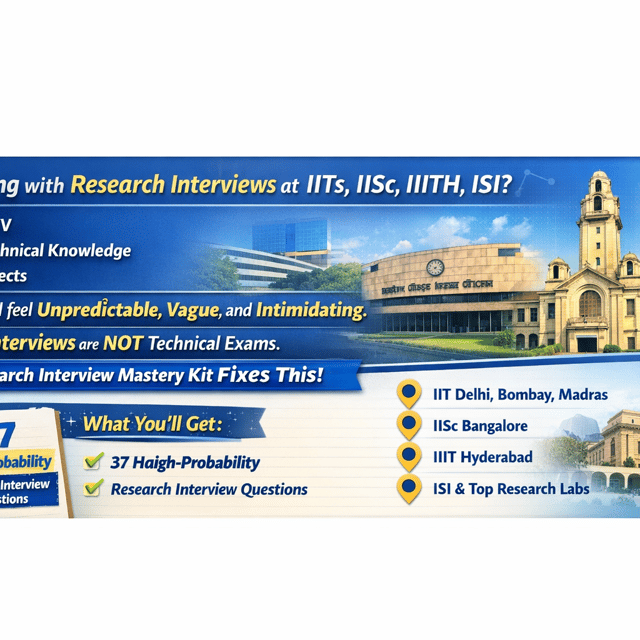
37 HIGH-PROBABILITY Research Interview Questions
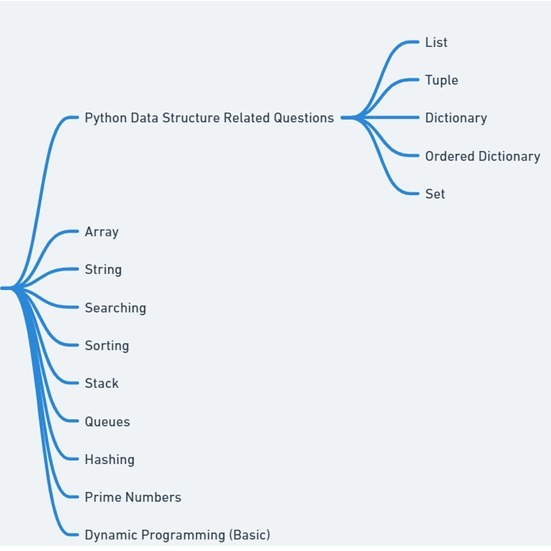
ML / Data Science DSA Blueprint (2026 Edition)
About me
Frequently asked questions
How to find internships in India?
Start with LinkedIn, Internshala and the career pages of companies you admire, along with your college's training and placement cell — most structured tech internships in India are posted between August and March for the summer cycle. For research roles there is no single portal: shortlist professors at IITs, IISc, IISERs and NITs working in your area of interest and reach out directly. Referrals from seniors and alumni also get far better response rates than mass portal applications.
How to get a research internship in India?
A research internship in India usually begins with a cold email rather than a job portal. Shortlist 15–20 professors whose recent papers genuinely interest you, read one or two of their works, and send a short, specific email with a one-page CV and a few lines on why their area fits your background. In parallel, apply to structured routes like the summer research fellowship programmes of IISc, IITs and the Indian science academies, and start 3–4 months before your target summer.
When should I apply for a summer internship in India?
A summer internship in India is a short stint — usually 8–12 weeks between May and July — at a company, startup or research lab while you are still studying. Large companies and organised research programmes open applications roughly between August and January for the following summer, startups hire on a rolling basis into April–May, and mass-recruiter internships mostly flow through campus placements in the pre-final year. So have your CV and projects ready before the season peaks rather than starting the search in March.
What is the GATE exam used for?
GATE (Graduate Aptitude Test in Engineering), conducted by IISc and the IITs, is primarily used for M.Tech, MS and PhD admissions at IISc, IITs, NITs, IIITs and other centrally funded institutes, along with the monthly assistantship attached to those programmes. A valid GATE score is also used by several PSUs to shortlist candidates for recruitment, and a growing number of foreign universities accept it for graduate admissions.
How to start GATE preparation?
Begin with the official GATE syllabus and 8–10 years of previous-year papers instead of a pile of textbooks. Skim the papers first to see what is actually asked, sequence subjects by weightage and interdependency, fix a realistic weekly timetable, and join a test series in the final 3–4 months. GATE exam preparation rewards consistency — 4–6 focused hours a day sustained over months beats irregular sprints.
How much GATE preparation time is actually needed?
Most successful candidates need 6–12 months of steady study — around 4–6 hours daily alongside college, and more if preparing full-time. A practical GATE preparation strategy matters more than raw hours: daily study, weekly revision, regular mock tests and honest error analysis. If your fundamentals are weak, budget closer to a full year instead of attempting a crash course in three months.
How should I plan GATE preparation for CSE?
Anchor your plan around the high-weightage CSE subjects — Data Structures and Algorithms, Operating Systems, DBMS, Computer Networks, Theory of Computation, Compiler Design, Computer Organisation — plus Engineering Mathematics and Aptitude. Use one standard source per subject, solve topic-wise previous-year questions immediately after finishing each topic, and practise coding regularly instead of only reading theory. Reserve the last two months for full-length mocks and revision.
Which GATE preparation books should I actually use?
Stick to one standard book per subject — for example, Cormen for algorithms, Galvin for operating systems and Navathe for DBMS — along with a good previous-year question compilation and one reliable test series. The most common mistake is collecting GATE preparation books you never finish; revising a single trusted source multiple times works far better than covering five sources once.
Are GATE preparation classes necessary, or is GATE preparation online enough?
Classes are not mandatory — thousands clear GATE every year through self-study and GATE preparation online using recorded lectures, standard notes, PYQs and a test series. What coaching really adds is structure, doubt-solving and peer accountability. If you can hold yourself to a schedule, disciplined self-preparation works just as well and costs far less; many aspirants mix both with online lectures at their own pace plus one test series.
How to get M.Tech admission in IIT?
You need a valid GATE score in the relevant paper, then apply to each IIT separately — application windows usually run from March to May — and track offers through COAP, the common offer acceptance portal used across rounds. Some routes, such as MS by Research, RA categories and interdisciplinary programmes, add written tests or interviews. Cutoffs vary sharply by branch and category: M.Tech admission at IIT Delhi for CSE, for instance, closes among the highest scores, while newer IITs, interdisciplinary schools and many NIT/IIIT programmes remain accessible with far more modest scores.
Can I get M.Tech admission in IIT without GATE?
For the regular full-time M.Tech with teaching assistantship at IITs, a GATE score is essentially compulsory. The recognised exceptions are sponsored and part-time categories for candidates with relevant work experience, QIP for faculty, and a few research-oriented programmes where institutes conduct their own written tests and interviews — policies differ, so always check the specific admission brochure. Without GATE, IIITs, state universities and institutions with their own entrance processes are realistic alternatives.
How do I get a summer internship at the Indian Academy of Sciences?
Apply through the Summer Research Fellowship Programme (SRFP), run jointly by the Indian Academy of Sciences with INSA and NASI. Applications usually open between September and December on the academies' joint portal, where you submit marksheets and choose guides whose research matches your interests; selection depends mainly on your academic record. Selected students spend roughly two months in summer with a fellow — many of them professors at IISc and the IITs — with a stipend and travel support.
What is the DAAD WISE internship, and who can apply for it?
DAAD WISE (Working Internships in Science and Engineering) is a scholarship from the German Academic Exchange Service that lets students from eligible Indian institutions spend a summer doing a research internship — typically two to three months — at a German university or research institute. You first secure acceptance from a German host professor for a specific project, then apply to DAAD for funding that generally covers a monthly stipend, travel and insurance. Deadlines fall months before the internship, so shortlist professors and write to them early.
How do I write a cold email to a professor for a research internship?
Keep it under 200 words and highly specific. Use a clear subject line like "Prospective research intern for Summer 2026", open with one or two lines showing you have actually read the professor's recent work, add 3–4 lines on relevant projects, skills or grades with links as proof, and state your availability clearly — duration, mode and dates. Attach a one-page CV, never send mass-forwarded generic emails, and send one polite follow-up after 10–14 days if there is no reply.
How should I start TCS placement preparation?
Start with the latest official TCS NQT notification, because the pattern, sections and cut-offs change almost every cycle. Typically you will face aptitude sections — quantitative, verbal and reasoning — plus coding rounds, with tougher advanced rounds for Digital and Prime roles. Practise previous papers and timed mocks, master one programming language along with core DSA topics like arrays, strings and hashing, and keep your resume consistent with what you can defend in the interview.