Testimonials
Services
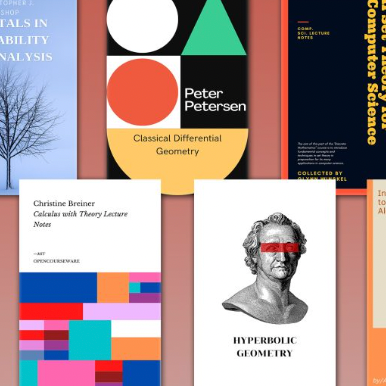
45+ Mathematics Books Every Data Scientist Needs
Premium Resources For Data Science Zero to hero
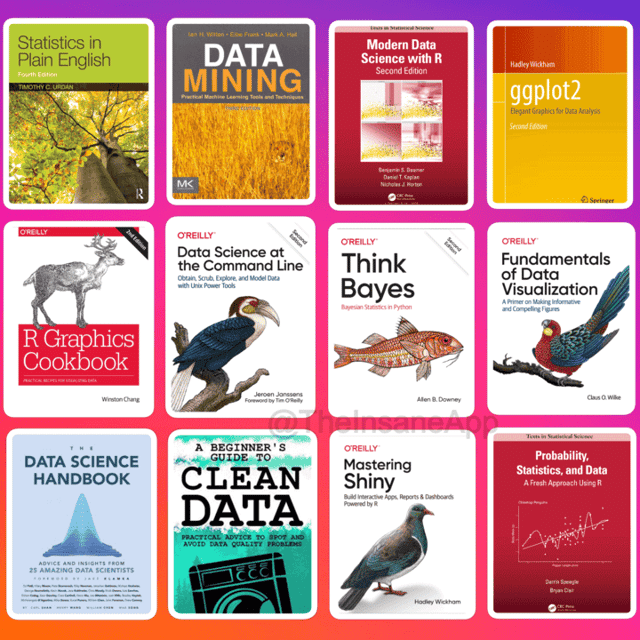
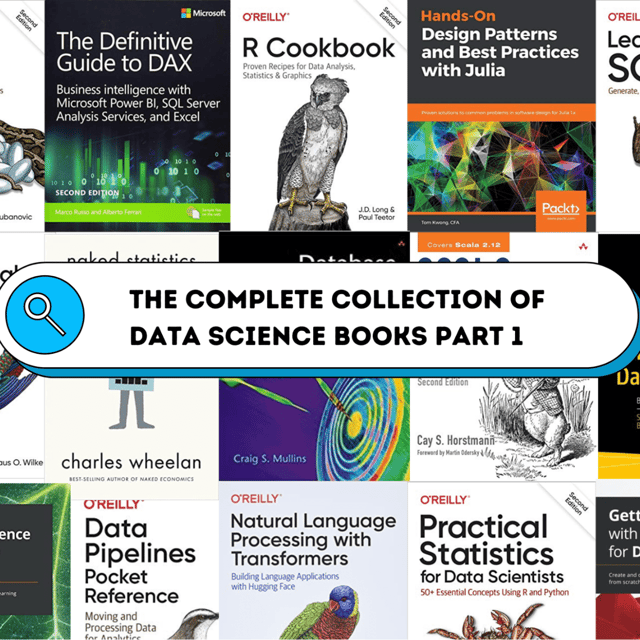
Data Science & AI Engineering Career Accelerator
About me
- Arif Alam is praised for providing valuable, well-organized resources that enhance learning and support professional growth in data science.
 AI-generated based on testimonials
Frequently asked questions
How to learn data science from scratch with no technical background?
If you're wondering how to learn data science from scratch, follow a fixed sequence: Python basics first, then statistics and probability, then SQL and data cleaning, and only after that machine learning. Apply every concept immediately on real datasets instead of just watching tutorials. Give it 1–2 focused hours daily for 6–9 months and finish with 2–3 portfolio projects — a dashboard, a prediction model, and one end-to-end case study. Consistency with hands-on practice matters far more than collecting courses.
How to learn data science for free?
If you're searching how to learn data science for free, combine YouTube tutorials, free introductory courses, Kaggle Learn modules, official library documentation, and open datasets for practice. Curated resource collections save the most time — for example, Arif Alam, founder of Data Science Reality and 0$ University, has compiled 400+ data science resources for a 500K+ learner community. Pair free learning with a weekly project target so your skills actually compound instead of getting stuck in tutorial loops.
What does a good data science roadmap for beginners look like?
A practical data science roadmap for beginners spans roughly 6–9 months: Months 1–2 for Python and core maths, Months 3–4 for statistics, SQL, and exploratory data analysis, and Months 5–6 for machine learning, visualization, and projects. The final phase is specialization — analytics, NLP, computer vision, or AI engineering — plus interview preparation. Pick a roadmap that includes projects at every stage, because portfolios, not certificates, get you shortlisted.
Where can I find a reliable data science roadmap PDF?
Community-maintained GitHub repositories and visual roadmap websites are the usual starting points, and several data science creators share a downloadable data science roadmap PDF as part of their free resources. Whichever data science roadmap PDF you pick, make sure it is updated for 2026, since tool recommendations change quickly, and check that it maps topics week-wise with linked resources and project checkpoints.
How to become a data scientist in India without a formal degree?
If you're evaluating how to become a data scientist without a CS degree, the path in India is skills-first: master Python, statistics, SQL, and machine learning, then prove it with a GitHub portfolio and 2–3 real-world projects. Most freshers enter through data analyst or junior data science roles and transition internally within 1–2 years. Companies increasingly hire on project work and interview performance, so demonstrable skill matters more than your degree.
What to learn in data science first — coding or maths?
The most common confusion about what to learn in data science first is coding versus maths — the practical answer is basic Python first, then statistics in parallel, because you need code to experiment with the math you learn. Your full stack should cover Python, statistics and probability, SQL, data wrangling, machine learning, and data storytelling. Linear algebra and calculus matter later, once you reach deep learning, not on day one. Dedicated maths-for-data-science book lists close gaps faster than generic textbooks.
How do I learn data science with Python?
The fastest way to learn data science with Python is library by library: NumPy and pandas for data handling, matplotlib and seaborn for visualization, then scikit-learn for machine learning — with a mini-project after each stage. Beginners often speed this up using a curated Python data science library PDF collection like the one Arif Alam offers, which bundles the essential libraries in one reference. Add SQL alongside Python, since real data science work almost always involves querying databases.
What is machine learning in data science?
When people ask what is machine learning in data science, the simplest explanation is that it is the part of data science where algorithms learn patterns from historical data to make predictions on new data without being explicitly programmed. Common uses include churn prediction, fraud detection, recommendation engines, and demand forecasting. In a typical workflow, machine learning comes after data collection, cleaning, and exploratory analysis — the model is only as good as the data prepared before it.
What is deep learning in data science?
If you've wondered what is deep learning in data science, it is the subset of machine learning that uses multi-layered neural networks to learn from very large and complex datasets. It powers image recognition, speech recognition, and today's generative AI tools and LLMs. For beginners, deep learning is not the starting point — get comfortable with Python, statistics, and classical machine learning first, then move into neural networks.
How to crack a data science interview as a fresher?
A solid plan for how to crack a data science interview has five parts: revise statistics and probability fundamentals, practice SQL and Python/pandas coding rounds, master core ML theory like bias-variance tradeoff and evaluation metrics, prepare to explain your projects in terms of business impact, and do 2–3 mock interviews. Freshers usually lose marks under SQL round pressure and vague project explanations, so rehearse both aloud. A 1:1 mock call with a working data science mentor can quickly expose weak areas before the real interview.
What are the most common data science interview questions for freshers?
Data science interview questions for freshers typically cluster around descriptive statistics (mean vs median, variance, outliers), probability puzzles, hypothesis testing and p-values, Python and pandas operations, SQL joins and window functions, and ML basics like overfitting, bias-variance, and precision vs recall. Expect 2–3 deep questions on your own projects, so know every technical decision you made. Practicing answers out loud, not just reading them, is what separates selected candidates.
How many weeks of data science interview preparation are enough?
For most freshers, 6–8 weeks of focused data science interview preparation is realistic alongside college or a job: weeks 1–2 for statistics and SQL, weeks 3–4 for Python coding and pandas, weeks 5–6 for ML theory and case studies, and the final two weeks for mock interviews and revision. If you're switching from a non-data role, extend it to 10–12 weeks. Short daily practice sessions beat weekend marathons for retention.
Which data science interview books are actually worth reading?
The data science interview books that genuinely help fall into three categories: one comprehensive question bank covering statistics, ML, and SQL; one statistics refresher written specifically for interviews; and one hands-on SQL/Python practice book. Widely used titles like "Ace the Data Science Interview" handle the question-bank role well. Whatever you pick, solve answers on paper or a whiteboard-style setup, because reading solutions passively creates false confidence.
Where can I find a reliable data science interview questions PDF?
A good data science interview questions PDF should be organized topic-wise — statistics, SQL, Python, ML, and case studies — and include model answers, not just question lists. Several data science creators offer such downloadable resources; Arif Alam's Data Science Interview Premium Resource on Topmate is one example built specifically for interview rounds. Use the PDF as a revision layer after hands-on coding and SQL practice, since question banks alone won't clear technical rounds.