Testimonials
Services
Ultimate roadmap for a Product Data Scientist
Mastering Communication
AB testing Zero to Hero
Quick Chat
About me
- 6 Problem Solving Tips to Crack Any Data Interviewhttps://www.youtube.com/watch?v=za1EmXMkOvA&t=322s

Frequently asked questions
What is the right data science roadmap for beginners?
A practical data science roadmap for beginners follows this sequence: SQL and Excel first, then Python with pandas, then statistics and probability, followed by data visualization in Power BI or Tableau, machine learning basics, and finally two or three end-to-end projects built on real datasets. Give SQL, Python and statistics the largest share of your time because they dominate entry-level interviews. Adjust the depth to your background — a final-year student, a fresher and a working professional switching from another domain should not follow identical plans.
What should a data science roadmap for 2026 include beyond the usual skills?
Along with the core stack of SQL, Python, statistics and machine learning, a data science roadmap for 2026 should include generative AI awareness — working with LLM APIs, prompt-based data analysis, and knowing where GenAI fits into analytics workflows. Employers increasingly expect data professionals to use AI tools to speed up exploration, code and documentation, so add one project that combines a traditional ML model with an LLM component. Treat GenAI as a layer on top of fundamentals, because interviews still test SQL, statistics and business thinking more than any single tool.
Is a data science roadmap PDF enough to become job-ready?
A data science roadmap PDF is useful as a checklist, but a static document cannot see your gaps, your available hours or the roles you are targeting, which is why many people keep collecting resources for months without finishing projects. Use the PDF to understand the correct order of skills, then convert it into a weekly plan with deadlines and a fixed project count. Review that plan once with a mentor who already works in data so you can cut everything that current interviews do not actually test.
What is a data analytics roadmap and how is it different from a data science roadmap?
A data analytics roadmap focuses on collecting, cleaning and visualizing data to answer business questions — heavy on SQL, Excel, dashboards and tools like Power BI or Tableau, with lighter statistics. A data science roadmap goes further into machine learning, predictive modelling and experimentation. If your goal is analyst roles at banks, services firms or e-commerce companies, the analytics route gets you interview-ready faster; pick the data science route when you specifically want modelling-heavy roles. Many professionals start with the analytics roadmap and add ML skills later while working.
How to become a data scientist without a computer science degree?
There is a well-tested path for how to become a data scientist from a non-CS background: build strong SQL, Python and statistics, add machine learning fundamentals, then prove it with two or three projects framed around real business problems rather than textbook datasets. Enter through data analyst, business analyst or domain-adjacent roles and transition internally after a year or two — this is how a large share of data scientists from mechanical, civil, commerce and even arts backgrounds actually made the switch. Hiring teams test skills in the interview, so proof of work matters more than your degree name.
How to crack a data science interview?
Structure your preparation in three layers: the technical screening (SQL queries, Python, statistics), the depth rounds (ML concepts, your projects, trade-offs like bias-variance and model selection), and the business rounds (case studies, guesstimates, metric design). Most candidates fail on articulation rather than knowledge, so practise explaining every project aloud in a problem-action-result format and rehearse with a timer. Two or three mock interviews with experienced data professionals before the real attempt usually separate people who crack the interview from people who know the material but freeze under pressure.
What is asked in a data science interview?
A typical data science interview covers five areas: SQL (joins, window functions, aggregation problems), Python or R with pandas-style data manipulation, statistics and probability (distributions, hypothesis testing, p-values), machine learning theory plus a deep-dive into your past projects, and case-study or guesstimate rounds that test how you connect data to business decisions. Fresher roles tilt toward theory and SQL, while experienced roles add scenario questions, metric design and heavy resume grilling. Product-based companies usually include one live round with an ambiguous business problem to test structured thinking.
How do I plan data science interview preparation while working a full-time job?
Plan eight to ten weeks of data science interview preparation at around 90 minutes on weekdays with longer weekend blocks, without quitting your job. Use the first two weeks to revise SQL and statistics, the middle weeks for machine learning concepts and reworking your projects so you can defend every decision, and the final weeks for timed mocks and company-specific patterns. Working professionals do best when they focus on high-yield topics — SQL, statistics, project storytelling and a few case studies cover most Indian interview loops.
What are the most common data science interview questions for freshers?
The most common data science interview questions for freshers start with your projects — explain them end to end, including why you chose each approach. Then come core ML concepts such as bias-variance trade-off, overfitting and how to fix it, precision versus recall, and when a simple model beats a complex one. Expect statistics questions on distributions and hypothesis testing, SQL problems built around joins and GROUP BY, and one guesstimate to test structured thinking. Freshers usually lose offers by memorising definitions instead of linking answers to their own projects, so prepare every resume line for a follow-up.
How to prepare for SQL interview questions?
To prepare for SQL interview questions, master joins, GROUP BY with HAVING, subqueries, CTEs and window functions such as ROW_NUMBER, RANK and running totals, then practise on realistic datasets instead of toy examples. Solve at least 40-50 problems across difficulty levels with a timer, and narrate your thought process aloud while writing because interviewers evaluate your reasoning, not just the final output. Track your recurring mistakes — NULL handling, date filters and duplicate rows are where most candidates slip — and revise that list the day before the interview.
Which SQL interview questions for freshers should I definitely practise?
The most repeated SQL interview questions for freshers are: WHERE versus HAVING, INNER JOIN versus LEFT JOIN, DELETE versus TRUNCATE versus DROP, primary key versus unique key, finding the second-highest salary, removing duplicates from a table, and aggregation with GROUP BY. Interviewers often add one window-function question even at fresher level, usually ranking rows within a group. Write each of these queries from scratch at least once, because most fresher rejections in SQL rounds come from fumbling these fundamentals rather than from overly hard problems.
What SQL interview questions for data analyst roles are asked most often?
SQL interview questions for data analyst roles are usually scenario-based: month-over-month growth, top-N products per region, repeat customer or retention queries, running totals and average order value — not abstract theory. Prepare date functions thoroughly since nearly every analyst task involves time periods, and be ready to explain which business decision each query supports. Pair your SQL practice with one dashboarding tool, because analyst interviews in India frequently combine a SQL round with a Power BI or Tableau discussion on the same dataset.
How are SQL interview questions for experienced professionals different from fresher-level questions?
SQL interview questions for experienced professionals shift from syntax to judgement: query optimization and execution plans, indexing and partitioning decisions, complex window-function logic, debugging a slow report and designing schemas for analytics. At 3-5 years of experience, expect scenario questions about real production problems; at more senior levels, data modelling and pipeline design join the discussion. The best preparation is revisiting performance issues or complex queries you have actually solved and framing each as a short story — the problem, your approach and the measurable result.
Do I need an ATS-friendly resume for data science and data analyst jobs in India?
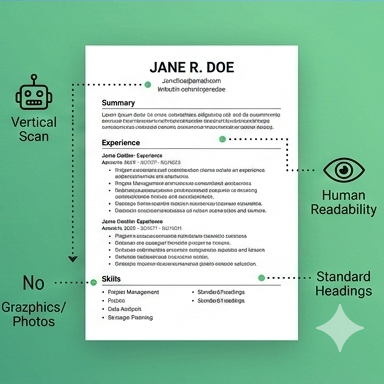
Yes, because most mid-size and large companies filter applications through an ATS before a human ever sees them, and even strong data science interview preparation cannot help if your resume never gets shortlisted. Use a single-column layout, standard section headings, no tables or graphics, and mirror the keywords the job description actually lists — SQL, Python, machine learning, Power BI and so on. Quantify every achievement with numbers such as accuracy improved, hours saved or revenue impacted, and keep the resume to one or two pages.
Do mock interviews really help before a data science interview?
Yes — a timed mock is the most reliable way to test whether you can crack a data science interview under pressure, because it exposes what self-study hides: rambling project explanations, long pauses on SQL and missed follow-up questions. Do at least two or three mocks with someone experienced in data roles, treat each one like the real round, and fix only the top two weaknesses after every session. Most candidates find the second mock dramatically easier than the first, which is exactly the composure the actual interview demands.