Testimonials
Services
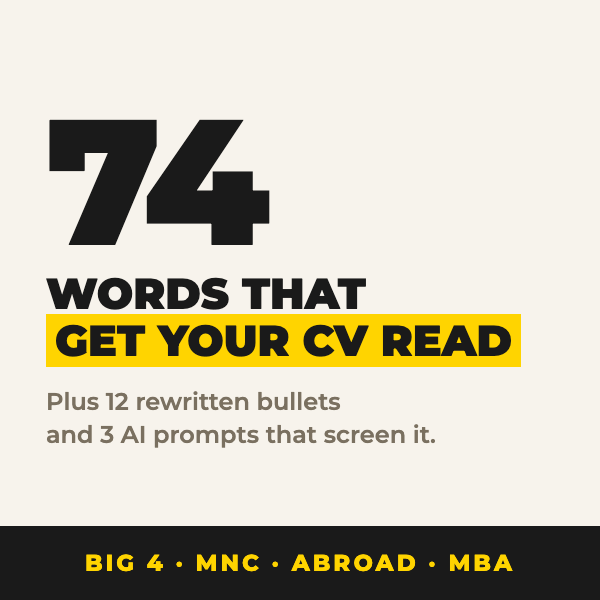
The CV Template That Got Me Into Big 4 & IIMA
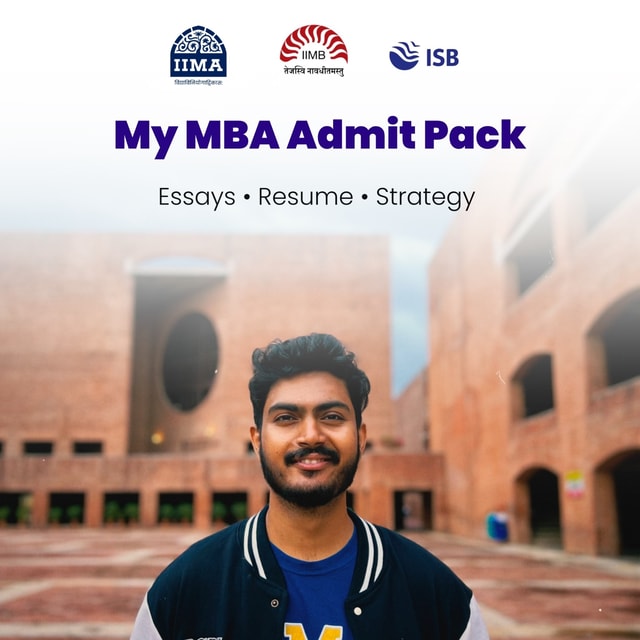
My MBA Admit Pack: IIMA, IIMB & ISB
MBA Mock Interview
Basics of Prompt Engineering
1:1 Mentorship call
MBA Profile Review
1:1 Mentorship call
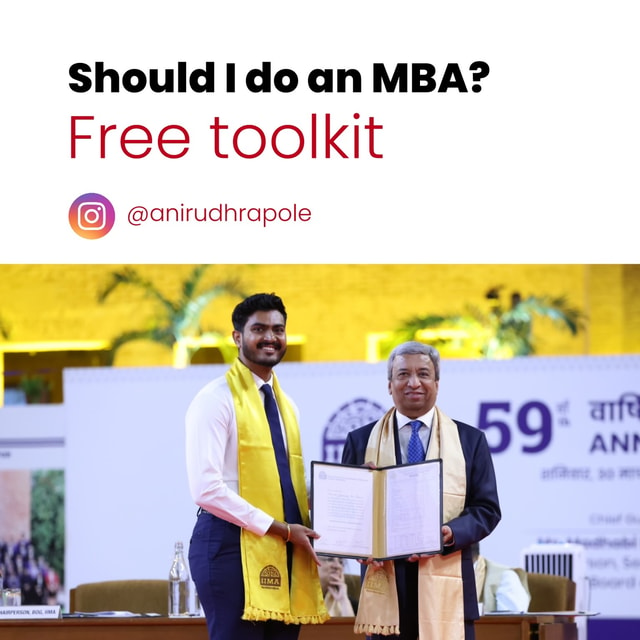
About me
- Anirudh Rapole offers insightful and tailored mentorship, fostering clarity and confidence for career decisions while creating a supportive atmosphere.
 AI-generated based on testimonials
Frequently asked questions
What is a Big 4 articleship?
A Big 4 articleship is the practical training period of the Chartered Accountancy course completed at one of the Big 4 firms — Deloitte, PwC, EY, or KPMG — in India. During a Big 4 articleship, students work on statutory audits, taxation, and advisory assignments for large listed and multinational clients instead of small local practices. The structured processes, big-brand exposure, and client quality are why CA students compete hard for a limited number of seats every intake.
How to get a Big 4 articleship?
If you are wondering how to get a Big 4 articleship, it usually comes down to three things: clearing both groups of CA Intermediate with a solid score, building a crisp one-page resume, and applying through the right channels at the right time. Most students secure a seat through campus placements, the ICAI placement route, referrals from seniors, or direct applications on firm career pages, followed by a technical and HR interview. Starting your interview preparation early matters more than most students realise, because shortlisting is competitive and offers move fast.
How to apply for articleship in Big 4?
If you are figuring out how to apply for articleship in Big 4 firms, there are four main routes: your college or CA institute's campus placements, the ICAI campus program, the careers pages of Deloitte, PwC, EY, and KPMG, and referrals from seniors or current articles. Big 4 offices typically open articleship vacancies in batches aligned to registration windows, so track announcements around your intended start date and keep your resume and CA Inter marks ready. A well-formatted resume followed by focused interview preparation is what converts an application into an offer.
What is the Big 4 articleship eligibility?
Big 4 articleship eligibility broadly means you must be registered for the CA course with ICAI and should have cleared CA Intermediate, with most Big 4 offices strongly preferring students who have cleared both groups, ideally in one attempt. Some offices also weigh graduation percentage, class 12 scores, and communication skills during shortlisting. There is no separate entrance exam for a Big 4 articleship — the real filters are resume shortlisting and the interview round.
How much is the Big 4 articleship stipend?
The Big 4 articleship stipend in India generally starts around ₹12,000–₹20,000 per month in the first year and can cross ₹30,000 by the final year, with metro offices like Mumbai, Delhi NCR, and Bengaluru usually paying at the higher end. Exact amounts vary by city, office, and year of articleship, and some teams add allowances during exam months or busy season. Treat the stipend as secondary — the audit and advisory exposure is the real long-term payoff of training at a Big 4.
What are the common Big 4 articleship interview questions?
Big 4 articleship interview questions usually cover four areas: core accounting and audit fundamentals (such as vouching vs verification, bank reconciliation, and basic standards), your resume in detail including internships and projects, your preference between audit and tax along with the reason, and HR questions like why our firm and how you handle pressure. Interviewers rarely expect expert-level depth from articles — they check whether your fundamentals are clean and whether you can be trained quickly. Rehearsing your answers aloud is the single most effective preparation step.
How to prepare for a Big 4 articleship interview?
Most students overcomplicate how to prepare for a Big 4 articleship interview — it really comes down to revising CA Inter level accounting and audit concepts, knowing every line of your resume, preparing a 60-second introduction, and practising standard HR answers like "why Big 4" and "audit vs tax". Reading up on the specific firm's recent work and basic current business news also helps you stand out. A structured prep pack or a mock interview with someone who has already been through the Big 4 process, such as the Big4 Articleship Pro pack format of preparation, can shortcut weeks of guesswork.
What are the Big 4 articleship timings?
Big 4 articleship timings typically run from around 9:00–9:30 am to 6:30–7:00 pm on regular days, but during busy season — roughly January to March and around quarter-ends — late nights and occasional weekend work are common, especially in statutory audit teams. Timings also differ by client and department, since a listed-client audit team works very differently from an internal support function. Before accepting an offer, it is worth asking current or former articles from that specific office about the real workload culture.
What are common MBA interview questions?
Common MBA interview questions fall into a predictable set: "Tell me about yourself", "Why do you want to do an MBA", "Why this particular B-school", "What are your strengths and weaknesses", "Where do you see yourself in five years", and detailed probing of your work experience, academics, and views on current business affairs. Many Indian B-school panels also ask situational questions to test how you think on your feet. Preparing structured, honest stories for these standard questions matters far more than memorising scripted answers.
How to prepare for an MBA interview?
If you are unsure how to prepare for an MBA interview, break it into four steps: know your own story cold (resume, academics, and a clear "why MBA" narrative), research the specific program and its curriculum, stay updated on current affairs for opinion-based questions, and practise through realistic mock interviews with candid feedback. For top Indian programs like IIMA, IIMB, and ISB, interviews dig deep into your profile, so any inconsistency between your SOP and your spoken answers is the most common reason candidates struggle. A profile review followed by a realistic mock interview is the most reliable way to close gaps before the actual day.
What are the MBA interview questions for freshers?
MBA interview questions for freshers focus more on academics, internships, projects, and clarity of intent than on corporate experience. Expect questions like "Why an MBA right after graduation", "Walk me through your final-year project", "Which subjects did you enjoy in BCom and why", along with basic current affairs and hobby-related questions. Freshers who connect their academic strengths to a specific career goal consistently outperform those who give generic answers about wanting a "leadership career".
Should I do an MBA?
The honest answer to "should I do an MBA" depends on your goal, not on what your batchmates are doing. It makes strong sense if you want to switch functions — for example from finance or audit into consulting, product, or general management — if you need a stronger brand and network to unlock opportunities, or if you are progressing slower than your potential in your current track. Experienced professionals usually benefit from one-year programs, while freshers are better suited to two-year programs; if you are still unsure, map your target role and check whether the people already doing that job actually hold an MBA. A structured decision framework, such as a free "should I do an MBA" guide, helps you weigh this honestly instead of deciding under peer pressure.
What are the prompt engineering basics for beginners?
The prompt engineering basics for beginners come down to five habits: assign the AI a clear role, give it relevant context, specify the exact output format you want, include one or two examples of good output, and iterate instead of accepting the first response. None of this requires coding — prompt engineering is simply clear communication with AI tools like ChatGPT and Claude. Once these basics click, non-tech professionals can use AI for emails, reports, research summaries, and data cleanup in a fraction of the usual time.
Is a prompt engineering basics course worth it for non-tech professionals?
A prompt engineering basics course is worth it for non-tech professionals if it is practical and role-specific rather than theoretical. The right course teaches a repeatable framework — role, context, examples, output format — and gives you templates you can reuse in your actual work, whether that is finance, marketing, or operations, instead of abstract AI theory. Since AI tools now sit inside everyday workflows, even a short, well-designed prompt engineering basics course typically pays for itself in saved hours within weeks.
How can I learn prompt engineering basics in Claude?
The fastest way to learn prompt engineering basics in Claude is hands-on practice: start a conversation, give Claude a clear role and context, and experiment with different output formats until you can see how each change affects the response. Claude works especially well with well-structured prompts that include explicit instructions, examples, and context, and its official free documentation is a solid reference for effective prompting patterns. Pairing that practice with ready-made, proven Claude prompts — such as a structured Claude Skills Pack — helps you build on patterns that already work instead of starting from zero.