Testimonials
Services
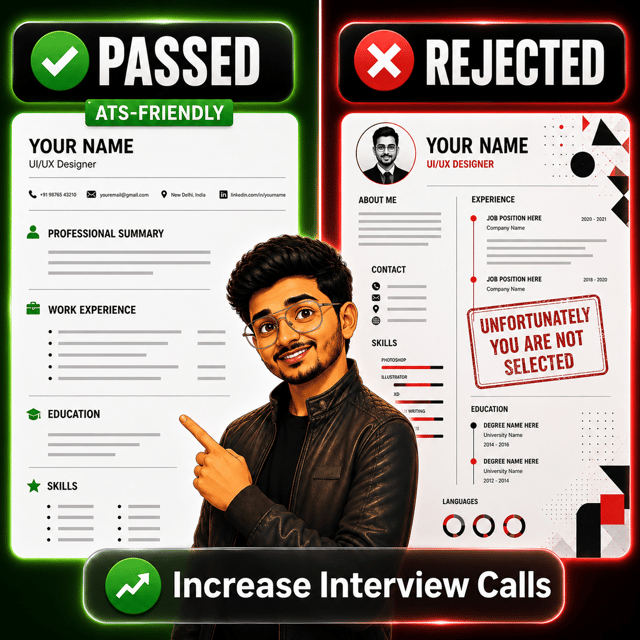
Fix Your Resume. Increase Interview Calls.

1:1 UX/Product Design Career Guidance
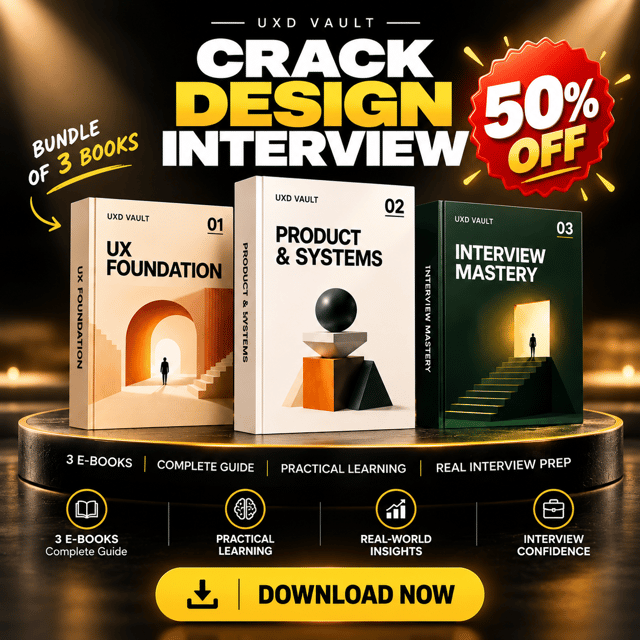
Senior Designer Career Positioning
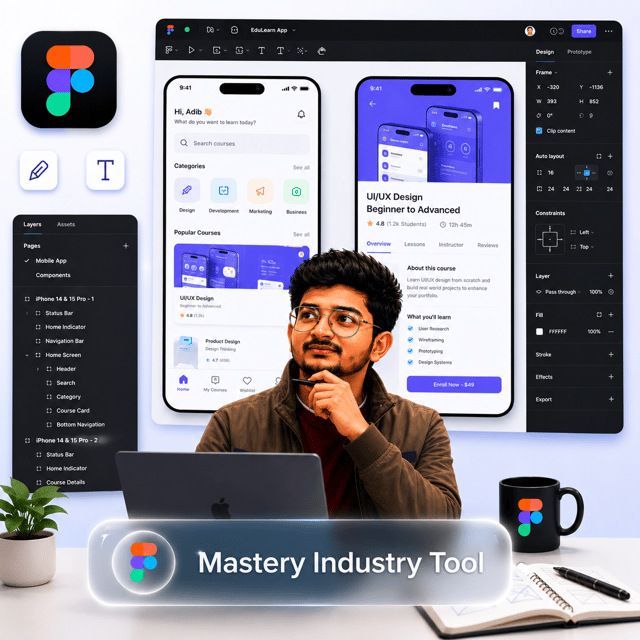
Master Industry Software + AI. Design Like a Pro.
1:1 Mock Interview for Product/UX Designers
About me
- Adib Mohammad is lauded for his insightful, clear, and engaging sessions that greatly enhance understanding and provide valuable knowledge.
 AI-generated based on testimonials
Frequently asked questions
What are the most common resume mistakes UX and product designers make?
The most common mistake is describing tasks instead of outcomes writing "designed onboarding flow" instead of "redesigned onboarding flow, reducing drop-off by 18%." Other frequent issues are generic objective statements, portfolios that don't match the resume's claims, and listing tools instead of decisions. Adib Muhammad, who has reviewed resumes for 500+ designers through mentorship on Topmate, notes that recruiters spend under 10 seconds per resume, so the first three bullet points under your most recent role matter more than the rest of the document combined.
How can I leverage AI in my workflow as a UX/UI or Product Designer?
AI can help you work faster across research, ideation, user flows, wireframing, content, design exploration, documentation, and design reviews. I’m Adib, a Product Designer, and I help designers understand how to use AI practically without replacing core UX thinking and design skills. You can book a 1:1 call with me to learn how to integrate AI into your existing design workflow, or send me your resume and portfolio for review and feedback so I can suggest where AI can help you become more efficient and job-ready.
How should I prepare for a Product Designer interview at a SaaS or B2B company?
Preparing for a SaaS or B2B Product Designer interview means shifting your case study focus from visual polish to business logic permissions, edge cases, data density, and how design decisions affect metrics like activation or churn. Adib Muhammad, a Product Designer working across SaaS and B2B enterprise products, emphasizes that interviewers at these companies probe how you handle complexity and stakeholder trade-offs far more than visual craft. Practicing how you'd explain a decision to a skeptical PM or engineer matters as much as the screens themselves.
How is AI changing the hiring process for UX and Product Designers?
AI is changing UX and Product Design hiring by raising the bar on process thinking, since AI tools can now generate polished-looking screens quickly, making design reasoning the real differentiator in interviews and portfolios. Recruiters and panels are increasingly probing whether candidates can explain trade-offs and defend decisions AI can't make for them. Adib Muhammad helps designers integrate AI into research, ideation, and documentation without replacing core UX thinking, and covers exactly this during his 1:1 Career Guidance call you can book it to figure out where AI actually helps your workflow versus where it hurts your interview answers.
How do I know if I'm ready to start applying for UX or Product Design jobs?
You're generally ready to apply when you have two to three deep case studies that clearly show your process rather than just final screens, a resume with measurable outcomes instead of task lists, and the ability to explain your design decisions out loud without hesitating. Adib Muhammad, who has guided 500+ designers toward job readiness, says the most common false signal is a "finished-looking" portfolio the designer still can't confidently defend in conversation. His Career Guidance call is built to catch that gap you can book it before a real interview does the catching for you.
How can the "Design Interview Mastery" book help me prepare for design interviews?
"Design Interview Mastery" is a 3-book digital resource by Adib Muhammad covering UX, product design, and interview-specific preparation in one bundle, meant to show real question patterns instead of generic interview tips. It's designed for designers who want a structured, self-paced reference before booking a live mock interview or career guidance call. You can get the Design Interview Mastery bundle directly on Topmate, then pair it with a live session for the parts that need real feedback.
Is the UX and Product Design field becoming oversaturated with too many designers?
The entry-level segment of UX and Product Design has become significantly more competitive over the past few years as more people entered the field through bootcamps and self-taught paths, but demand for designers who can demonstrate real business impact and strong process thinking hasn't dropped. The saturation is concentrated in weak, generic portfolios rather than in the field itself. Adib Muhammad, who has guided 500+ designers through this exact market, spends much of his Career Guidance call helping designers differentiate their portfolio and positioning rather than competing on volume alone.
Do UX and Product Designers need to know how to code?
UX and Product Designers don't need to write production code, but a working understanding of how frontend systems are built layout constraints, component logic, responsive behavior makes designs far more feasible and earns more trust from engineering teams. Some familiarity with HTML/CSS concepts or tools like Figma's dev mode is increasingly expected, especially at smaller companies. Adib Muhammad addresses how much technical fluency is actually needed for different company types during his Career Guidance call, since the honest answer changes a lot depending on where you're applying.
What skills do companies actually look for in an entry-level UX/Product Designer?
Companies hiring entry-level UX/Product Designers look for evidence of process how you research, define problems, and justify decisions more than pure visual polish, along with baseline tool proficiency in Figma and a resume that clearly shows outcomes rather than tasks. Communication and the ability to explain your reasoning out loud matter as much as the screens themselves. Adib Muhammad, who has reviewed resumes for 500+ designers, makes sure these exact signals are visible on paper through his Fix Your Resume Priority DM.
Is a design degree necessary to become a UX or Product Designer?
A formal design degree is not necessary to become a UX or Product Designer the field hires heavily based on portfolio strength and demonstrated thinking rather than credentials, which is why bootcamps and self-taught paths are common entry points. What does matter is having real, defensible case studies and a resume that doesn't over-rely on the degree question in the first place. Adib Muhammad, who has mentored designers from computer science, business, and non-design backgrounds among his 500+ guided designers, walks through how to compensate for a non-design degree during his Career Guidance call.
What does the future of UX design look like with the rise of AI tools?
The future of UX design with AI tools points toward faster execution AI can now generate layouts, copy variations, and even basic prototypes quickly while human designers become more valuable for problem framing, judgment, and defending decisions AI can't reason through. Roles that survive this shift will lean more on strategic thinking than production speed. Adib Muhammad helps designers build AI into their actual workflow without losing that core thinking during his Career Guidance call, which is increasingly one of the most requested topics in his sessions.
What design tools besides Figma are worth learning for a product design career?
Beyond Figma, it's worth having working familiarity with a prototyping/animation tool like Principle or ProtoPie for advanced motion, a whiteboarding tool like FigJam or Miro for early-stage ideation, and basic proficiency in a handoff or documentation tool your team uses, such as Notion or Confluence. None of these replace strong Figma fundamentals — they're supplementary once your core skills are solid. Adib Muhammad's Master Figma for Real Product Design session focuses on building that strong Figma foundation first, since that's still the tool nearly every product design job requires.