Testimonials
Services

Career guidance
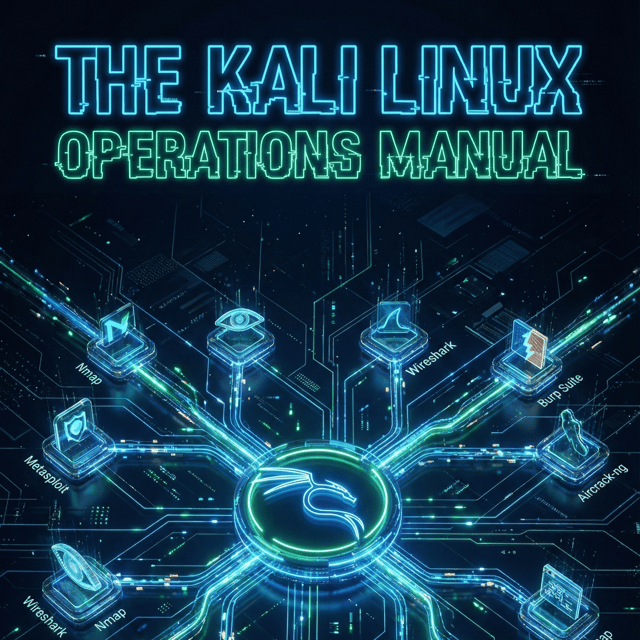
Cybersecurity - Kali Linux Mini Course E -Boook
PM Resource Library
Community mentorship

GitHub Certifications Study Guide
About me
- Microsoft Student Trainerhttps://www.credly.com/badges/2dbca6cf-f3af-4b74-8f37-62c703adf6cf/public_url

- Abimel excels in empowering, clear mentorship on community building and MLSA, highly valued across India.
 AI-generated based on testimonials
 - Join for Opportunitieshttps://www.instagram.com/channel/Aba1wDnzyIxg4Qsi/

Frequently asked questions
What is ethical hacking in simple words?
In simple words, ethical hacking is breaking into computers, networks, and applications legally — with the owner's permission — to find security weaknesses before criminals do. Ethical hackers use the same techniques as malicious hackers, but their goal is to report and fix flaws, not exploit them. That is what makes it a legitimate, well-paying profession, while unauthorised hacking is a crime.
Is ethical hacking legal in India?
Yes. Ethical hacking is fully legal in India as long as you have explicit permission — usually a signed contract or scope agreement — from the owner of the system you are testing. Unauthorised access to computers and networks is a punishable offence under the IT Act, 2000, which is exactly why professional penetration testers document authorisation before touching anything. Practising on your own virtual labs, legal practice platforms, and bug bounty programs within their rules is completely safe.
How to become an ethical hacker?
There is no single route, but a sequence that consistently works is: learn networking fundamentals and the Linux command line, pick up Python, understand how websites, networks, and operating systems are attacked, then practise legally on platforms like TryHackMe, Hack The Box, and vulnerable virtual machines. Certifications such as CompTIA Security+, CEH, and later OSCP add credibility once your fundamentals are solid. One non-negotiable rule: never test any system, website, or network you don't own or have written permission to test — that single line separates an ethical hacker from a criminal.
Do I need coding to start ethical hacking or cybersecurity?
Not on day one. Networking, Linux, and understanding how systems actually work matter far more in the beginning, and entry-level roles like SOC analysis reward analytical thinking more than programming. That said, learning Python or Bash alongside makes you noticeably more effective — automating scans, writing small scripts, and understanding exploits — and it becomes necessary as you move into penetration testing or security research. Start without the pressure to code, then add it once your fundamentals click.
How to learn ethical hacking in Hindi?
Look for Hindi-language playlists on YouTube and e-learning platforms — several creators teach ethical hacking fundamentals, Linux, and security tools entirely in Hindi, which is easier to digest if English-heavy content feels overwhelming. Build your base there, but keep switching to English for tool documentation, certification exams like CEH, and interview preparation, since the industry largely runs in English. A practical mix is learning concepts in Hindi while practising commands and writing notes in English.
Should I start with a free ethical hacking course or pay for one?
Start free. Networking basics, Linux, and core security concepts are available at zero cost through YouTube playlists and community platforms, so use a free ethical hacking course to confirm your interest and build fundamentals. Pay only when you need structure, mentorship, hands-on labs, or a recognised certificate. Ethical hacking course fees in India range from a few thousand rupees for self-paced online programs to ₹50,000+ for classroom training with certification prep — so never pay for basics that are freely available, and always check whether a course includes practical labs rather than just videos.
What salary can I expect as an ethical hacker in India?
Ethical hacking salary in India depends more on demonstrated skills and certifications than on degrees. Freshers with strong lab and CTF experience typically start around ₹4–8 LPA in SOC analyst or junior penetration testing roles. With 3–5 years of experience and certifications like CEH or OSCP, professionals commonly move into the ₹12–25 LPA range, and senior penetration testers or security leads can cross ₹30 LPA. Bug bounty earnings vary widely and are purely skill-driven.
What is Kali Linux used for?
Kali Linux is a Debian-based operating system built specifically for penetration testing and security auditing. It comes preloaded with 600+ tools for network scanning (Nmap), password cracking, wireless testing, web application attacks, vulnerability analysis, and digital forensics, so security professionals don't have to install everything manually. Students and aspiring ethical hackers use it in labs, CTFs, and practice machines to rehearse attacks legally. It is not meant as a daily-use operating system — think of it as a specialised toolkit you boot into for security work.
How to install Kali Linux on a PC?
The easiest and safest route for beginners is a virtual machine: install VirtualBox or VMware Workstation Player on your existing Windows 11 or Windows 10 system, boot the Kali installer inside a new VM, and keep your main OS untouched. The first step — the Kali Linux ISO download — should always be done from the official Kali website, never from random mirrors or torrent links, and the checksum should be verified. If you want native performance instead, create a bootable USB with Rufus or balenaEtcher and install Kali Linux on a PC as a dual-boot setup, backing up your data and partitioning carefully first.
How to use Kali Linux on Android?
Through Kali Linux NetHunter, the official mobile penetration-testing platform from the Kali team. The rootless NetHunter Lite runs through Termux on most modern Android phones without rooting, while the full version requires supported devices with custom kernels and recovery. That said, a small screen and Termux limitations make phones a frustrating first environment — learn the tools on a laptop VM first, then move to NetHunter for on-the-go practice. The same rule applies on mobile: attack only your own lab networks.
What is a cybersecurity roadmap?
A cybersecurity roadmap is a structured, step-by-step learning path that tells you what to learn, in what order, and which job role each skill set leads to — instead of collecting random courses and hoping things eventually connect. A solid cybersecurity roadmap for beginners generally flows like this: networking fundamentals → Linux command line → one scripting language (usually Python) → core security concepts like the CIA triad, cryptography basics, and common attacks → hands-on labs and CTFs → then a specialisation such as SOC analysis, penetration testing, or cloud security. Community versions exist on GitHub and as free PDFs or Notion pages — pick one and stick to it instead of hopping between five.
What should a cybersecurity roadmap after 12th look like?
Start the degree and the skills in parallel. On the formal side, B.Tech/B.E. in Computer Science or IT, BCA, or even B.Sc. all work — recruiters in India care far more about demonstrable skills than the degree tag. On the skills side, give your first year to networking and Linux, the second to Python and security fundamentals, and the final years to certifications like Security+ or CEH, CTFs, internships, and a small project portfolio. Following a clear cybersecurity roadmap after 12th matters because three years pass quickly, and students who start with a plan reach interviews with proof of work, not just marksheets.