Testimonials
Services
AI for Teacher
AI & ChatGPT Expert Guidance – 1:1 Call
Complete GitHub: From Zero to Industry Workflow
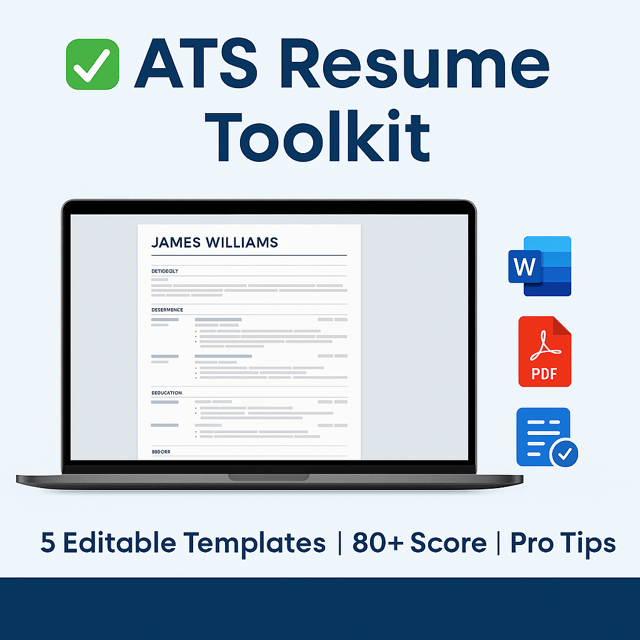
ATS Resume Toolkit: Templates + Pro Tips
AI Upskilling for Your Domain (Personalized)
Get Interview Ready (Strategy + Mock + Profile)
Realign Resume for AI Roles
Lead Data Engineer/Manager Prep
Non-Tech to Data Roles (Transition Program)
1:1 Career Mentorship
1:1 Career Mentorship
Resume and LinkedIn : Building and Optimization
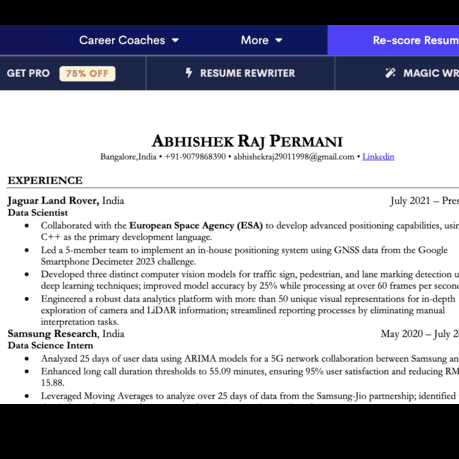
Personalised ATS Friendly Changes for Resume
End to End - Data Analysis Project
Resume Rewrite with 75+ ATS Score
Data Science Beginner Kickstart (Start Right)
HR Analyst Transition
AI Product Manager Role Prep
Mock Interview
Quick Career Clarity Call
Interview Strategies and Roadmap
About me


Frequently asked questions
What is agentic AI and how does it work?
Agentic AI refers to AI systems that can independently plan, make decisions, and take actions to complete a goal, instead of only responding to a single prompt. It typically combines a large language model with memory, tool access (search, code execution, APIs), and a feedback loop, so the agent can break a task into steps, execute them, check the results, and course-correct on its own. Real examples include support agents that resolve tickets end to end, coding agents, and research agents. This ability to finish multi-step workflows autonomously is why agentic AI has become the biggest shift in AI after generative AI.
Agentic AI vs generative AI — what is the difference?
Generative AI creates content — text, images, code — from a prompt, while agentic AI uses that intelligence to act toward an outcome. In simple terms, generative AI is the engine and agentic AI is the driver that plans, uses tools, and completes tasks end to end. Most real-world systems today combine both: a generative model powers the reasoning, and the agentic layer handles planning, tool calls, and execution until the goal is achieved.
How to learn agentic AI from scratch?
Start with Python and the fundamentals of LLMs and prompting, then move into frameworks like LangChain or LangGraph and learn how function calling, memory, and RAG actually work. Build small single-agent projects first — an agent that researches a topic or automates a report — and only then progress to multi-agent systems. Following a hands-on guide, such as the upcoming Springer book "Designing Agentic AI Systems," and getting feedback on your projects from someone who builds these systems in industry can shorten the learning curve significantly.
How to build agentic AI step by step?
Begin by defining one narrow task your agent should complete, then build a single agent with an LLM, a clear goal prompt, and one or two tools such as web search or a code executor. Next, add memory, error handling, and evaluation, and only after that experiment with multi-agent setups where agents hand off subtasks to each other. Deploying on cloud infrastructure and monitoring cost, latency, and reliability is what separates a demo from a production system — a skill that comes from working on real, large-scale ML pipelines.
Are paid agentic AI courses worth it, or should I start with free resources?
You can absolutely start with free documentation, open-source repos, and introductory agentic AI courses, so paying is not mandatory to begin. A structured paid course or mentor-led program becomes worth it when it gives you hands-on projects, code reviews, and accountability — the things self-learning usually lacks. Whatever you choose, judge it by the portfolio you exit with and the systems you can explain in an interview, not by the certificate.
Do I need an agentic AI certification to get hired?
A certification can help your resume pass screening, especially when you are switching careers, but hiring teams for AI roles weigh demonstrated projects far more heavily. A strong combination is one recognized certification plus two or three deployed agentic projects you can explain end to end. If you already work in data or software, targeted certification plus real project work usually matters more than collecting multiple certificates.
Which agentic AI tools should I learn first?
Learn one orchestration framework well — LangChain or LangGraph — along with function calling, RAG, and a vector database, since these appear in almost every agentic stack. Add CrewAI or AutoGen for multi-agent patterns, and get comfortable with Docker and a cloud platform like AWS for deployment. Employers care less about the specific tool and more about whether you can design reliable, observable, cost-efficient agent workflows.
How to crack a data science interview?
Prepare in layers: nail statistics, Python, and SQL first, then machine learning fundamentals, and finally case-study and scenario rounds. Practice explaining your projects in terms of business impact, because at many Indian companies candidates lose offers at the communication stage rather than the coding stage. Add mock interviews under real time pressure and review every rejection for patterns — focused, consistent preparation over 8–12 weeks beats last-minute cramming every time.
What are the most common data science interview questions?
Expect questions across statistics and probability (distributions, hypothesis testing, p-values), machine learning (bias-variance trade-off, overfitting, algorithm choice, evaluation metrics), SQL joins and window functions, and Python coding with pandas. Interviewers also ask scenario questions like "your model's accuracy dropped after deployment — what do you check?" and, for senior roles, ML system design. Preparing structured answers for these categories, with your own project examples attached, works far better than memorising question banks.
What are the common data science interview questions for freshers?
For freshers, interviewers focus on fundamentals — basic statistics, core ML concepts, simple SQL queries, and questions built around the projects on your resume. You will almost always be asked to walk through an end-to-end project: why you chose that model, how you handled missing data, and how you measured success. A clear, honest explanation of what you personally did in each project matters more than dropping buzzwords.
What are the most common data analytics interview questions?
Data analytics interviews are usually SQL-heavy, covering joins, aggregations, and window functions, along with Excel, Power BI or Tableau, and basic statistics. Expect business case and guesstimate questions — estimating a metric or explaining why a number changed — because analytics hiring in India tests business sense along with tooling. Being able to turn a chart into a clear business recommendation is often the deciding factor.
What topics do MLOps interview questions usually cover?
MLOps interview questions typically cover CI/CD for machine learning, model versioning and registries, experiment tracking, data and model drift monitoring, and pipeline orchestration. You should also expect Docker, Kubernetes, and cloud services — especially AWS — since most production ML teams run on them. Candidates who can explain how they would take a model from a notebook to a monitored, automatically redeployed production pipeline stand out immediately.
I have around 3 years of experience — what MLOps interview questions can I expect?
MLOps interview questions for experienced professionals go beyond definitions and focus on design and trade-offs — architecting training pipelines, GPU cost optimisation, scaling inference, handling data quality at scale, and debugging failures in production. Interviewers will dig deep into your past systems: why you chose Kubernetes, how you reduced cloud spend, how you set up monitoring and alerting. Prepare two or three detailed stories from your own work with measurable outcomes attached.
How to switch from non-tech to data science?
It is very achievable, and many people in India make this move every year by following a structured path: build SQL, Python, and statistics first, then apply them to a project in your current domain so your work experience becomes an advantage instead of a gap. Roles like business analyst or data analyst are often the fastest bridge, and you can move deeper into data science or AI after a year or two. A step-by-step transition plan helps you avoid the most common mistake — random course-hopping without a target role.
How do I write an ATS friendly resume for data and AI roles?
Use a clean single-column layout with standard section headings, and mirror the exact keywords from the job description — SQL, Python, machine learning, MLOps, and similar terms — because ATS software matches text before a human ever sees your resume. Quantify every bullet (for example, "reduced processing time by 40%") and avoid graphics, tables, and text boxes that confuse parsers. For AI and data roles specifically, lead with projects and tools, and get the resume reviewed against real job descriptions before you start applying.