Testimonials
Services
Dynatrace Complete Guide | Beginner to Expert
Prometheus Complete Guide | Beginner to Expert
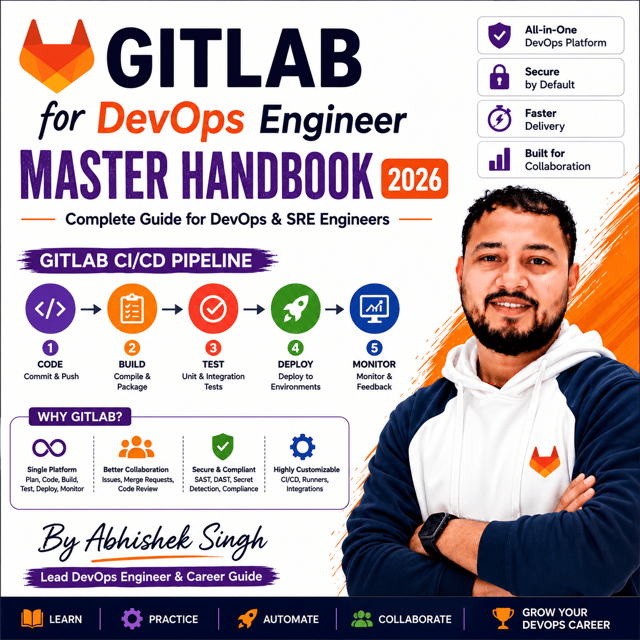
GitLab Complete Guide | Beginner to Expert
ELK Stack Complete Guide | Beginner to Expert
Docker Complete Guide | Beginner to Expert
Jenkins Complete Guide | Beginner to Expert
AI & Agentic AI for DevOps |Beginner to Expert
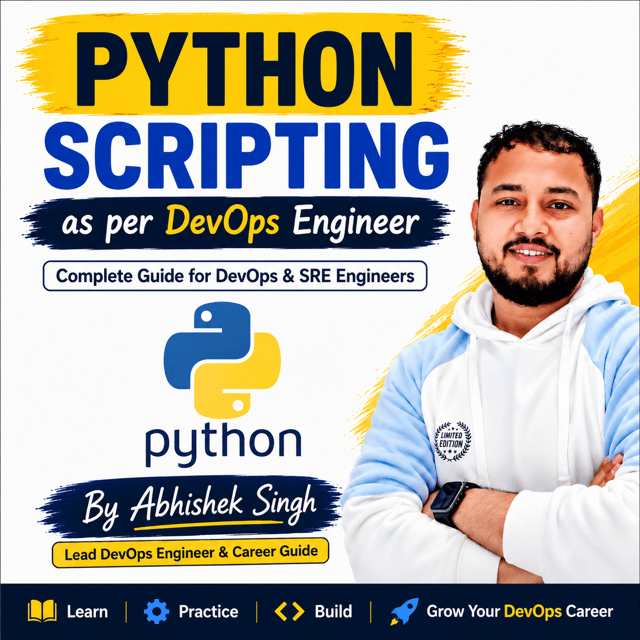
Python Scripting for DevOps | Beginner to Expert

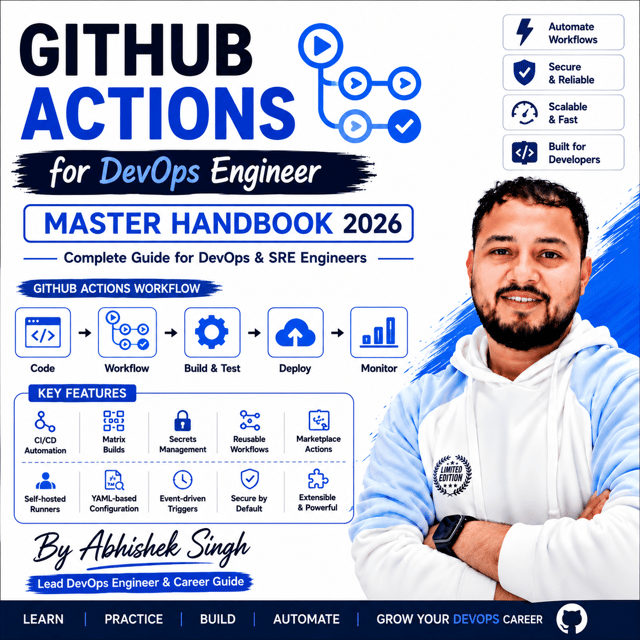
GitHub Actions Complete Guide | Beginner to Expert
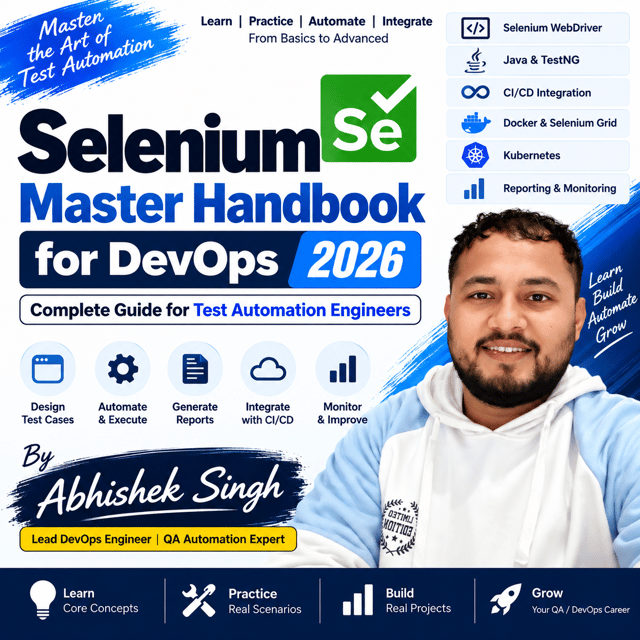
Selenium Complete Guide | Beginner to Expert
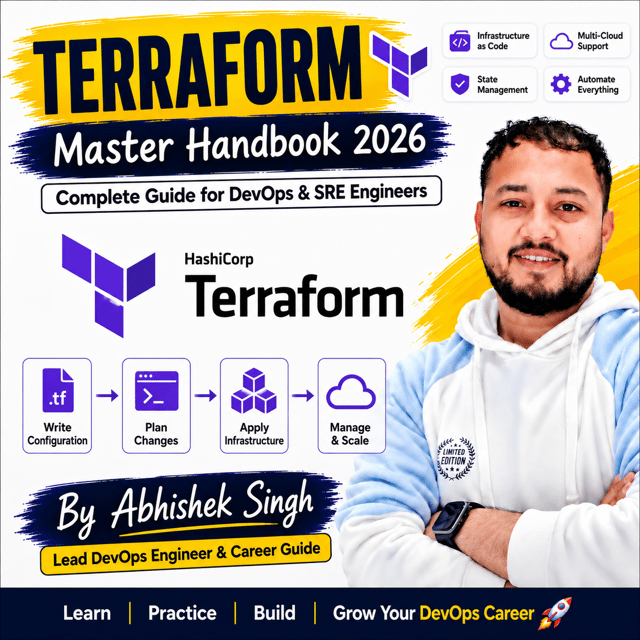
Terraform Complete Guide | Beginner to Expert
MLOps Complete Guide | Beginner to Expert
20 Real Time HandsOn DevOps Projects
4 CI/CD Tools Master Library
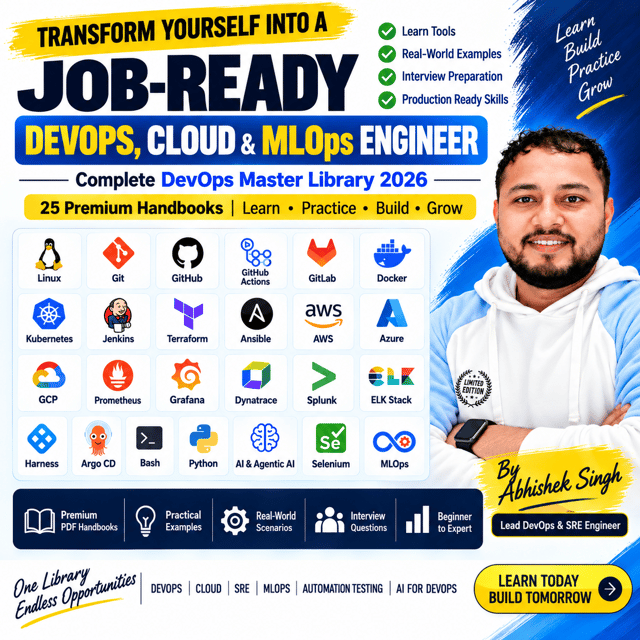
DevOps Master Library | 25 Tools Premium Resources
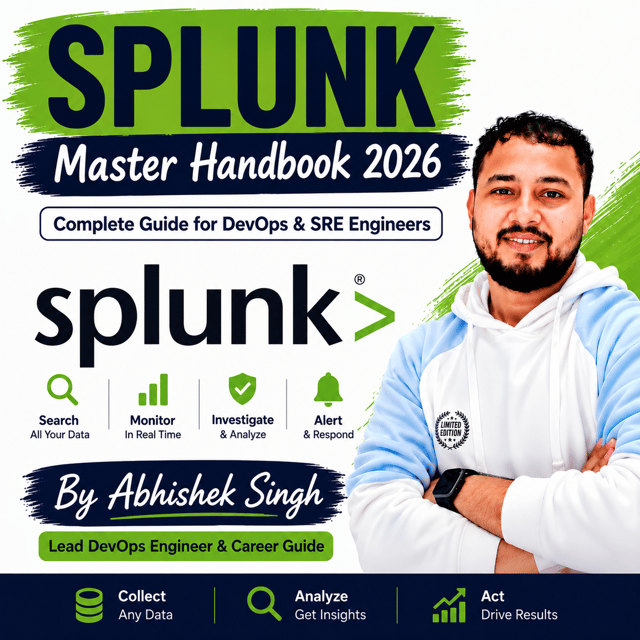
Splunk Complete Guide | Beginner to Expert

Grafana Complete Guide | Beginner to Expert
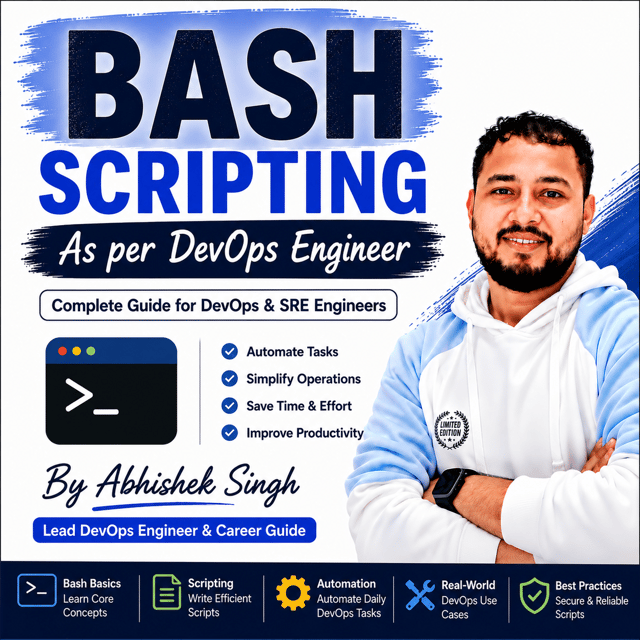
Bash Scripting Complete Guide | Beginner to Expert
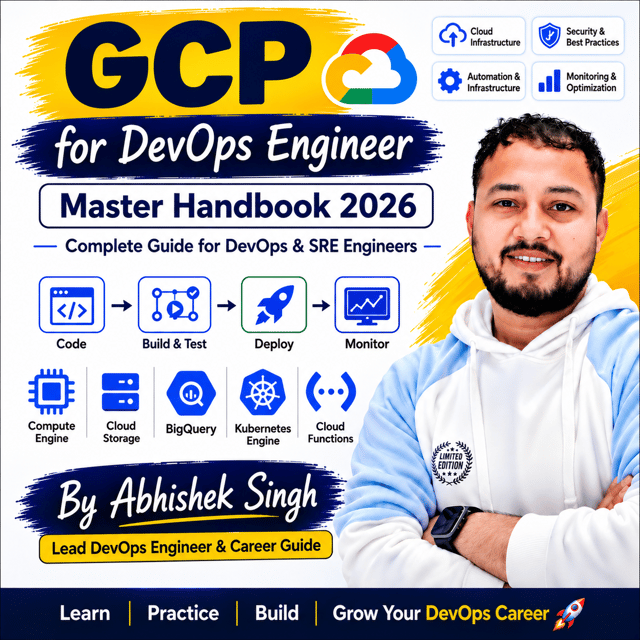
GCP DevOps Complete Guide | Beginner to Expert
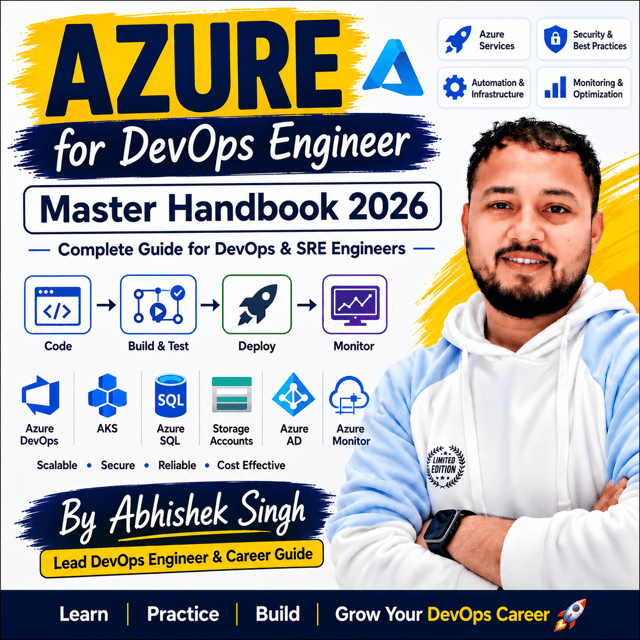
GitHub Complete Guide | Beginner to Expert
Argo CD Complete Guide | Beginner to Expert

Behavioural & System Design Interview Q&A
Ansible Complete Guide | Beginner to Expert
Kubernetes Complete Guide | Beginner to Expert
AWS Complete Guide For DevOps| Beginner to Expert
Monitoring & Observability Master Library
Cloud Engineer Master Library | 6 Tools
About me
Frequently asked questions
What are the most common DevOps interview questions and answers?
The most frequently asked DevOps interview questions and answers revolve around CI/CD pipelines, Linux commands, Git branching strategies, Docker vs virtual machines, core Kubernetes objects, Terraform and infrastructure as code, and monitoring tools like Prometheus and Grafana. Interviewers increasingly prefer scenario-based responses, so instead of only giving definitions, explain how you would debug a failed deployment, roll back a bad release, or handle a production incident.
What are the important DevOps interview questions and answers for freshers?
DevOps interview questions and answers for freshers usually stay at the concept level: what is DevOps, difference between continuous integration and continuous deployment, basic Linux and networking, essential Git commands, why containers are used, and a simple CI/CD flow. Freshers should prepare one hands-on project they can explain end to end, because a real-time project explanation is what separates candidates who have only read theory from those who can actually work.
What topics do DevOps interview questions for 3 years experience cover?
DevOps interview questions for 3 years experience become scenario-based and tool-specific: designing a CI/CD pipeline, troubleshooting Kubernetes pods stuck in CrashLoopBackOff, managing Terraform state, handling secrets, autoscaling, and resolving production outages. Expect deep dives into your own resume projects, so be ready to justify architecture decisions, explain challenges faced, and describe how you monitored and debugged real production issues.
Where can I get a good DevOps interview questions and answers PDF?
You can find a DevOps interview questions and answers PDF across job portals, Telegram groups, and community threads, but quality varies a lot. A topic-wise handbook compiled tool by tool is far more reliable than random question dumps — for example, structured premium handbooks like a DevOps Master Library covering 23 tools, or a dedicated Managerial & SRE interview Q&A guide, are organised by tool and interview scenario so revision is faster before interviews.
What are Azure DevOps interview questions?
Azure DevOps interview questions focus on Microsoft's DevOps platform: Azure Pipelines (classic vs YAML), agents and agent pools, Azure Boards for work tracking, Azure Repos, Artifacts, and service connections for CI/CD of applications. Interviewers also commonly ask how Azure DevOps compares with Jenkins or GitHub Actions, so knowing at least one other CI/CD tool well makes your answers much stronger.
What is Kubernetes with an example?
Kubernetes is a container orchestration platform that automates deploying, scaling, and managing containerised applications. For example, if your web application runs in 10 Docker containers and one crashes, Kubernetes automatically restarts it, balances traffic across the healthy containers, and can scale from 10 to 50 containers during peak traffic — all without manual intervention. This self-healing and auto-scaling behaviour is exactly what companies mean when they ask for Kubernetes skills.
How do I start with a Kubernetes tutorial for beginners?
A structured Kubernetes tutorial for beginners should start with containers and Docker basics, then cover cluster architecture, pods, deployments, services, ConfigMaps, secrets, and kubectl commands using Minikube or a cloud playground. After the fundamentals, move to real scenarios like debugging a crashing pod or exposing an app through a service and ingress, because both interviews and production work test practical troubleshooting rather than definitions.
Should I learn Docker and Kubernetes together?
Yes, a combined Docker and Kubernetes tutorial follows the natural learning order: first containerise an application with Docker, then use Kubernetes to deploy, scale, and manage those containers across a cluster. Docker is still the standard way to build and package container images that Kubernetes runs, and since job descriptions in India expect both skills together, most DevOps roadmaps place Docker first and Kubernetes immediately after.
Is Kubernetes free for commercial use?
Yes. Kubernetes itself is open source and free for commercial use, even for company production workloads — you only pay for the servers it runs on. What you pay for are managed services like Amazon EKS, Google GKE, or Azure AKS, which charge for the control plane and underlying cloud resources. Self-hosting Kubernetes on your own machines remains completely free apart from infrastructure costs.
What is Terraform and how to use it?
Terraform is an infrastructure-as-code tool that lets you define cloud infrastructure — servers, VPCs, load balancers, databases — in code files instead of clicking through the console. To use it, you write .tf files describing the desired state, run terraform init, then terraform plan to preview changes, and terraform apply to create the resources. Because the same code can be version-controlled and reused across AWS, Azure, and GCP, Terraform has become a default requirement in DevOps job descriptions.
What should a Terraform tutorial for beginners include?
A practical Terraform tutorial for beginners should cover providers, resources, variables, outputs, state files, and remote state storage (S3 backend with DynamoDB locking, or Azure/GCP equivalents), followed by building real infrastructure like a VPC with EC2 instances. Avoid tutorials that stop at a hello-world example; pick one that demonstrates terraform plan and apply on a real cloud account and explains state locking and modules, since these are the areas interviewers probe.
How do I switch into DevOps from production support, testing, or another IT domain?
Career transitions into DevOps are very common from support, sysadmin, testing, and networking backgrounds. The usual path is: strengthen Linux, learn Git, pick one cloud platform (AWS is the most in-demand in India), then Docker, Kubernetes, Terraform, and one CI/CD tool, and build 2–3 real-time hands-on projects you can confidently discuss in interviews. Reframe your resume around these skills, optimise your LinkedIn and Naukri profiles with DevOps keywords, and practise mock interviews — a structured roadmap with 1:1 mentorship speeds this up compared to jumping between random tutorials.
How do I prepare for SRE interview questions?
SRE interviews test reliability engineering concepts along with DevOps tooling: SLIs, SLOs, SLAs, error budgets, incident management and postmortems, on-call practices, and monitoring with Prometheus, Grafana, or Dynatrace. Prepare scenario answers like "a service is failing intermittently in production — how do you debug it?", revise your Kubernetes and CI/CD fundamentals, and go through dedicated SRE and managerial interview Q&A guides, since these rounds often include behavioural and leadership-style questions too.
What should a DevOps resume include to get shortlisted?
A strong DevOps resume leads with real-time projects, not certifications alone. Include 2–3 hands-on projects with the exact stack used (AWS/Azure/GCP, Kubernetes, Terraform, Jenkins/GitLab/GitHub Actions), quantified outcomes, relevant certifications like AWS Solutions Architect Associate or Terraform Associate, and tool keywords matching the job description so ATS filters pick it up. Getting a resume review from someone working as a DevOps/SRE lead helps, because hiring managers immediately spot generic, tutorial-only resumes.