Testimonials
Services
Portfolio Walkthrough + Mock Q&A
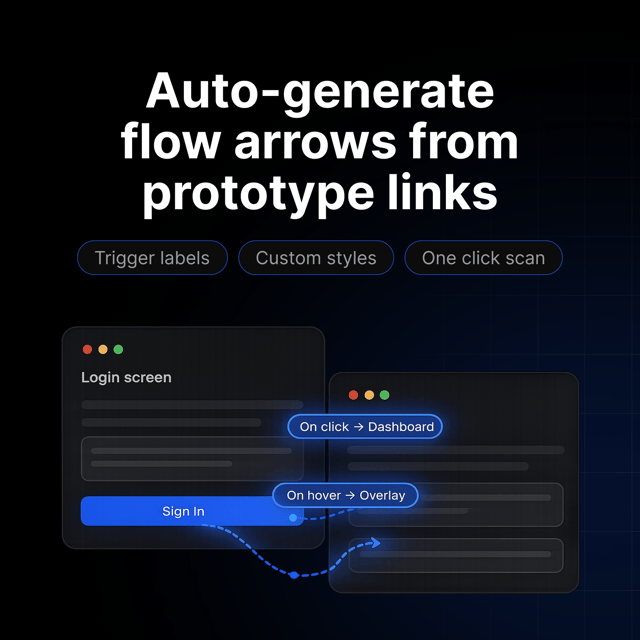
Flow Connect - Figma plugin
About me
Frequently asked questions
What is product design about?
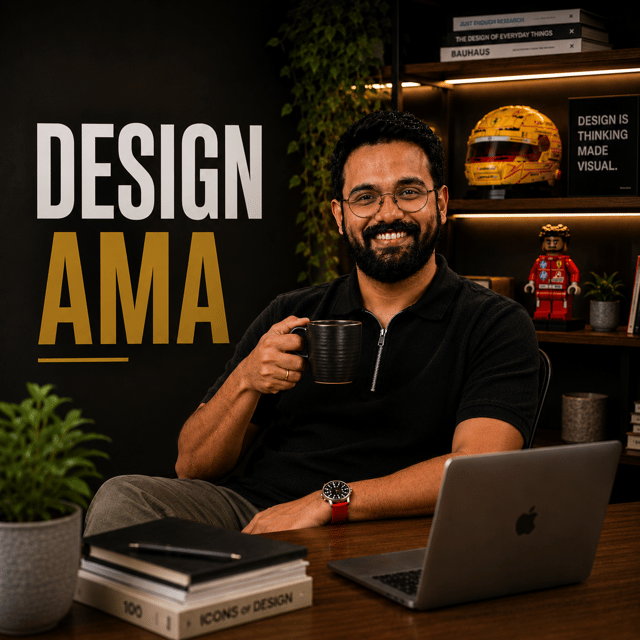
Product design is about solving real user problems through digital products — it combines user research, UX, visual design, and business thinking to create experiences people actually use. A product designer typically owns the journey from understanding users and defining the problem to ideation, prototyping, testing, and shipping. If you're exploring this field, a quick 1:1 conversation with a practising product designer — like the Design AMA sessions Abhinav Agrawal runs — is one of the fastest ways to see whether the craft suits your strengths.
What is the product design process?
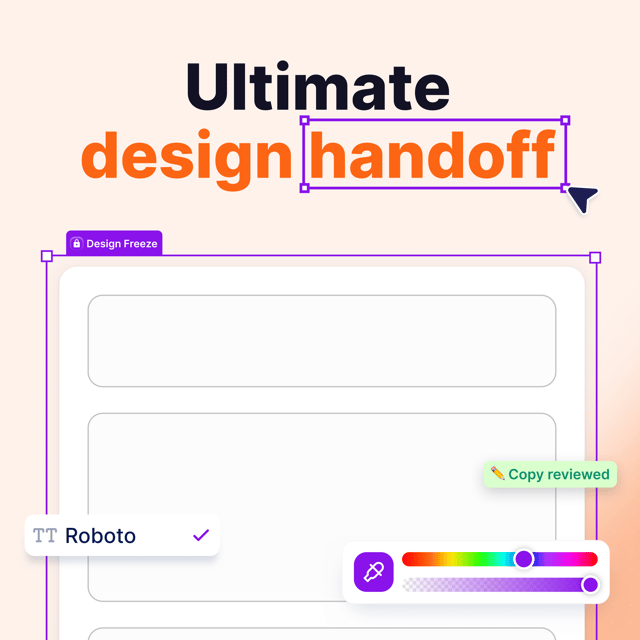
The product design process typically moves through discovery and user research, problem definition, ideation, wireframing and prototyping, usability testing, iteration, and finally handoff to engineering. What has changed recently is speed — AI tools now compress research synthesis, copy exploration, and first-draft prototyping from days into hours, so designers who build smart workflows spend more time on actual problem-solving. For the final stage specifically, targeted resources like Abhinav Agrawal's Ultimate Design Handoff help teams structure developer handoff cleanly.
What is the best way to review a design portfolio?
Knowing how to review a design portfolio comes down to checking four things: whether each case study clearly states the problem, your specific role, and the outcome; whether the storytelling flows logically from context to decisions to impact; whether results are backed by metrics; and whether the presentation is clear rather than decorative. A good review ends with actionable direction — what to cut, what to restructure, and what to lead with — instead of vague praise.
Is a design portfolio review by AI as good as feedback from an experienced designer?
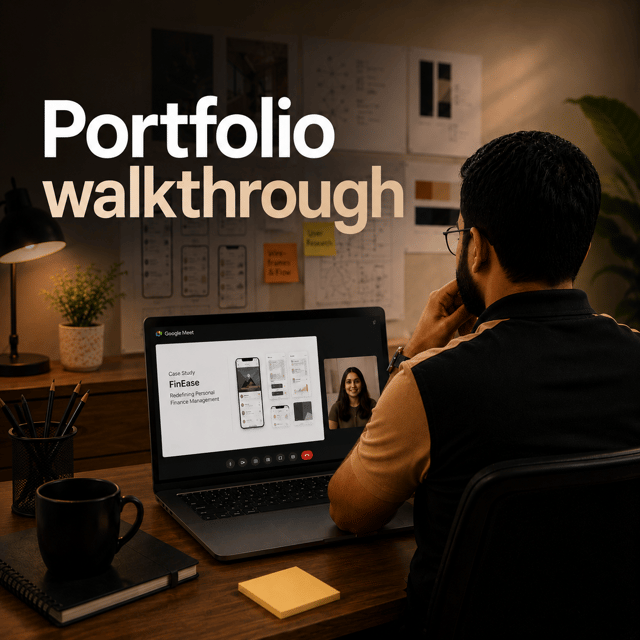
A design portfolio review by AI is genuinely useful as a fast first pass — it can catch unclear writing, inconsistent flows, and missing context within minutes. What it cannot do is read your work the way a hiring panel will: judge whether your storytelling matches the roles you're targeting, spot weak narrative structure, or tell you which project should lead. The strongest setup combines both — polish your draft with AI, then get candid, experience-based feedback from a mentor such as Abhinav Agrawal, whose Portfolio Walkthrough + Mock Q&A sessions focus on exactly this kind of practical, real-world critique.
Where can I find genuine design portfolio review services?
You'll find design portfolio review services through three main routes: design communities where peers exchange feedback, online platforms that connect you with practising design mentors for 1:1 sessions, and structured bootcamp-style programs. The 1:1 mentor route usually gives the most tailored feedback because the review is built around your experience level and target roles. Abhinav Agrawal offers this on Topmate — his Portfolio Walkthrough + Mock Q&A session gives designers practical feedback on case studies, storytelling, and presentation flow.
Is a product design portfolio review worth it before interviews?
Yes — portfolio deep-dives are a near-universal round in product design hiring, so a focused product design portfolio review before you start applying is one of the highest-ROI steps you can take. An experienced reviewer will tell you within an hour whether your case studies communicate impact clearly, whether your process narrative survives follow-up questions, and which projects to lead with. Fixing those issues before applying is far cheaper than losing interviews to fixable presentation gaps.
How do I prepare for a product design interview?
If you're unsure how to prepare for a product design interview, work backwards from the rounds: sharpen your top two or three case studies with clear problem–decision–impact storytelling, rehearse a portfolio walkthrough out loud, practise product sense and structured design questions, and finish with a mock Q&A under realistic conditions. Preparing with candid feedback — rather than rehearsing alone — is what separates candidates who improve from candidates who repeat the same mistakes. Abhinav Agrawal's 1:1 interview prep sessions are built around exactly this kind of tailored, practical practice.
What are the most common product design interview questions?
The product design interview questions you'll face most often fall into five buckets: "Walk me through one of your projects" (portfolio deep-dive), "How would you improve this product?" (product sense), "Design X for Y users" (structured case questions), metrics and success measurement, and increasingly, questions about how you'd apply AI to the product or your design workflow. Practising each category out loud — ideally in a mock interview — matters far more than silently reading sample answers.
How do I answer product design interview questions without sounding rehearsed?
If you're stuck on how to answer product design interview questions, the rule is structure over script: clarify the problem and users, state your approach, walk through key decisions with trade-offs, and close with impact or metrics. Interviewers reward structured thinking applied live to their follow-ups, not memorised answers. Mock Q&A sessions with candid feedback are the most reliable way to build this, because you practise handling unexpected questions instead of reciting prepared ones.
What are product design interviews like?
Product design interviews usually run across several rounds: an intro or recruiter screen, a portfolio deep-dive where you present and defend your case studies, a product sense or design exercise round, and a final conversation with the hiring manager about collaboration and impact. Expect layered follow-up questions at every step, since interviewers probe why you made each decision. Because the format rewards calm, structured thinking under questioning, a mock Q&A that simulates this pressure is one of the best ways to prepare.
Is there a simple product design interview framework I can use?
Yes — a dependable product design interview framework looks like this: (1) clarify the problem, users, and constraints; (2) identify the target user's core need; (3) generate multiple solutions instead of jumping to one; (4) choose one and explain your trade-offs; (5) define success metrics; and (6) mention edge cases and how you'd iterate. Internalising this skeleton keeps your answers structured even when a curveball question arrives. Rehearsing it in a mock Q&A with someone who gives honest feedback makes it second nature.
How can designers use AI in the design process?
There are practical ways to use AI in the design process at every stage: synthesising user research and interview notes, generating and clustering ideas during ideation, producing first-draft prototypes and copy, and automating repetitive workflow steps like handoff documentation. The designers growing fastest treat AI as a workflow multiplier rather than a replacement for design judgment. Abhinav Agrawal, who leads the AI Innovation team at Naukri.com, works with designers in 1:1 sessions on exactly this — leveraging AI in everyday design workflows and building automated design tools.
What is the role of AI in design thinking?
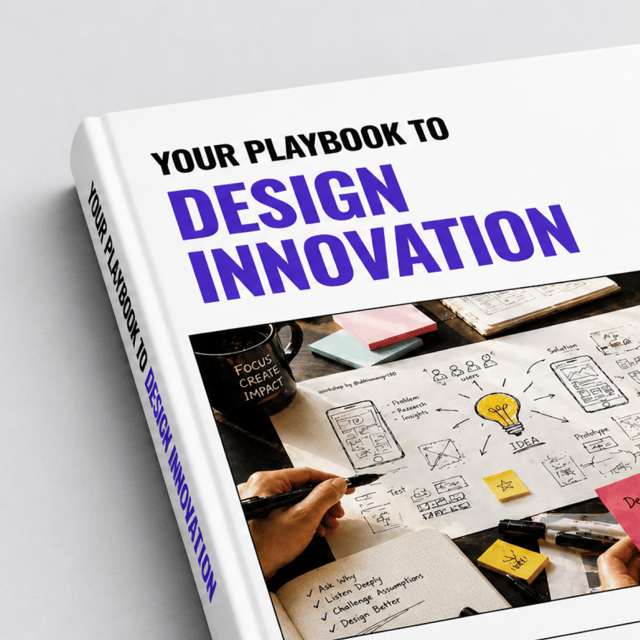
AI in design thinking acts as an accelerant across the entire process: it helps you empathise by summarising large volumes of user feedback, widens ideation by generating option sets you'd never produce manually, and enables rapid prototyping and testing so ideas can be validated in hours instead of weeks. The human role shifts toward framing the right problem, exercising judgment, and keeping solutions genuinely human-centred. For a structured take on this shift, Abhinav Agrawal's Playbook to Design Innovation covers frameworks for running research, ideation, and prototyping at AI speed.
Are AI in design courses worth it for working designers?
AI in design courses are worth it when they teach application rather than tool demos — look for material that shows how AI fits into research, ideation, prototyping, and your daily workflow, not just a list of tools. For many working designers, short practical resources combined with 1:1 guidance beat a long generic course, because you apply the learning to your own work immediately. Resources like Abhinav Agrawal's ChatGPT Cheat Codes and Playbook to Design Innovation, paired with a session to plug them into your actual design process, often deliver more lasting improvement than passive video learning.