Testimonials
Services
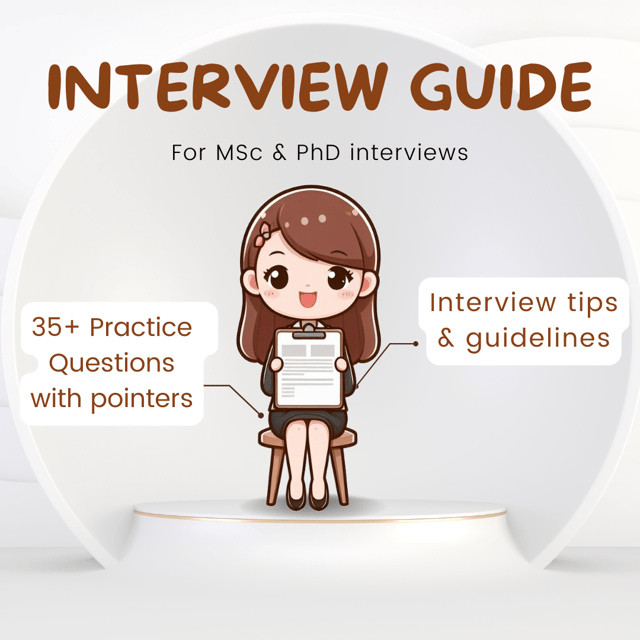
Comprehensive Interview Guide - MSc & PhD
Apply abroad! (Mini-Package)
Academic CV Reviews
IELTS/TOEFL Speaking+Writing Mock Test
Mock Interview - MSc & PhD
About me
Frequently asked questions
How to study abroad after 12th from India?
Students planning how to study abroad after 12th from India should start at least a year in advance: decide the country and course, take the required tests (most universities ask for your 12th-grade marks plus an English test like IELTS or TOEFL), prepare a statement of purpose and academic CV, and submit applications before deadlines. Once an offer arrives, begin the student visa process immediately, as timelines can stretch for weeks.
How to study abroad for free?
The realistic answer to how to study abroad for free is full funding rather than zero cost: apply for fully funded scholarships, target countries and public universities with low or no tuition fees, and look for assistantships or stipend-based research programs that cover living expenses. Track deadlines carefully, because scholarship cut-offs usually fall before admission deadlines, and get your scholarship essays reviewed before submitting.
How do I find genuine study abroad consultants for my applications?
Good study abroad consultants evaluate your actual profile before advising, explain why each university or country fits you, and stay transparent about what their sessions include — so check reviews from past students rather than glossy marketing. Also, do not limit yourself to "study abroad consultants near me"; an experienced mentor available on a video call can guide you just as effectively, often with more flexible timings.
How do I find study abroad scholarships for Indian students?
Most study abroad scholarships for Indian students come from three sources: government and external awards, university-specific entrance scholarships, and departmental or research funding for graduate programs. Check each university's official funding page, maintain a tracker of eligibility criteria and deadlines, and tailor every application essay — generic submissions are the most common reason strong students miss out on funding.
What is a statement of purpose and why does it matter?
A statement of purpose (SOP) is an essay in which you explain your academic background, why you want a specific program, and what you plan to do after it. Admissions committees use it to judge whether your goals genuinely align with the course — something marks alone cannot show — which is why a vague or templated SOP can sink an otherwise strong application.
How to write a statement of purpose?
Build it as one clear narrative: what drew you to the subject, what you have studied or researched, why this particular program and university is the right next step, and where you want to go afterwards. Be specific with projects, skills, and faculty research areas instead of praising the university in general terms. Reading a statement of purpose example helps you understand tone and depth, but never copy one — admissions teams recognize template writing instantly.
How to format a statement of purpose?
Keep it roughly 800–1,000 words across five to seven paragraphs: an engaging opening, your academic and research background, relevant projects or work experience, why this program, and your career goals. Use a clean, readable layout with a standard font, and follow the university's word limit and instructions exactly — formatting a statement of purpose is about clarity, not decoration.
How to take an IELTS mock test?
Simulate real exam conditions: set a timer, attempt complete sections without pauses or help, and then score yourself against the official band descriptors to see exactly where marks were lost. Take your first IELTS mock test early to identify weak sections, and repeat one every week or two as the exam approaches so your improvement is measurable, not guesswork.
How to book an IELTS mock test?
You can book an IELTS mock test through official practice platforms, free online sample tests, or one-on-one evaluated sessions with a mentor. For speaking and writing — the two sections hardest to self-assess — an evaluated live mock with band-level feedback is worth far more than an unmarked PDF, ideally booked three to four weeks before your exam so you have time to act on the feedback.
Where can I take a free IELTS mock test online with score?
If you specifically want a free IELTS mock test online with score feedback, official sample papers, practice apps, and study platforms offer free tests with automated scoring. Treat those scores as indicative only, because speaking and writing cannot be accurately banded without a human evaluator — use free mocks for regular practice and get at least one evaluated test before exam day.
How should I prepare for the TOEFL speaking and writing sections?
Practise speaking your responses within the given 45–60 second limits and write essays under strict time conditions, then compare your answers against the official rubric. The fastest improvement usually comes from a TOEFL speaking and writing mock test with detailed feedback, since it pinpoints your actual errors in pronunciation, task response, and structure instead of leaving you to guess what examiners want.
How do I prepare for an MSc or PhD admission interview?
Prepare around three areas: your research interests and past projects, why this specific program or supervisor, and your long-term goals — and re-read your own SOP and CV carefully, since interviewers often question what you wrote. Practising a mock interview for MSc and PhD admissions with someone experienced is the most effective preparation, because it exposes weak answers and nervous delivery long before the actual panel.
Academic CV vs resume: what is the difference?
An academic CV is a detailed, steadily growing record of your education, research, publications, projects, and awards, used for university admissions and research roles, while a resume is a short, skills-based document meant for jobs. If an MSc or PhD application asks for a CV, it means the academic format — sending a one-page job resume is a common mistake that weakens otherwise strong applications.
Is a letter of motivation the same as a statement of purpose?
They overlap but are not identical: a statement of purpose is more academic and research-focused, arguing your fit with a specific program, while a letter of motivation leans slightly more personal, explaining why you want that particular opportunity and what you will do with it. Many European universities specifically ask for a letter of motivation, so always submit the exact document requested and adjust the emphasis rather than reusing the same essay everywhere.
How should I go about shortlisting universities for MSc and PhD?
Build a three-layer list — a few ambitious options, several realistic matches, and a couple of safe choices — and judge each program on curriculum, faculty research fit, funding, location, and outcomes rather than rankings alone. For a PhD, the supervisor's research area often matters more than the university's name. If you are unsure where your profile stands, a quick profile evaluation before shortlisting universities for MSc and PhD keeps the final list grounded in facts rather than guesswork.