Testimonials
Services
Data Science & Analytics Career Guidance
About me
- Change the World With Your Time. Come and Join Us!https://topmate.io/join/aasifcodes

Frequently asked questions
What does a data science roadmap for beginners look like?
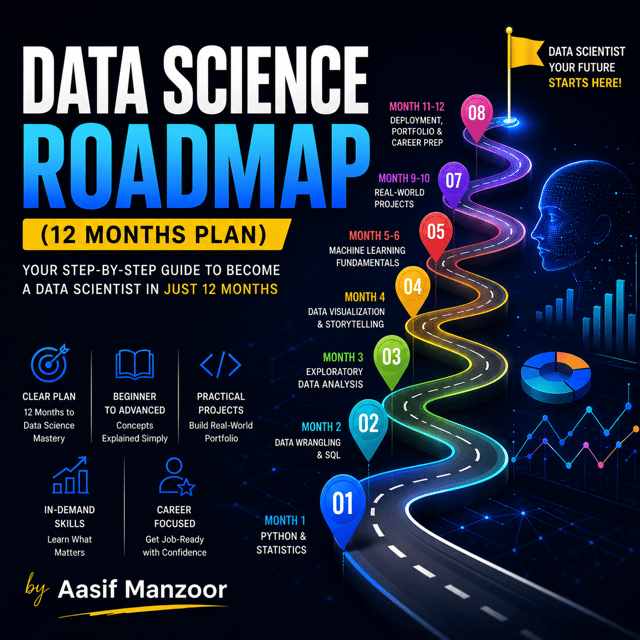
A practical data science roadmap for beginners usually moves through four phases: building foundations in statistics, Excel, and SQL; learning Python for data analysis; understanding machine learning basics; and finally working on real projects and a portfolio. Most beginners need 8 to 12 months of consistent study. The biggest mistake is jumping straight to advanced machine learning without first becoming comfortable with SQL and Python, so a phase-wise plan matters more than speed.
Where can I get a data science roadmap PDF that I can follow month by month?
A data science roadmap PDF is only useful when it breaks the journey into month-wise milestones — for example, Months 1–2 for SQL and Excel, Months 3–5 for Python and statistics, and later months for machine learning, projects, and interview preparation. Free versions are widely shared in learning communities, but check that the PDF includes project ideas and linked resources rather than just a list of topics, so you can follow it without spending extra money.
How to become a data scientist without a coding background?
If you are figuring out how to become a data scientist from a non-technical field, start with spreadsheets and SQL before touching Python, because logical thinking matters more than syntax. Move on to Python, statistics, and machine learning only after you can query and analyse data confidently. Recruiters care more about demonstrated projects and problem-solving than your degree stream, so a documented portfolio can completely offset a non-IT background.
What is a data analytics roadmap and how is it different from a data science roadmap?
A data analytics roadmap focuses on collecting, cleaning, and visualising data to answer business questions, and is built around Excel, SQL, and tools like Power BI or Tableau. A data science roadmap goes deeper into statistics, Python, and machine learning for prediction and modelling. If your goal is a data analyst or business analyst role, follow the analytics path first since it makes you job-ready faster, and add data science skills later.
What is Power BI and how does it work?
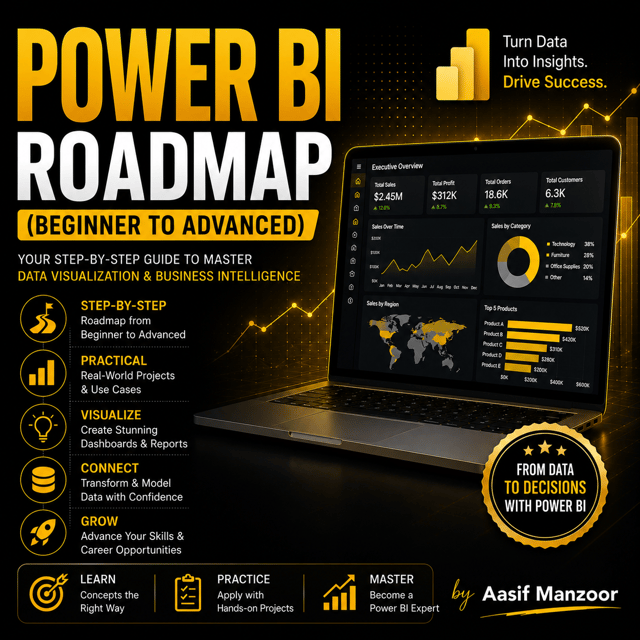
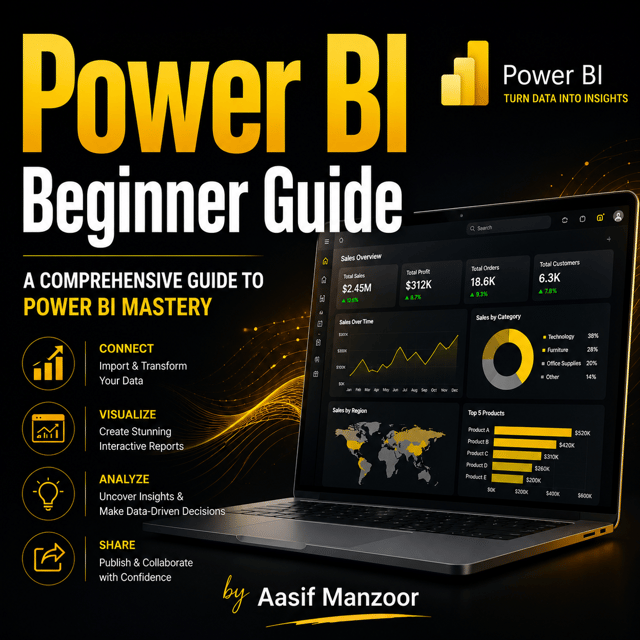
Power BI is Microsoft's business intelligence tool used to connect data sources, clean and model data, and build interactive dashboards. It works in three layers: Power Query handles data cleaning and transformation, the data model manages relationships and calculations using DAX, and the report view is where you design visuals. Indian companies use it heavily for sales, finance, and operations reporting, which is why it appears in almost every data analyst job description.
How do I choose the right Power BI tutorial for beginners?
A good Power BI tutorial for beginners should be project-based rather than theory-only, meaning you finish by building at least one complete dashboard from raw data. Look for coverage of the full flow: importing data, cleaning it in Power Query, writing basic DAX measures, and publishing a report. If a tutorial only shows buttons and menus without explaining the reasoning, you will struggle with real job tasks, so always prefer step-by-step learning with practice datasets.
Is there a good Power BI tutorial for beginners in Hindi?
Yes, searching for a Power BI tutorial for beginners in Hindi on YouTube gives you plenty of well-known options, so language is not a barrier to learning this tool. The underlying concepts — Power Query, DAX, and dashboard design — remain the same regardless of the language of instruction. What matters is practising along with the instructor on the same dataset, because Power BI is a hands-on tool and passive watching rarely builds job-ready skills.
How to answer data analyst interview questions?
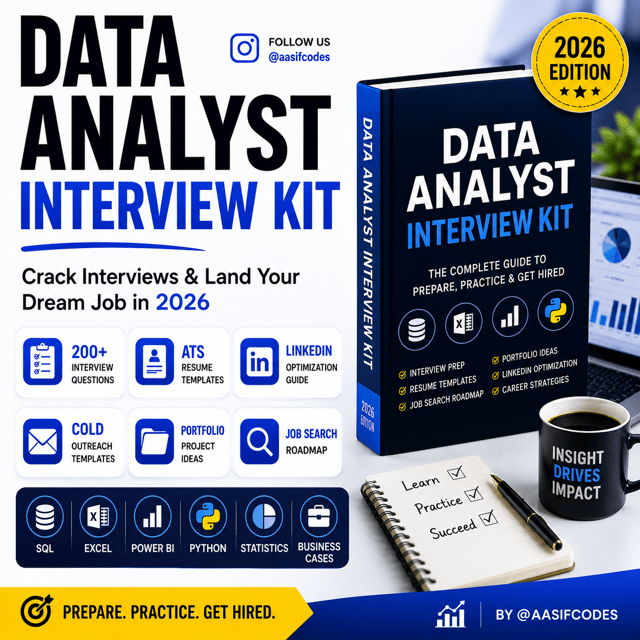
Knowing how to answer data analyst interview questions comes down to structure: state your assumption, explain your approach, and then give the technical steps or a real example from a project. For SQL questions, think aloud while writing the query; for scenario questions, connect your answer to business impact rather than just naming tools. Interviewers assess how you think under ambiguity as much as your syntax, so practising out loud works better than memorising answers.
What are the most common data analyst interview questions and answers for freshers?
The most repeated data analyst interview questions and answers for freshers revolve around SQL joins and group by, Excel functions like VLOOKUP and pivot tables, basic statistics such as mean versus median, and a walkthrough of one project on your resume. Questions like "explain a dashboard you built" or "how do you handle missing data" come up in almost every fresher interview. Preparing short, structured answers for these core areas covers a large share of the round.
Are data analyst interview questions for 3 years experience different from fresher-level ones?
Yes, data analyst interview questions for 3 years experience shift from definitions to depth. Expect complex SQL problems involving window functions, questions on handling stakeholders or conflicting requirements, metrics you improved, and case studies where you must frame a business problem from scratch. At this level, interviewers test ownership and business impact, so prepare two or three strong stories from your work with measurable results.
Where can I find a good data analyst interview questions and answers PDF for quick revision?
A data analyst interview questions and answers PDF works best as a final-week revision tool rather than your main preparation source. Pick one organised by topic — SQL, Excel, Python, statistics, Power BI, and the HR round — with model answers you can adapt in your own words. Make sure it is recently updated, because commonly asked case-study styles and tool expectations change every year.
What should an AI engineer roadmap for 2026 include?
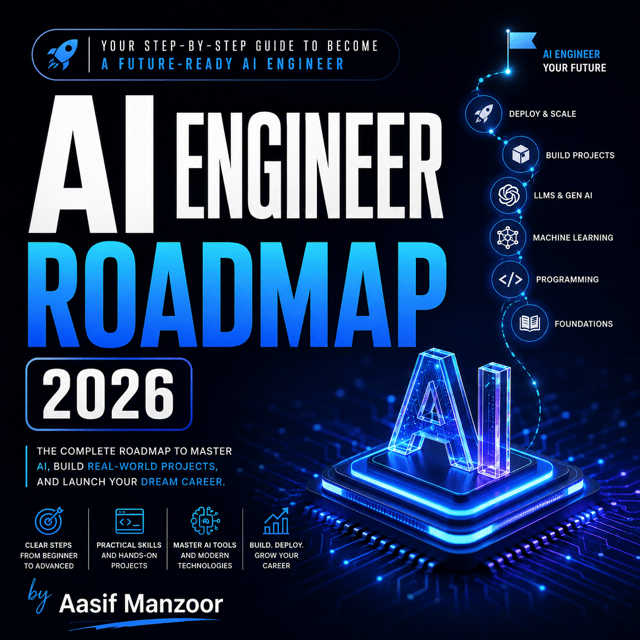
A realistic AI engineer roadmap for 2026 starts with Python and mathematics — linear algebra, probability, and statistics — then moves into machine learning and deep learning fundamentals. The current market also expects hands-on skills with large language models, including prompt engineering, building RAG applications, and working with APIs, plus deployment basics like cloud platforms. Employers now weigh working projects, such as a functional AI chatbot or automation tool, as heavily as certificates.
How do I build an ATS-friendly resume for data analyst and data science jobs?
An ATS-friendly resume keeps formatting simple: standard section headings and no tables, graphics, or columns that confuse parsing software. Use keywords from the job description — such as SQL, Python, Power BI, and data visualisation — in your skills and experience sections, and describe achievements with numbers, like "built dashboards used by a 20-member sales team". Many freshers get filtered out before a human ever reads their resume, so fixing this one page often significantly increases interview callbacks.
Are Python and SQL enough to get a data analyst job?
Python and SQL cover the technical core of most entry-level data analyst roles, but they are rarely enough on their own. Add Excel and at least one BI tool such as Power BI, along with basic statistics and data storytelling, because real roles involve presenting insights to non-technical teams. Three or four solid end-to-end projects matter more to recruiters than the number of tools listed on your resume.