Testimonials
Services
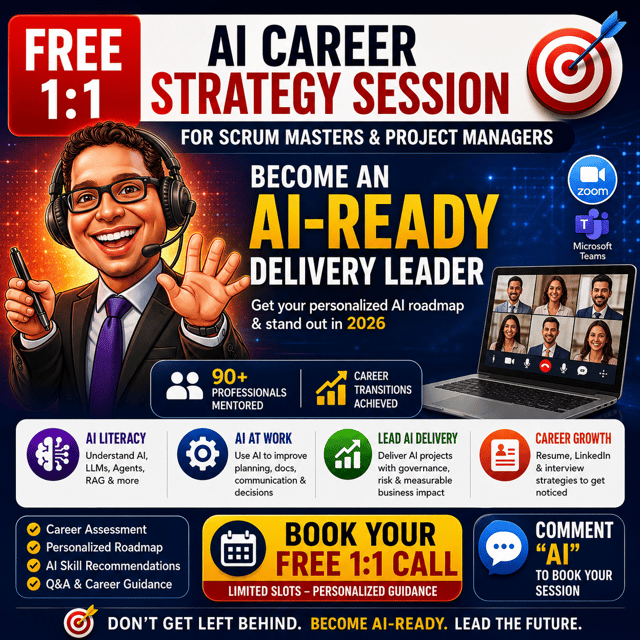
AI Career Transition & Interview Strategy
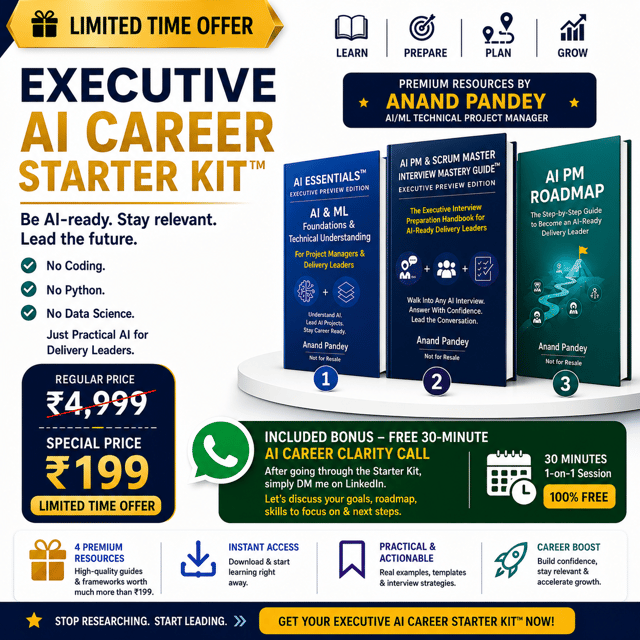
🚀AI Career Starter Kit for Delivery Leaders
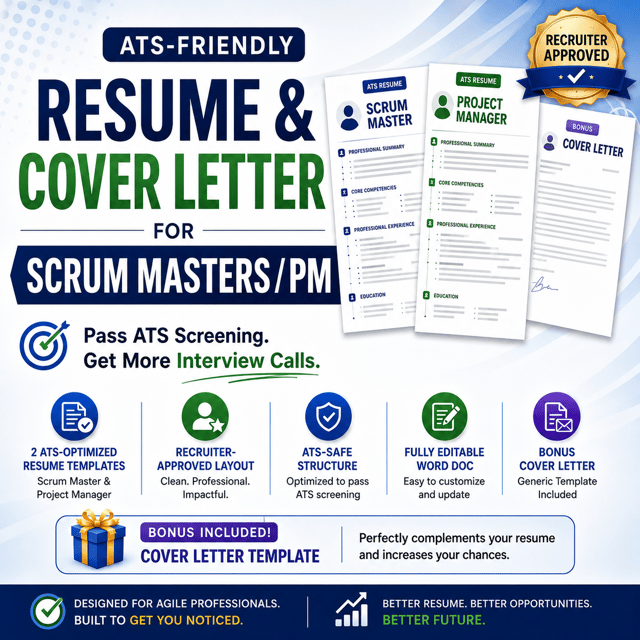
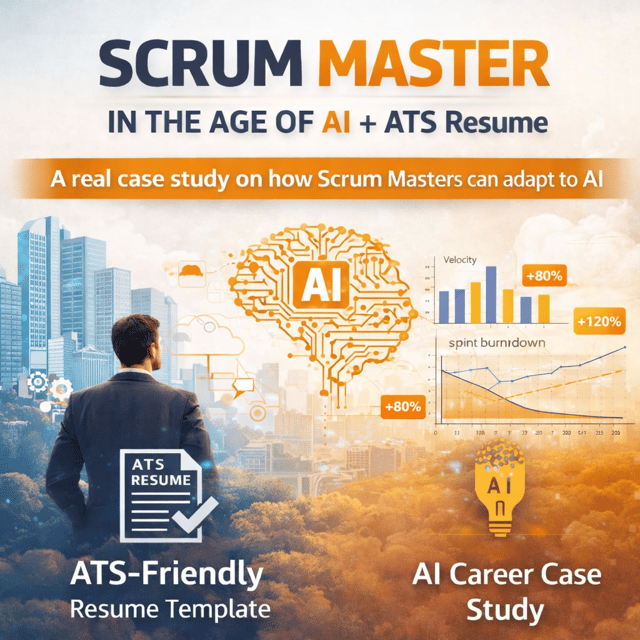
ATS Resume & Cover Letter for Scrum Masters/PM
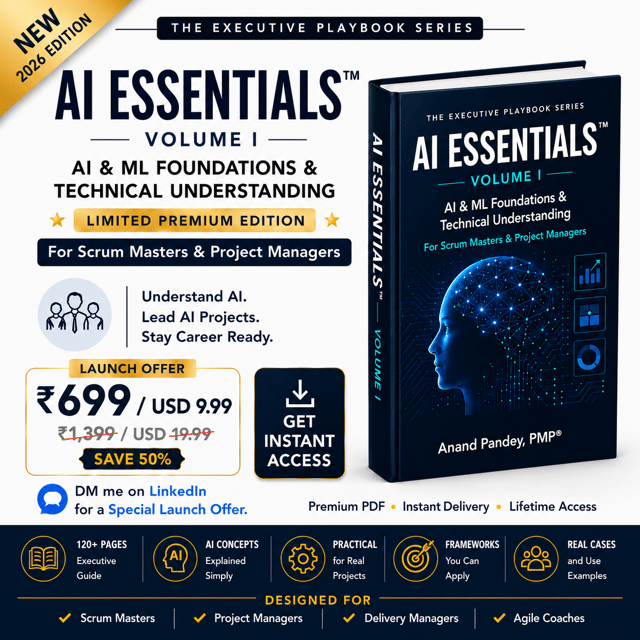
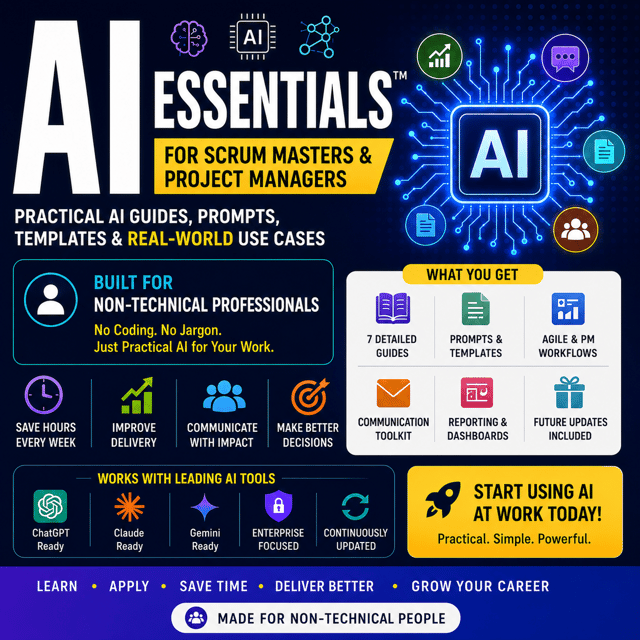
AI Essentials™ Vol I | AI for PMs & Scrum Masters
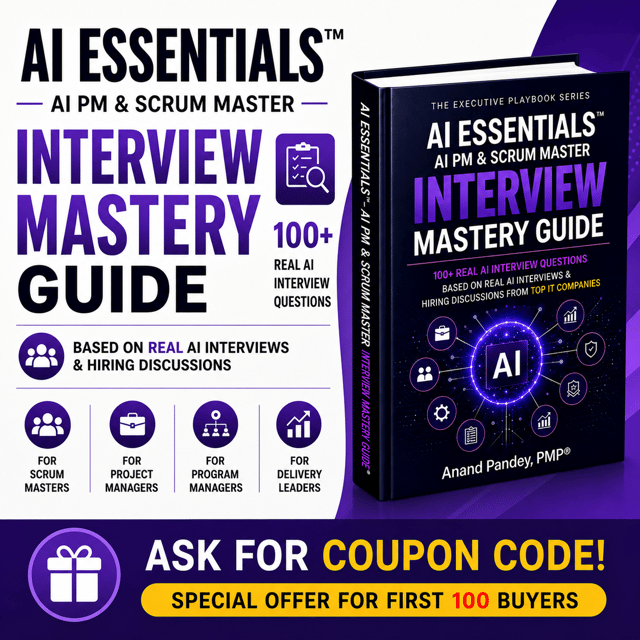
AI Interview Mastery Guide™ for PM & Scrum Masters
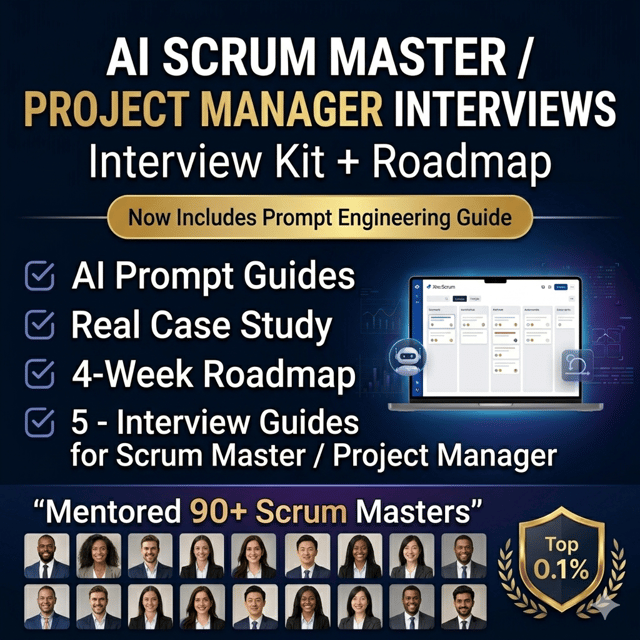
👉 Crack Scrum Master/PM Interviews with AI
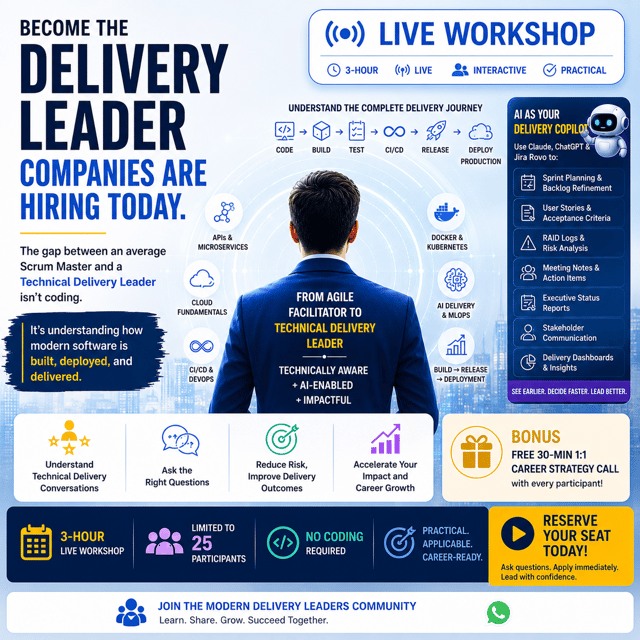
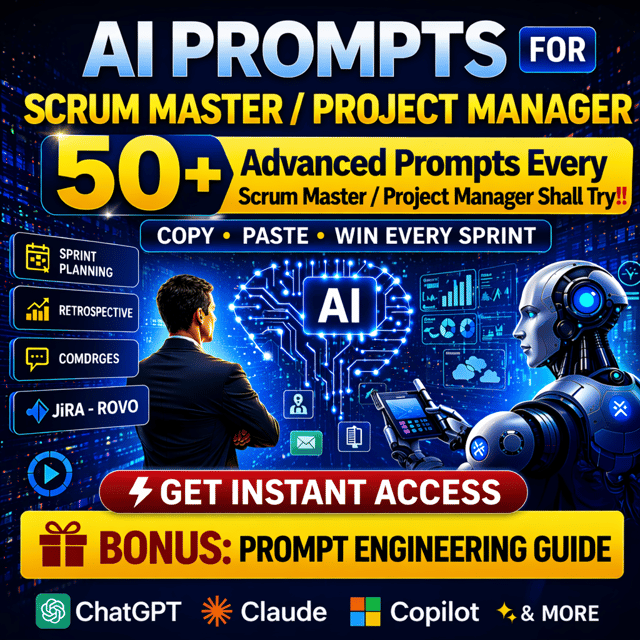
AI Scrum Master & Project Manager Guides
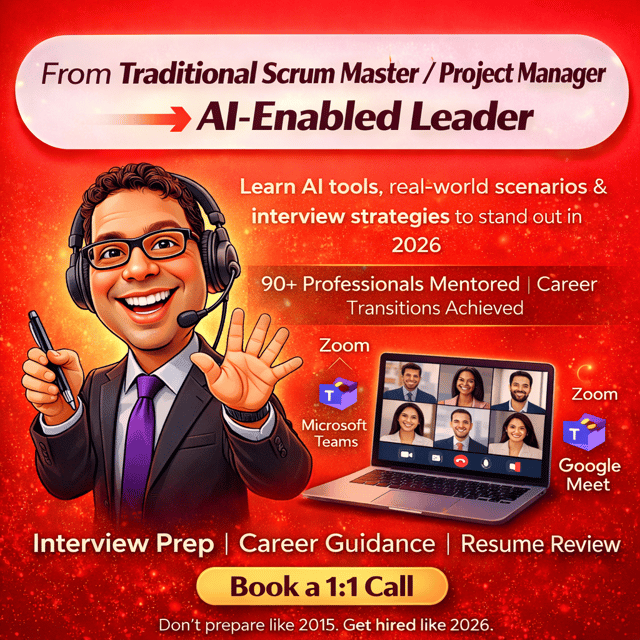
1:1 Interview-Prep | Career Guidance | ATS Resume
About me
- Anand Pandey is highly praised for his insightful mentorship and practical guidance in interview preparation, boosting confidence and enhancing technical skills.
 AI-generated based on testimonials
Frequently asked questions
How to crack a Scrum Master interview?
Start with the Scrum Guide until you can explain roles, events, artefacts and commitments in your own words — most rejections happen on shaky fundamentals. Next, build 8-10 personal stories in STAR format: an impediment you removed, a conflict you facilitated, a sprint that went wrong and what you changed. Interviewers increasingly test live scenarios — dysfunctional teams, pushy stakeholders, mid-sprint scope changes — instead of textbook definitions, so practise answering out loud and timing yourself. Close the interview with sharp questions about the company's delivery culture, and do a couple of mock interviews with someone who has sat on hiring panels; it exposes gaps in your structure far quicker than self-study.
How to crack a Scrum Master interview without experience?
Be honest about your background, but show evidence of agile behaviour. If you're coming from QA, development, support or business analysis, translate your work into Scrum language — standups you attended, blockers you escalated, releases you helped ship. Revise the Scrum Guide thoroughly, prepare 4-5 scenario answers covering unplanned work, scope creep and team conflict, and volunteer to facilitate ceremonies in your current team so you have genuine stories to tell. Just as important, format your CV as a proper ATS resume for Scrum Masters — most Indian IT companies and GCCs filter applications through ATS software before a human ever reads them. Entry-level roles and internal transitions are realistic; proof of mindset gets you there, not years in the title.
What are the common Scrum Master interview questions and answers for experienced candidates?
For 5+ years of experience, expect depth over definitions. The usual areas: handling a team that repeatedly misses sprint goals, dealing with a Product Owner who keeps reshuffling priorities, measuring success without turning velocity into a surveillance metric, coaching a reluctant middle manager, and running Scrum across multiple teams. Structure every answer as situation, action, measurable result, and name specifics — tools, metrics, artefacts, timelines. Panels can tell memorised theory from lived experience, so mine your own projects for 6-8 strong stories and rehearse them until they sound natural, not scripted.
What are some scenario-based Scrum Master interview questions and answers I should practice?
Practise situations like: a senior developer dominates every discussion, half the team is new and velocity has dropped, the Product Owner is unavailable before sprint planning, or a stakeholder demands mid-sprint changes. A structure that works for almost all of them: clarify the real problem, anchor your response in Scrum values and empiricism, facilitate rather than dictate, protect the team's focus, and close the loop transparently. Rehearse at least 6-8 scenario-based Scrum Master interview questions and answers aloud — interviewers are judging how you think under pressure, not just what you remember.
How should I start my Scrum Master interview preparation?
Work backwards from the interview instead of collecting random material. Week one, revise the Scrum Guide and map every concept to something you have actually done. Week two, build your story bank — impediment removal, conflict resolution, stakeholder management, a failure you owned. Week three, drill scenario questions and mock interviews, then research the target company's domain, because questions about their release cadence and stakeholder structure will come. Consistent, structured Scrum Master interview preparation across 3-4 weeks beats last-minute cramming of 100-question lists every single time.
Where can I find a good Scrum Master interview questions and answers PDF?
Free Scrum Master interview questions and answers PDF files circulate widely on job portals and study groups, and they're fine for a quick revision of definitions. The catch: PDFs train you to read, while interviews test whether you can speak, structure and think aloud under pressure. Use the PDF only as a checklist — for every question in it, say your answer out loud or record and review yourself. Pair this with the Scrum Guide and two or three deep scenario practices a week, and the PDF becomes a supplement instead of a crutch.
What is the main reason for the Scrum Master to be at the Daily Scrum?
Not to collect status updates — that's the trap answer. The Daily Scrum belongs to the Developers; the Scrum Master attends mainly to ensure the event takes place, stays within the 15-minute timebox, and remains a real inspection of progress toward the Sprint Goal. It's also where impediments surface early, so the Scrum Master can act on them the same day instead of at sprint's end. In interviews, frame your answer around coaching the team and keeping the event healthy, never around managing or reporting.
How to crack a project manager interview?
Treat it like a project you're delivering. Map the job description against your experience, then prepare STAR stories across the areas PM interviews in India almost always probe: planning and estimation, risk and dependency management, stakeholder communication, handling slippage, and leading people without authority. Expect a screening round, one or two delivery-focused rounds with scenarios and sometimes guesstimates, and a final HR or culture round. Quantify everything — budget, team size, timeline improvements — and rehearse a crisp answer for why you want this specific role. Calm, structured storytelling backed by numbers is what usually separates the offer from the rejection.
What project manager interview questions and answers are asked for experienced professionals?
At senior levels, questions shift from definitions to judgement calls: how you rescued a delayed release, negotiated scope with a difficult client, managed vendors across time zones, or handled a key resignation mid-project. Budgeting, risk registers and prioritisation trade-offs come up regularly, often as scenario questions. Prepare answers that show your reasoning — what you decided, what you consciously gave up, and what the outcome was. Keep 8-10 stories ready from real projects, because interviewers will follow up with "why" questions two levels deep to check the experience is genuinely yours.
What is AI for project management?
It's the practice of using AI — including generative AI and AI agents — to plan, execute and improve project delivery instead of doing everything manually. Practical examples: drafting user stories and status reports, summarising meetings into action items, analysing risks and dependencies hiding in your Jira data, forecasting timelines, and automating repetitive admin. The goal isn't to replace the project manager; it's to strip out low-value work so you can focus on decisions, stakeholders and team health. That shift is why AI for project management is fast becoming a baseline expectation in delivery roles rather than a nice-to-have.
How to use AI for project management?
Start with the tasks that eat your week. Use AI assistants to draft sprint reports and stakeholder updates, turn raw meeting notes into decisions and action items, generate risk and dependency lists from your backlog, sanity-check estimates, and prepare ceremony agendas. Then connect it to your actual stack — Jira automation, Copilot across Microsoft Project and Excel, and saved prompt templates for recurring work. Keep human judgement on anything sensitive, like performance conversations or vendor negotiations. Fifteen minutes a day applying AI to one real deliverable builds more skill than a weekend of theory.
How to learn AI for project management?
You don't need to code or build models. A practical sequence: first, get fluent with a generative AI assistant by using it on your real work — agendas, user stories, RAID logs. Second, learn core prompting patterns for delivery tasks and build a small library of reusable templates. Third, understand how agentic AI workflows connect with tools like Jira, DevOps platforms and reporting dashboards. Fourth, apply it all on a live project or a realistic simulation. Follow that route and you can learn AI for project management in a few focused weeks — the target is applied fluency, not an engineering degree.
What is the best AI for project managers?
There's no single winner — it depends on your stack. Most project managers today combine a general assistant such as ChatGPT, Claude or Gemini for drafting, analysis and brainstorming; Jira's Atlassian Intelligence for backlog and sprint insights; Microsoft 365 Copilot for reports, emails and Project plans; and tools like Notion AI for documentation. What separates candidates is not the tool they pick but whether they can prompt it well and wire it into a real delivery workflow. Pick one assistant, master it on live project work, and expand from there — that's what actually impresses hiring managers.
Is an AI for project managers certification worth it, or should I take a course first?
Both solve different problems. A certification — such as PMI's AI-focused options — helps your profile clear HR filters and signals commitment, especially in larger Indian organisations. But certifications largely validate knowledge, while hiring managers increasingly test whether you can actually apply AI in delivery. That's where a hands-on AI for project managers course wins: you build prompts, workflows and artefacts you can show in an interview (the AI Essentials™ series for PMs and Scrum Masters is one example). A sensible path for most working professionals: a practical course first to build demonstrable skills, then a certification later if your target employers value the badge.
Do Scrum Masters need an ATS resume to get shortlisted?
Yes — most mid-to-large Indian IT companies and GCCs screen every application through an applicant tracking system before a recruiter reads it. An ATS resume for Scrum Masters simply means clean, parser-friendly formatting, standard role titles, and keywords mirrored from the job description — Scrum, Jira, sprint planning, stakeholder management, and increasingly AI-enabled delivery skills. Replace responsibility lists with measurable outcomes, and tailor the top third of the resume to each role. If you're getting profile views but no interview calls, your resume is usually the fastest thing in the funnel to fix.