Testimonials
Services
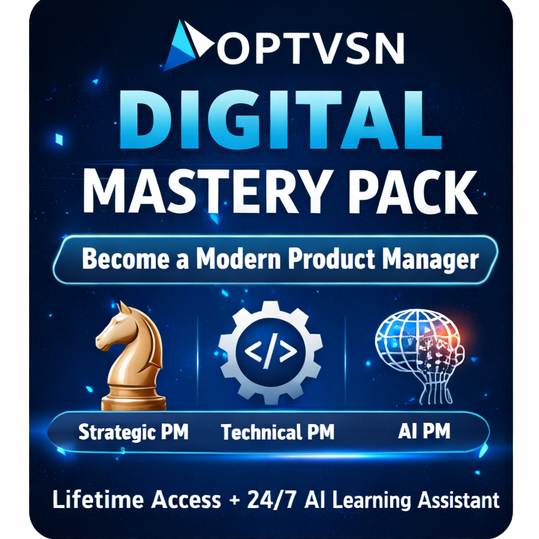
Digital Bundle: PM Mastery Pack (Self-Paced)
1 on 1 Hourly Mentorship
Package 1: PM Career foundation Package
PM TRY & BUY
Become an AI-native PM: Live 1 on 1 Program
💼 Technical Product Manager Training
Mock PM interview
🎯 Free 15-Minute Discovery Call
The Biz Canvas Kit – Your ultimate business model
Priority DM
Strategic Product Management – Self Paced E-Course
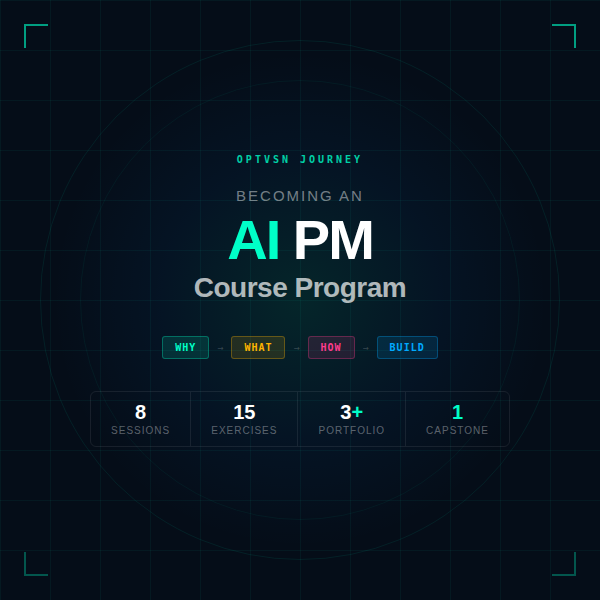
Package 2: PM Real World Mastery Package
Package 3 : All-in-One PM Transformation Package
PM Case Study Practice Package
🚀 Job-Ready PM Package
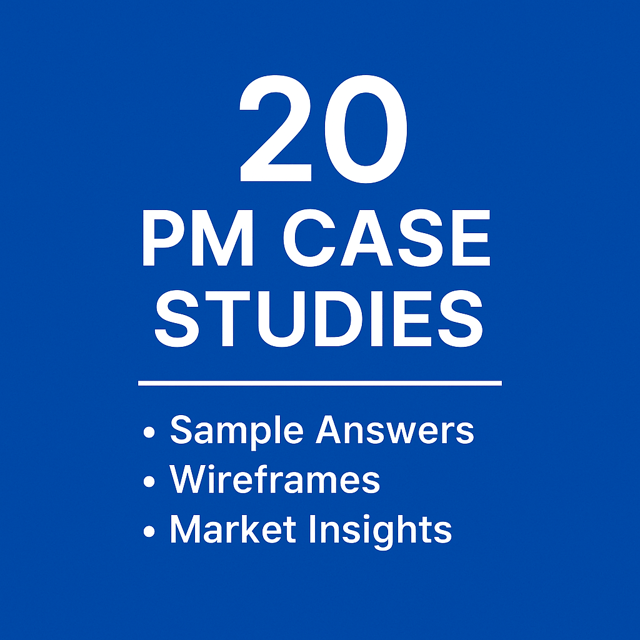
📚20 Real-World Product Management Case Studies
Strategic PM Training & Coaching
Looking to move from Tech to Strategic PM role?
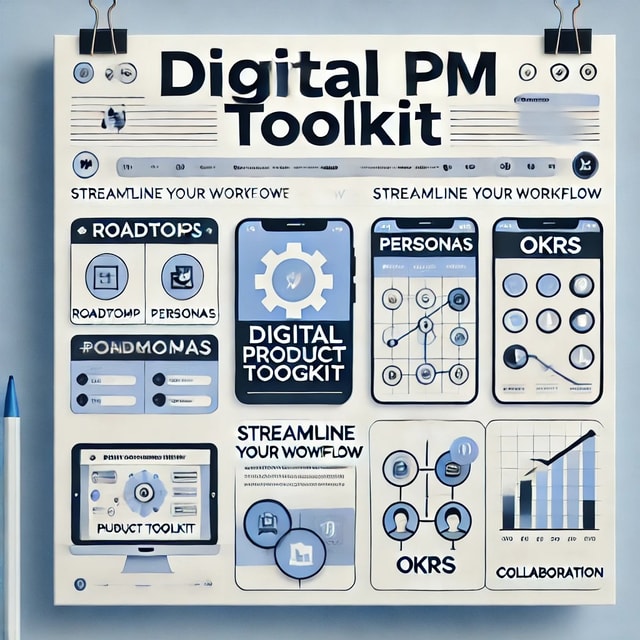
PM Wizardry Kit – Magic in every template!
Request for Speaker
About me
- Aakanksha is an exceptional product manager and mentor. She guided me with patience and insight, helping refine my skills. Her leadership fosters growth, making her one of the best mentors I’ve had!Recommended by Yolanda Ocampo on

- Aakanksha Sharma is highly regarded for her personalized guidance, innovative thinking, and actionable insights that empower individuals in career and business pursuits.
 AI-generated based on testimonials
Frequently asked questions
How to prepare for a product management interview?
Give yourself 4–6 weeks of structured preparation instead of last-minute reading. Break your prep into four buckets — product design cases, guesstimates and analytics, execution and metrics, and behavioral questions. Pick 10–15 apps you use daily (Swiggy, Zomato, Paytm, CRED) and do mini case studies on them, practise answering out loud, and finish with at least 3–4 mock interviews with experienced PMs. Honest feedback on your structure and communication is what separates shortlisted candidates from rejected ones.
How to answer product management interview questions?
Always structure your thinking before you speak. Start by clarifying the question and stating your assumptions, then follow a clear flow — define the user and their problem, prioritise, propose solutions with trade-offs, and end with success metrics and risks. Interviewers evaluate how you think, not whether your answer matches a "correct" one, so stay user-focused and think aloud. For behavioral questions, use the STAR format (Situation, Task, Action, Result) with quantified outcomes. Rehearsing this structure out loud with a mentor makes it second nature.
What is a product manager interview like?
Most companies in India run 3–5 rounds: a recruiter screening, one or two product case rounds (product improvement, design, or guesstimates), an execution/analytics or technical round depending on the role, and a hiring-manager or culture round. Expect prompts like "Improve WhatsApp for small businesses" or "Estimate the number of daily food orders in Mumbai." The interviewers are testing structured thinking, user empathy, prioritisation, and clarity of communication — not memorised frameworks.
Where can I find good product management interview questions and answers for practice?
Start with standard PM interview books such as Cracking the PM Interview and Decode and Conquer, then add company-specific questions from Glassdoor and LinkedIn threads, and real-world case study compilations. Sample answers alone are not enough, though — pair them with live practice. Working through a structured case study practice package or doing 1:1 mock interviews with an experienced PM gives you feedback on your reasoning that self-reading never will.
What are the common product management interview questions for freshers?
Fresher interviews focus on potential rather than past PM experience. Expect "Why product management?", product design questions on apps you already use, guesstimates (for example, "Estimate the number of ATMs in Bengaluru"), basic metrics questions, and HR or behavioral rounds. Build 2–3 mini case studies from internships, college projects, or product teardowns, and practise answering within a framework. Freshers who demonstrate structured thinking clearly outperform peers who improvise.
How to write a good product manager resume?
Lead every bullet with impact, not responsibilities — use the pattern "action + what it improved + by how much," for example "Improved onboarding conversion by 18% by simplifying the KYC flow." Tailor your resume to each job description, quantify outcomes, and keep it to one page for under 8–10 years of experience. Recruiters spend under a minute scanning, so your top three achievements must be visible without scrolling. A 1:1 resume review with an experienced PM helps you catch blind spots that self-editing misses.
What should a product manager resume look like?
Clean, single-column, and ATS-friendly — no tables, graphics, or fancy fonts. Use this section order: name and contact, a 2–3 line summary, professional experience with quantified bullets, projects, skills, and education. Reverse-chronological format works best for PM roles in India, one page for early-to-mid careers and two for senior roles. Every bullet should show product thinking — the decision you made and the measurable result — and always send it as a PDF.
How do I build a product manager resume for freshers with no work experience?
Swap the experience section for what you do have: internships, live projects, hackathons, case competitions, and self-driven product teardowns. Frame each with outcomes — "Designed a feature concept and validated it with 40 user interviews" reads far stronger than "Studied product management." Add relevant courses and tools (SQL, Excel, Figma) and highlight transferable skills like stakeholder management and data analysis. Recruiters hiring freshers look for product sense and initiative, not tenure.
Are product manager resume templates worth using?
Yes — as a starting structure, not a finished copy. A good template keeps your layout ATS-safe and shows you which sections matter, but recruiters can instantly spot an untouched template, so customise every bullet with your own metrics and the target job description. Choose a clean single-column format, and if possible pair the template with guidance on writing impact-driven bullets — some PM template kits also include AI prompts to help you tailor your resume for each application.
How to become an AI product manager?
Build PM fundamentals first, then layer on AI-specific depth: ML basics, LLMs, prompt design, RAG, model evaluation trade-offs, and responsible-AI and data-privacy considerations. The most practical route is a combination of a structured AI PM course or e-course, hands-on exposure by volunteering for AI or automation features in your current role, and 2–3 AI case studies or side projects you can discuss in interviews. Companies currently want professionals who combine strong domain knowledge with AI literacy — that mix is your differentiator.
What does the AI product manager role involve?
An AI product manager owns the same outcomes as any PM — user problems, roadmap, and business value — but works with probabilistic systems instead of deterministic features. Day to day, that means identifying high-impact AI use cases, defining data and model requirements with ML engineers, setting evaluation criteria like accuracy, latency, and cost, planning for edge cases and failure modes, and ensuring responsible use of data. Strong AI PMs also know when AI is the wrong answer and a simple rule-based solution works better.
What is the AI product manager salary in India?
AI product managers typically earn a premium over traditional PMs at similar experience levels because the role demands both product craft and AI/ML literacy. Actual pay varies widely with the type of company (GCCs, unicorns, and global tech firms pay very differently), city, and whether you own core ML products or AI-powered features on existing products. Instead of chasing the number, focus on building demonstrable AI project experience — that is what moves you into the top salary bands.
How do I choose the right AI product management course?
Check four things before enrolling: (1) does it cover real fundamentals like ML, LLMs, and evaluation — not just hype, (2) does it include real case studies or projects you can showcase in interviews, (3) is there mentorship or feedback rather than only recorded videos, and (4) does the instructor have hands-on AI product experience. Self-paced courses suit working professionals who need flexibility, while live or 1:1 programs work better if you want accountability and personalised feedback. Avoid any course that teaches concepts without making you apply them to actual product decisions.